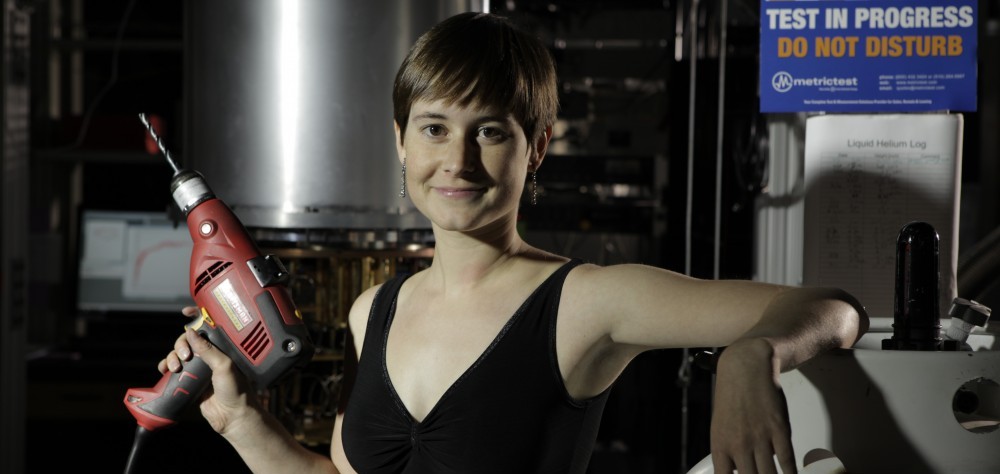
First, why a video?
I am part of a generation that was raised on a nourishing diet of science communication videos on YouTube. The likes of MinutePhysics, Veritasium, VSauce, Crash Course, TED-Ed, Physics Girl, 3Blue1Brown — you name it, these channels were my childhood. Had they not existed, I may very well have never considered pursuing a physics PhD here at Caltech.
But you probably already knew about the power of science communication in its ability to inspire the next generation. I am here to convince you that science communication just became a whole lot more important.
Earlier this month, Terence Tao gave a talk at Caltech about the growing use of AI in mathematics. In light of OpenAI’s recent release of hundreds of AI-generated mathematical manuscripts, he argued that our community has transitioned from a long era of proof scarcity to one of proof abundance. As a result, problem-solving may no longer be the central challenge in mathematics and theoretical physics that it once was. What surprised me most, though, was Terence’s claim that problem-solving was never the central goal in the first place. It was only ever a proxy for the actual goal of these disciplines: to elevate human understanding.
I do not think we have fully internalized this maxim as a community yet. The arXiv is seeing a flood of AI-generated submissions that claim to solve problems but offer very little insight. So how do we encourage human understanding?
Perhaps a video recording is one good way. Flagship conferences like STOC 2027 have begun requiring video recordings as part of their submission process to prioritize effective scientific communication and filter out low-insight AI-generated submissions. On one level, requiring authors to explain their work over video establishes a standard that scientific research should remain intelligible to others.
But on another level, a video recording captures something of the humanness of the act of understanding itself. When I understand something, I feel like I can taste it, almost as if it were a sensory experience. I then feel empowered, as if I have been given a new tool to use, and subsequently feel an excitement to share that insight with other human beings. In other words, understanding is an embodied phenomenon. And what better way to embody your work than to stand before a camera and explain it?
Science communication is no longer just about communicating science to people outside the field. It is increasingly about ensuring that the scientific progress we make be accompanied by a corresponding growth in human understanding. So go out there and record yourself geeking out!
About the work
Quantum spin glasses are, in some ways, very quantum systems. Their Hamiltonians contain many non-commuting terms, and their low-energy states can be far from simple product states that are easy to represent classically.
One might therefore expect these systems to be difficult to simulate on a classical computer. Yet, in our recent work, we show strong evidence that there is no exponential quantum advantage for sampling from the thermal states of one such quantum spin glass model.
The key is to reduce sampling to estimating certain quantities related to the model called tilted means, which we expect to be classically easy. I say expect because our results rely on a conjecture from spin-glass physics that is widely believed to hold true, but has yet to be rigorously proven with existing mathematical tools. Such assumptions are quite common in the spin-glass community.
The video above focuses more on why we wanted to study sampling than on how we actually solved the problem in order to make it accessible to a general audience. For those curious, our approach is based on stochastic localization, a sampling technique closely related to diffusion models. More technical details can be found in our arXiv preprint.


La foto con la IA también cuentan historias investigativas y nuevos desafíos para la ciencia. Todo depende de cómo le sacas información a la IA….un gran desafío!!!
Load the Navier-Stokes paper into your favorite LLM and have it draw a force diagram. You will see the words and diagrams it uses to describe the problem do not match. It has no understanding. Notice that all the images of the vortex do not show arrows or direction of the flow.
The AI proof is to boost their IPO. Except we are now at the point where a vacuous solution buried in AI slop looks genuine but is wrong. The proof uses the angular velocity to drive the linear velocity of the two opposing jets in the vortex outflow.
Then a new piece of fluid instantly replaces the old piece, creating a persistent radial force that, according to AI, shrinks the vortex. It believes the momentum stripping, radial fluid transport, and shear from the vortex, from an infinite amount of centrifugal force, can power the outflow jets to move at an infinite velocity.
What really happens is that the outflow jets carry away a finite amount of angular momentum, which shrinks the core. The key idea is that it spins faster as it gets smaller, but if angular momentum decreases, angular velocity also decreases.
Because the angular momentum L in the equation L = mR^2 x W is no longer conserved, W can decrease without the radius decreasing. If the angular velocity decreases, the centrifugal force decreases, and the radius shrinks; if the external force and pressure gradient are large enough to overcome the centrifugal force, the angular velocity increases as the radius decreases under a constant finite force.
However, the angular velocity must be less than before; it is bounded and does not diverge because angular momentum was transported away, causing the radius to become smaller
The angular momentum goes to zero in the limit because it is stripping away angular momentum until it reaches zero. The AI claims the energy is bounded as velocity diverges. Still, energy and angular momentum are zero when the radius is zero, and this is another example of a vacuous truth proven by AI.
What makes the proofs deceptive are the vacuous truths applied to empty sets buried in pages of AI slop like saying the angular momentum is zero when angular velocity is infinity. Another problem is the AI leaned into the confirmation bias of researchers who believed it would blow up but hadn’t proven it. Science is falsifiable and experimentally tested. The motto of the Royal Society is, ‘on no one’s word which is a contradiction for LLMs’