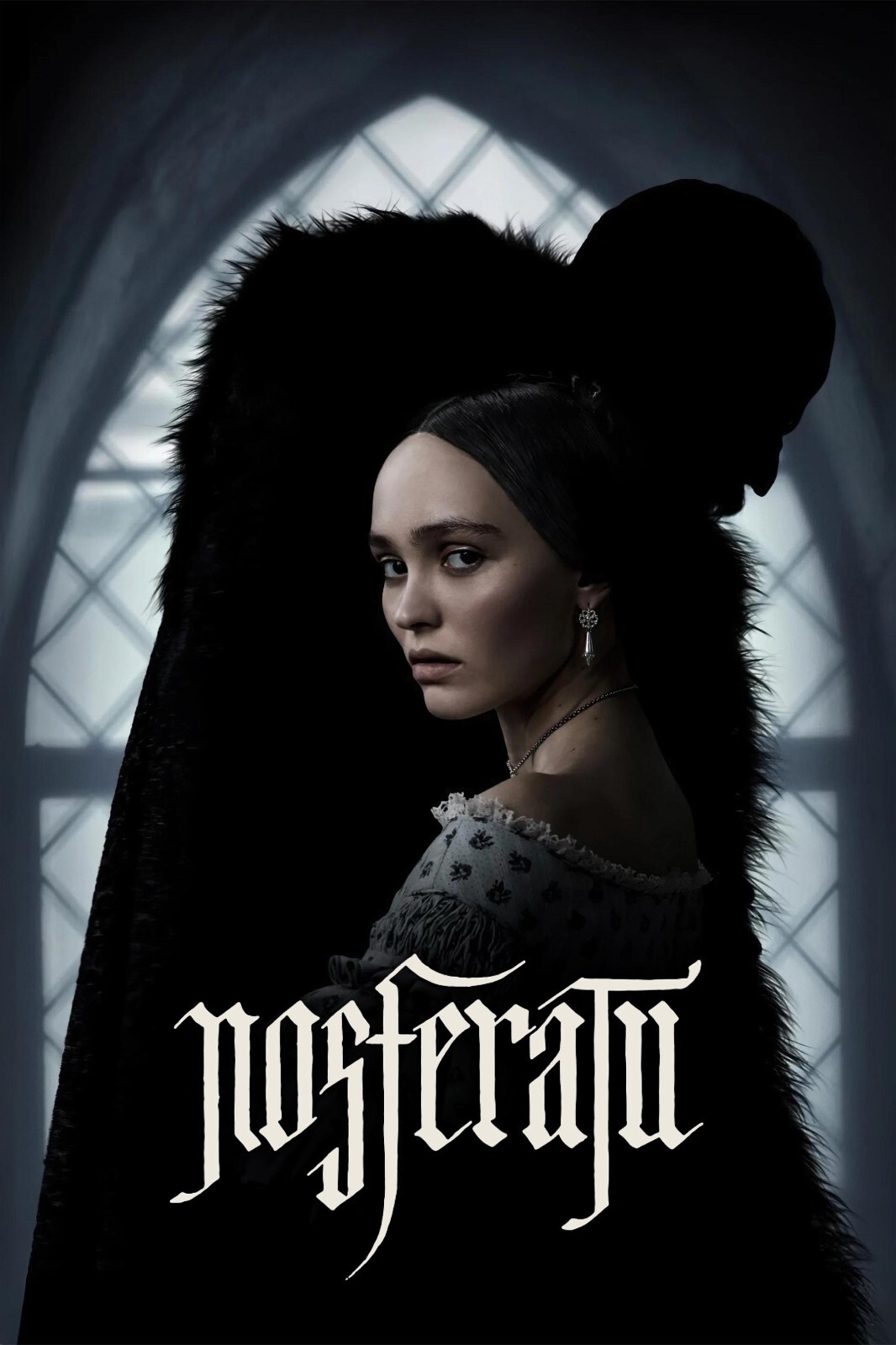
Did you know that Horace Walpole invented the Gothic novel? The Englishman spawned a genre by publishing The Castle of Otranto during the 1700s. Walpole’s work featured dark atmospheres, crumbling castles, family secrets, and taboo subjects such as madness and incest. If you’ve enjoyed Oscar Wilde’s novel The Portrait of Dorian Gray or the 2024 film Nosferatu,1 thank Horace Walpole.
I memorized the above information in a high-school English class. My teacher, Mrs. Lukacs, demanded a great deal of her students: we memorized boatloads of facts about literary genres (from Anglo-Saxon epics to elegies), history (the Enlightenment, the Romantic era, etc.), literary devices (enjambment and litote and synecdoche), and authors (Samuel Johnson, Anne Bradstreet, and their ilk.). Thanks to Mrs. Lukacs, I can add that Charles Brockden Brown Americanized the Gothic. He shifted stories’ settings to caves, dark forests, and villages at the edge of civilization. The novels Wieland, Edgar Huntly, and Arthur Mervyn exemplify his style.
Mrs. Lukacs’s curriculum hibernated in me like an educational chipmunk after I’d graduated from high school. Imagine my surprise, during a recent lunchtime, when I lifted my gaze to find Horace Walpole a few feet away.
I was dining at King’s College, Cambridge. The University of Cambridge contains colleges similarly to how Hogwarts contains houses. Each house has students and faculty members from multiple departments. Some departments share their disciplines with institutes. An institute and a college account for my visiting Cambridge most of this autumn: the Isaac Newton Institute for the Mathematical Sciences is hosting a several-month program about quantum many-body physics. I’m grateful to be attending the program while holding a Visiting Fellowship at King’s College.
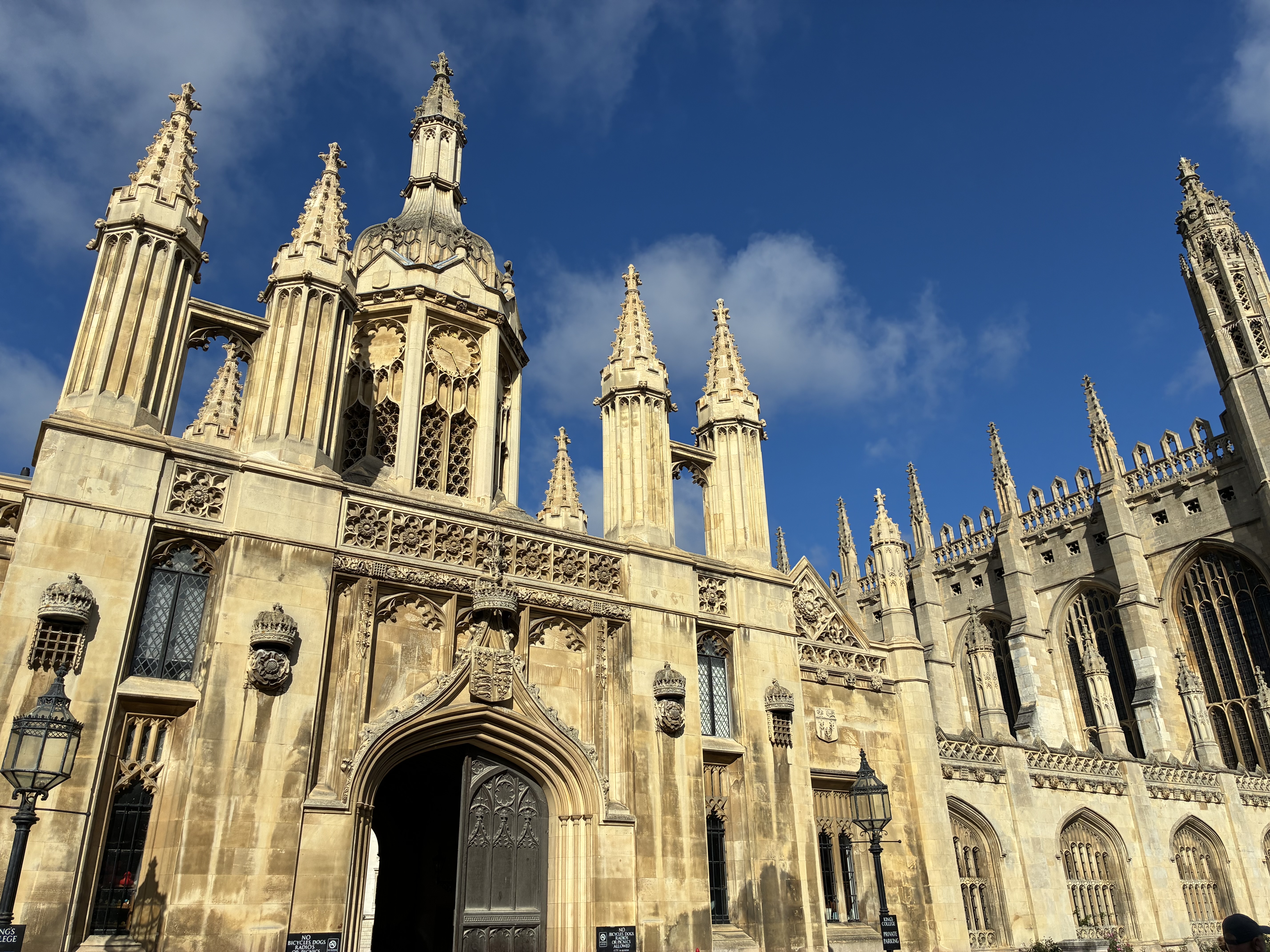
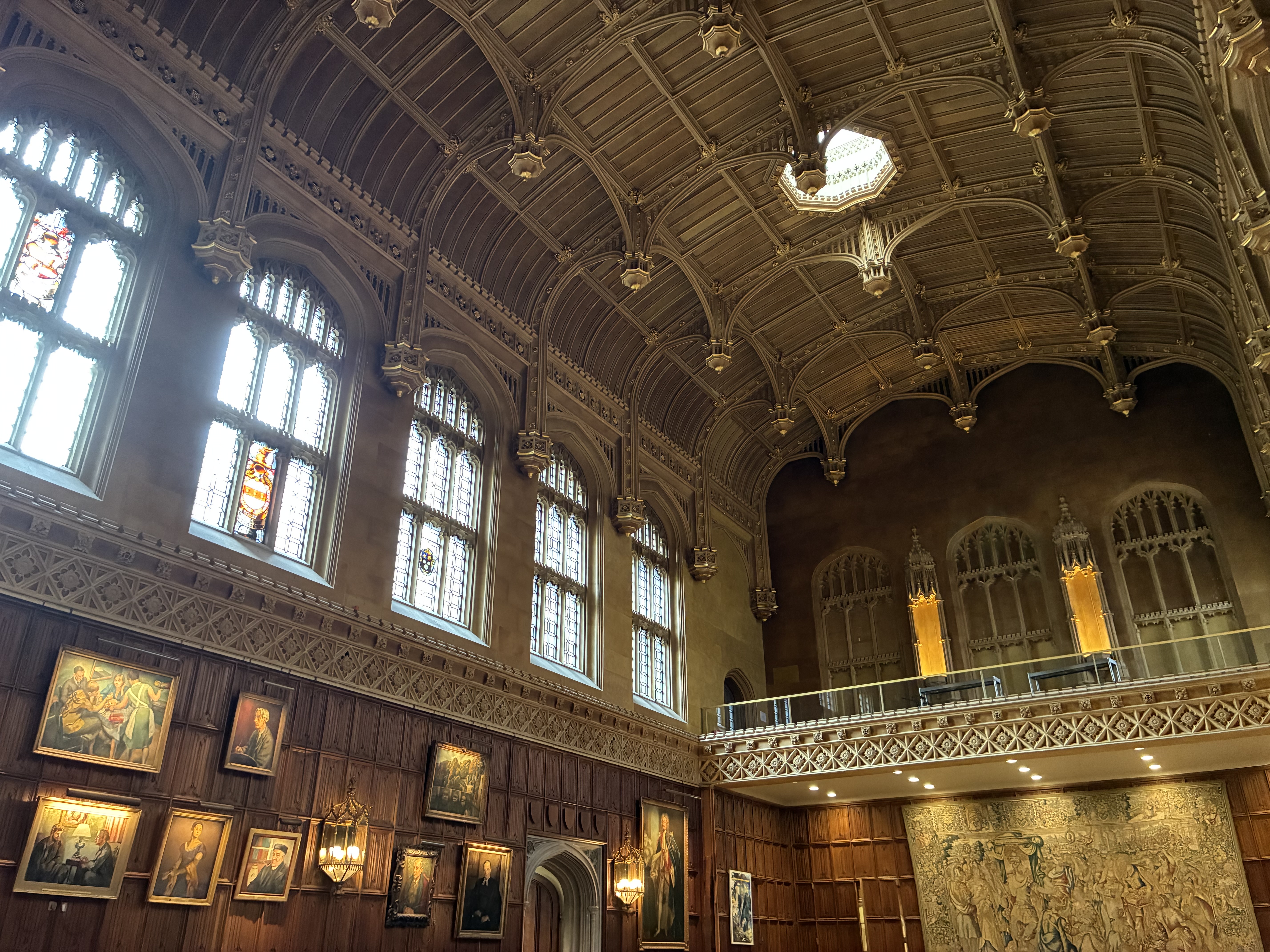
King Henry VI founded King’s College in 1441. (Caltech, where I earned my PhD, precipitated from earlier institutions around the turn of the twentieth century.) The college’s alumni and former Fellows include centuries’ worth of luminaries. Some of their portraits hang in the dining hall, a Gothic confection that could play a cathedral on television.
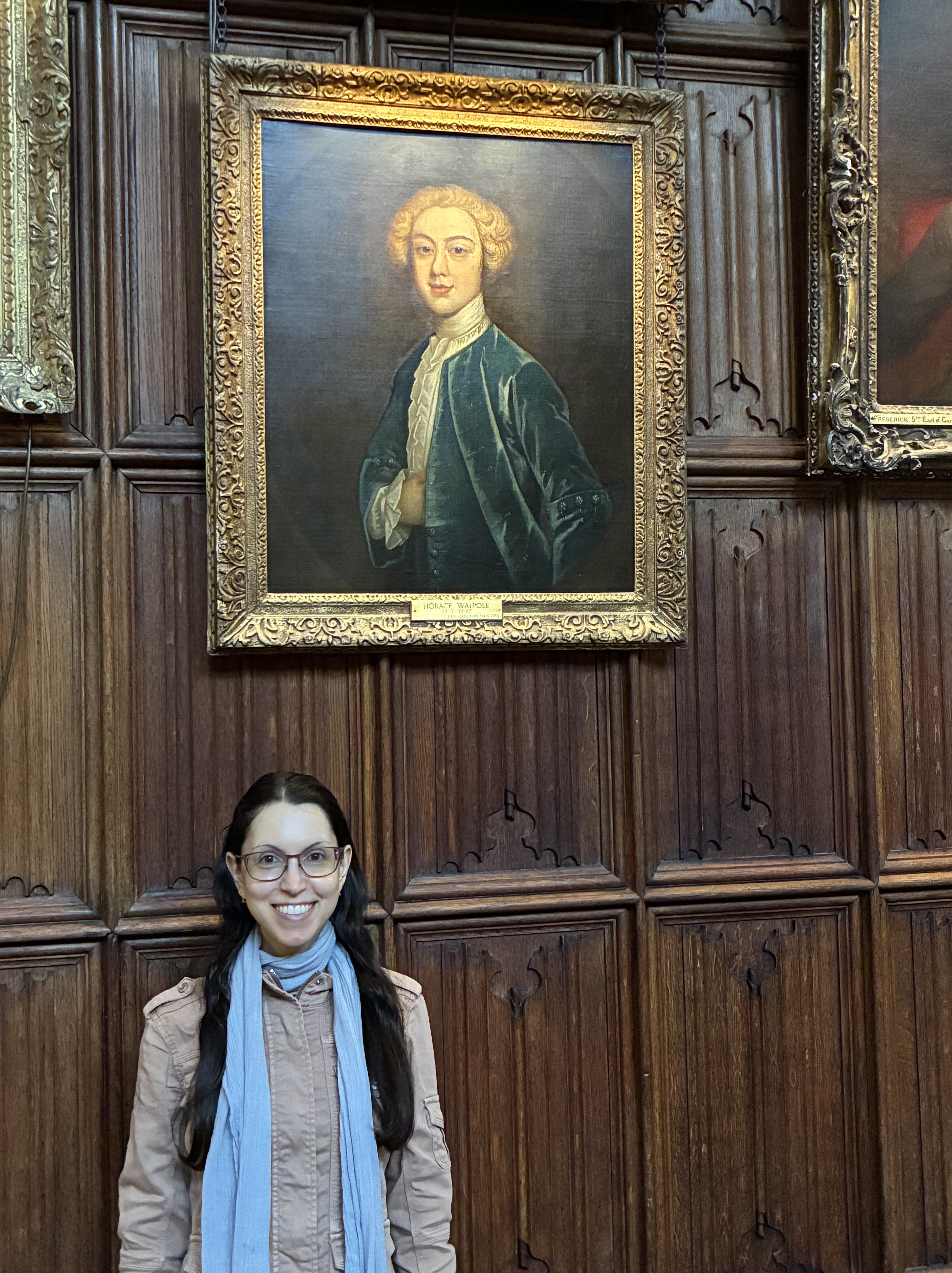
I sometimes talk with other scholars over meals in the dining hall; but, when dining alone, I examine different facets of the hall over different meals. The room boasts carved wooden walls, a seventeenth-century tapestry, the gold-colored wall sconces. I couldn’t forgive myself if I squandered the opportunity to examine them. Sometimes, I’ve scrutinized a portrait per meal. One portrait depicts Horace Walpole.
Did I attempt to envision Horace Walpole during high school? Probably not. He lurked in my imagination as the silhouette of an eighteenth-century Englishman—likely as buttoned-up, industrious, and middle-aged.
The portrait shows a youth in his teens or twenties, his skin smooth. A slight smile hints at levity. His clothing’s light coloring buttresses the impression: a white shirt peeps out from a cobalt-blue jacket. The young man’s pose suggests formality, his back straight and one hand tucked inside his jacket. Yet his large, dark eyes seek the viewer’s. I wouldn’t have expected such a plucky-looking youth to have founded the genre that includes Dracula. But I welcomed Horace Walpole as a lunch companion.
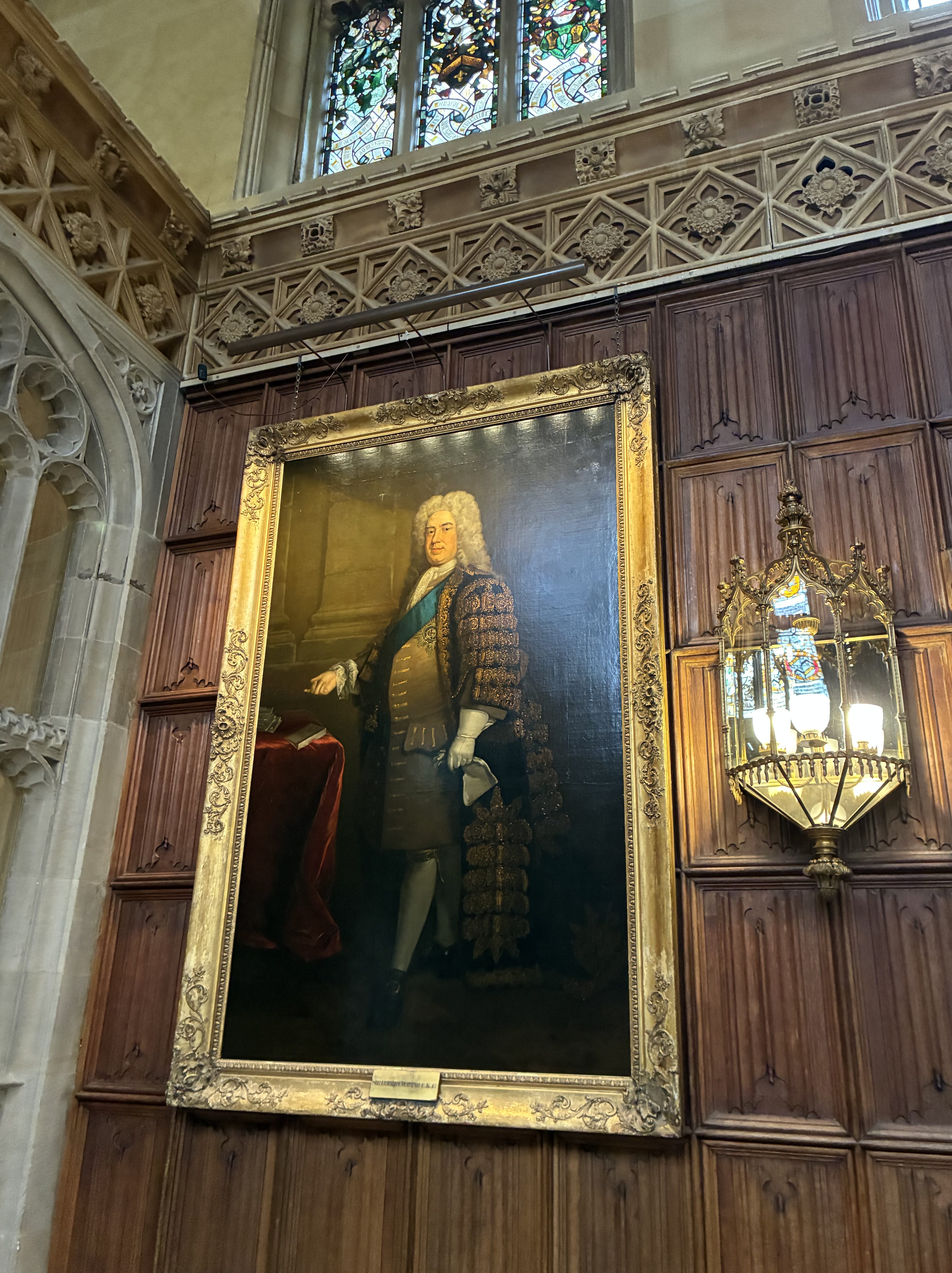
After finishing eating, I walked to one end of the dining hall to drop off my tray. Beside a doorway there hung another portrait whose name leaped out at me: Sir Robert Walpole. Google revealed that Sir Robert had fathered Horace—and served as Great Britain’s first prime minister.
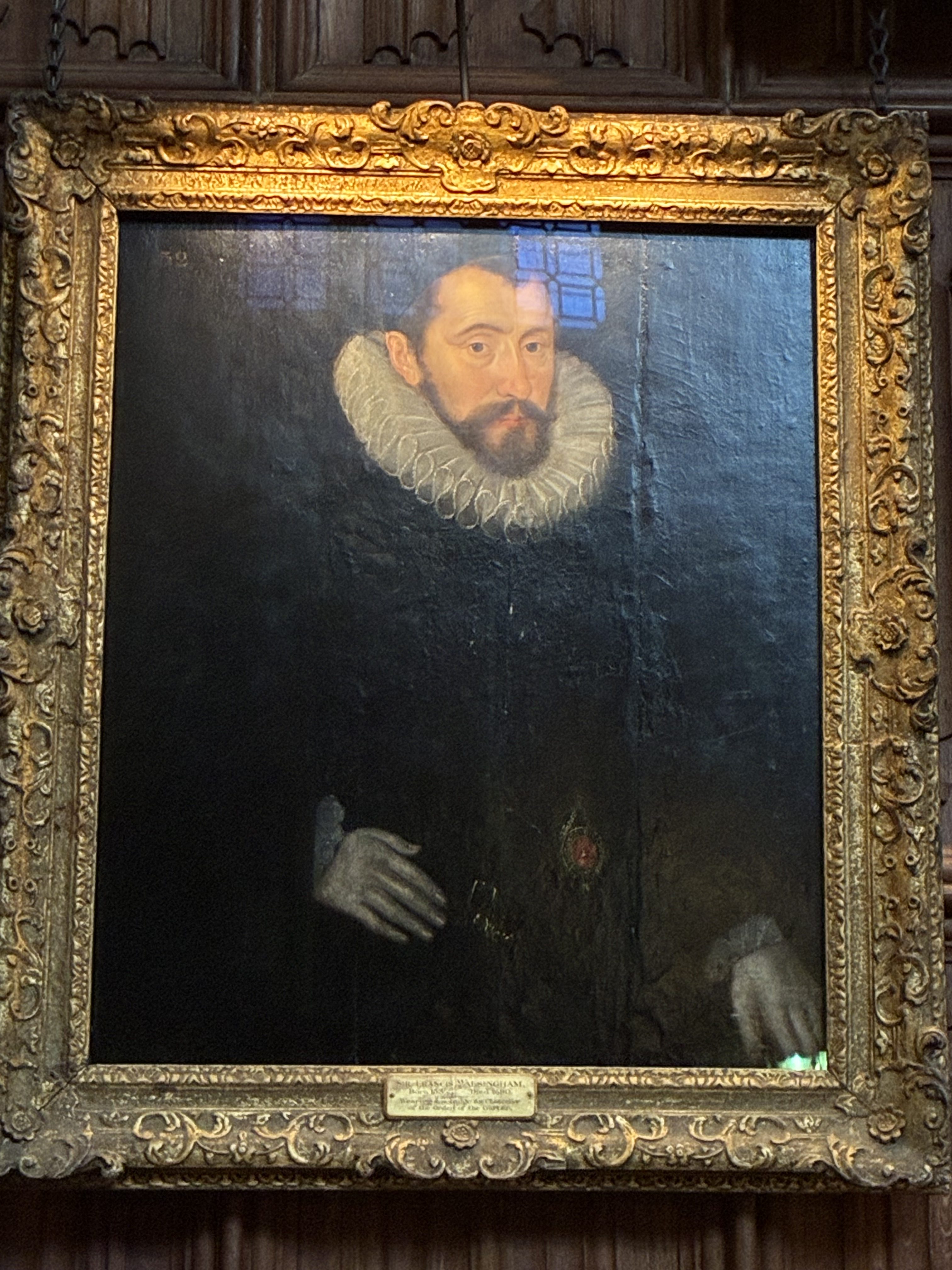
During another meal, I found myself eyeing a portrait of a man wearing an Elizabethan ruff. He wore no smile, unlike Horace. Little wonder: a label revealed the portrait to be of Sir Francis Walsingham. Walsingham had headed Queen Elizabeth I’s spy network during the 1500s. Catholics across Europe sought—overtly and by cloak and dagger—to dethrone Elizabeth and the Protestantism to which Walsingham subscribed. I could hardly blame her right-hand man for looking as though he’d found a rat in his soup.
What a crew surrounds me, I keep thinking. What depth and richness it adds to my meals. I eat chicken-tikka sandwiches and minty-pea salads with history.
Studying physics unlocks similar depth and richness. Doing physics, one doesn’t merely pose a problem, translate it into math, and solve the mathematical problem. One interprets the mathematical outcome physically, illuminates it with examples, and applies the results to the world around us.
For instance, odors waft out of the servery into the dining hall, savoring of flatbread pizza or falafel or beef Wellington. Why? Because improperly fed or watered students can cause riots. But why, more fundamentally? Because, by the second law of thermodynamics, every sufficiently large closed, isolated system’s entropy increases or remains constant. Entropy increases as a gas—which can carry an odor—spreads out.
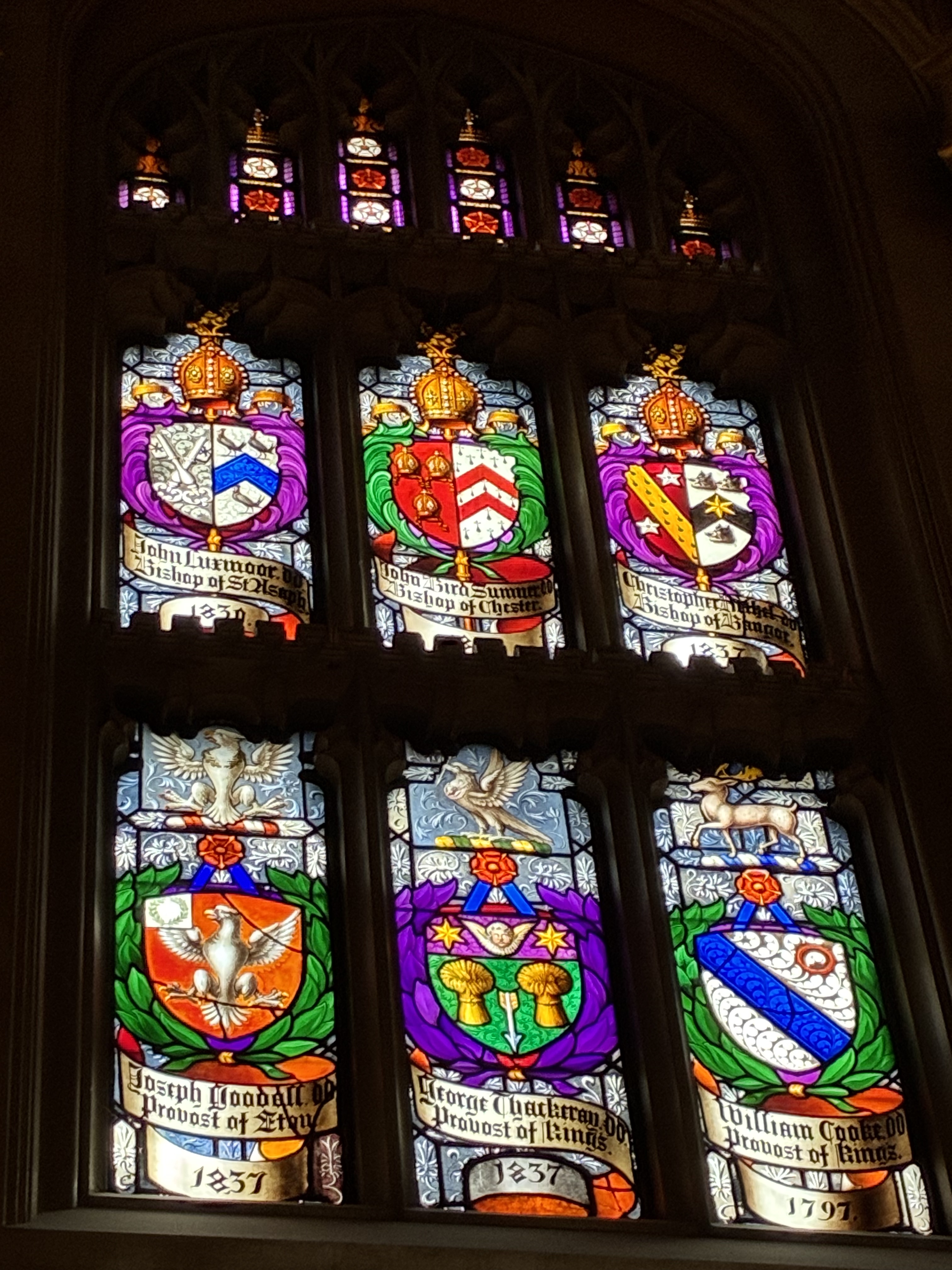
As its entropy grows, the gas approaches equilibrium: large-scale properties of the gas, such as its volume, cease to change. If any energy leaves the gas, an equal amount enters it, on average. The gas takes far less time to equilibrate than glass does. The dining hall’s stained-glass windows depict coats of arms and list college provosts of yore. A glass’s atoms don’t form a crystal, a pattern repeated across space. Diamonds, table salt, and the quartz in wristwatches consist of crystals. A glass’s atoms lie at random distances from each other. This randomness leads to randomness in the interatomic interactions’ strength.
Similar randomness characterizes neural networks, which underlie conversations I’ve overheard and participated in at meals. Neural networks realize artificial intelligence, which has been widening, disrupting, monetizing, speeding up, eroding, and enhancing research. You don’t need for me to tell you that AI has ignited a quest for an understanding of what computers can and can’t accomplish. What better place to undertake such a quest than King’s? Alan Turing, a co-founder of computer science, studied and worked here.
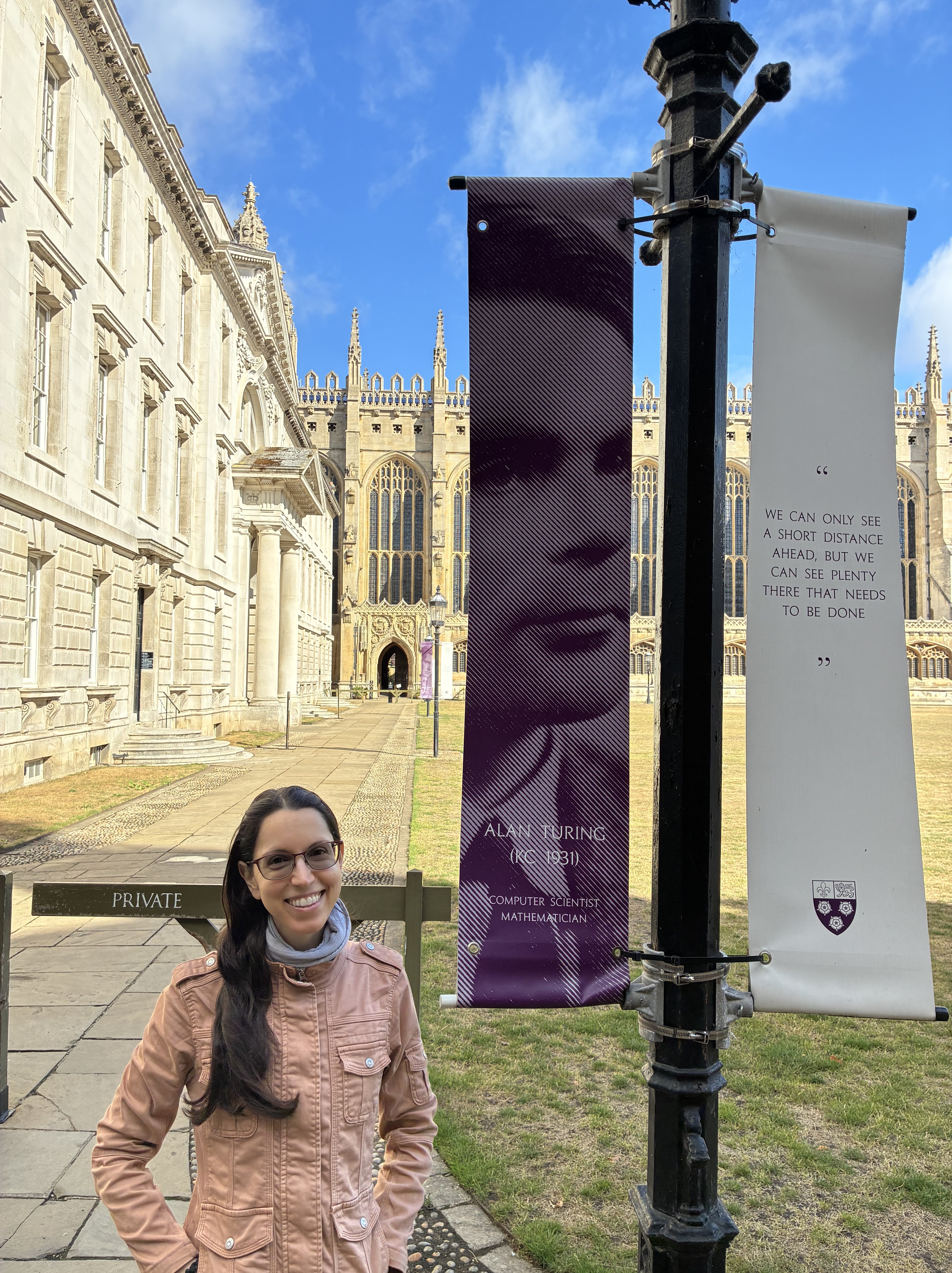
I’ve written about how a liberal-arts education has enhanced my physics. So has a physics education enhanced my life. Physics adds depth and richness—as well as nuance, detail, and significance. I have the opportunity to eat lunch with Horace Walpole this autumn; we have the opportunity to eat our cosmic lunches in this universe for only slightly longer. I couldn’t forgive myself if I squandered the opportunity to examine my surroundings.
With thanks to King’s College, the Isaac Newton Institute, David Arvidsson-Shukur, and many others for my visit.
1Or the 1922 original.

