Unknown's avatar

About Nicole Yunger Halpern

I’m a theoretical physicist at the Joint Center for Quantum Information and Computer Science in Maryland. My research group re-envisions 19th-century thermodynamics for the 21st century, using the mathematical toolkit of quantum information theory. We then apply quantum thermodynamics as a lens through which to view the rest of science. I call this research “quantum steampunk,” after the steampunk genre of art and literature that juxtaposes Victorian settings (à la thermodynamics) with futuristic technologies (à la quantum information). For more information, check out my book for the general public, Quantum Steampunk: The Physics of Yesterday’s Tomorrow. I earned my PhD at Caltech under John Preskill’s auspices; one of my life goals is to be the subject of one of his famous (if not Pullitzer-worthy) poems. Follow me on Twitter @nicoleyh11.

Nicole’s guide to writing and editing

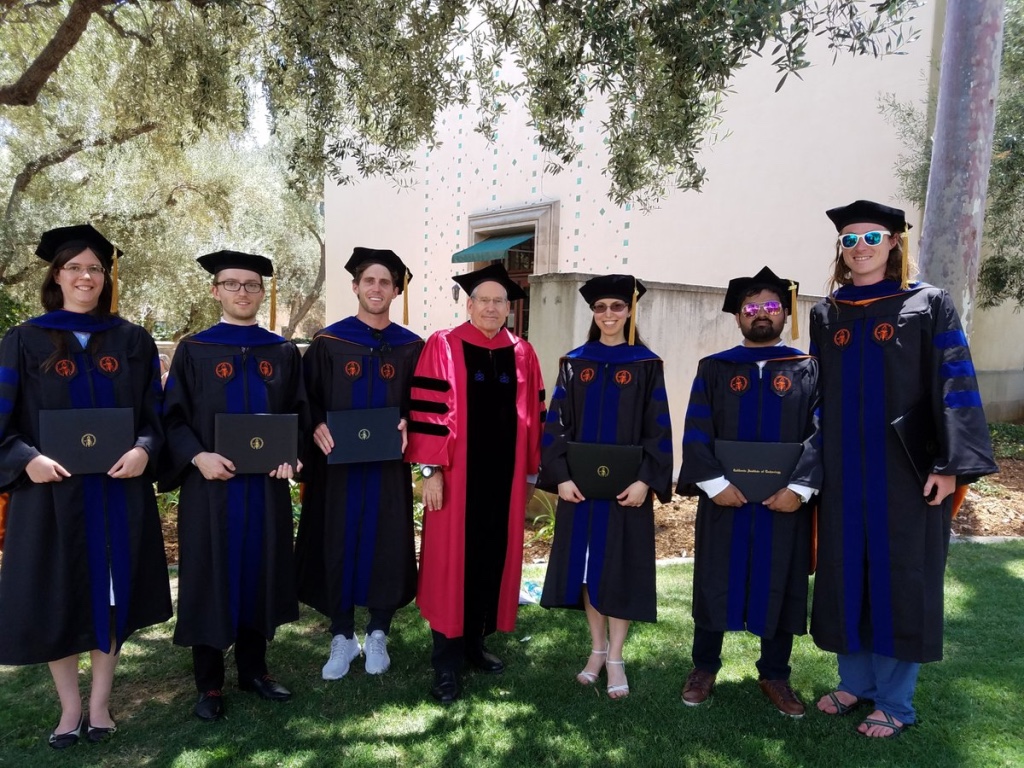
Freshman year of college, I took a writing seminar from German-literature professor Ellis Shookman. Professor Shookman loved Mozart’s music, he told us early in the term. He listened to Mozart on the radio while driving from campus to Boston. Static might mar the transmission, but he could often turn up the volume and continue enjoying the program. Sometimes, the static worsened during the drive. It could worsen and worsen, until Professor Shookman’s frustration outweighed his delight at listening. He’d switch off the radio.

As Professor Shookman loved listening to Mozart’s music, he loved reading about students’ ideas. Yet static can mar a piece of writing: infelicities in grammar, structure, composition, word choice, and more. If enough infelicities obscure the writing, the frustration of reading outweighs the benefits. Professor Shookman will quit reading.

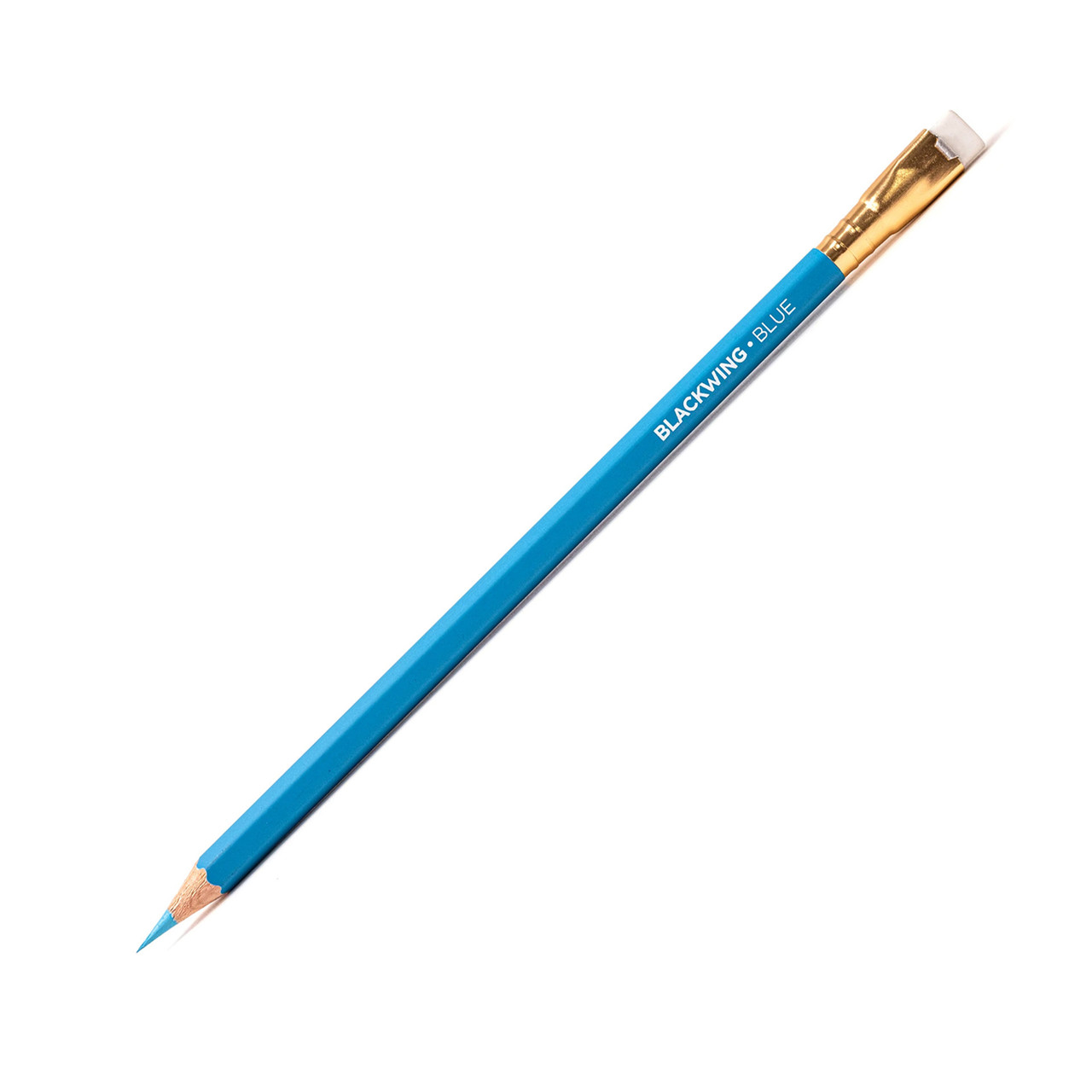
Professor Shookman marked up our essays with a blue pencil that achieved the status of legend among his students. If you’ve written a paper I’ve coauthored, you’ve probably received PDF drafts replete with green highlighting.1 A sticky note explains the reason for each highlighting: “Singular–plural mismatch.” “Active voice >> passive voice.” “Let’s clue the reader in as to this formula’s meaning before lobbing the math at them.” 

Over the past year, I’ve catalogued the suggestions I write most often on paper drafts. The comments embody principles gleaned from Strunk and White’s The Elements of Style; the Physical Review style guide; other writing guides I esteem; literature whose writing I esteem;2 collaborations with professional editors; and writing instructors, including Professor Shookman. Each section below begins with more-important principles, shading into more-nuanced ones.

Please use and disseminate these principles. Train your favorite large-language model (LLM) on them, and have the LLM critique your manuscripts. Instruct it to use green highlighting if you wish. Even if the LLM suggests fixes initially, tell it to stop offering suggestions later, so that you can devise the solutions: train not only the LLM, but also yourself. I hope to enjoy your papers as much as Professor Shookman enjoyed his sonatas.

  1. Organization
    1. Motivate your work; then, present it; and then, explain its physical significance.
    2. Begin each paragraph with a topic sentence.
    3. Begin each section, apart from the introduction and conclusion, with (i) a statement of the takeaway and (ii) an outline of the section. When outlining a section, hyperlink to each subsection. Similar guidelines concern subsections and subsubsections.
    4. Before presenting a piece of math, sketch its meaning and origin. This strategy enables the reader to understand the math as soon as they encounter it. If you throw math at the reader without introducing it, the reader will have to squint at the symbols for a while to figure out what the expression means and where it comes from.
      • Example: To calculate the average work, we substitute the Hamiltonian formula (10) into the definition (12): [equation].
    5. Most citations belong at the ends of (i) sentences and (ii) phrases concluded with commas. Put a citation elsewhere only if you have a compelling reason for doing so.
    6. Bridge each component of your writing to the next component; the next shouldn’t sound like a non sequitur.
      • Suppose that the next sentence refers to (i) a topic mentioned in the previous sentence and (ii) a new topic. Mention (i) before (ii).
        • Example: Smith et al. applied control theory to the extent possible. The attempt led to intractable equations, unlike our approach.
        • Example of a broken bridge: Smith et al. applied control theory to the extent possible. Our approach does not involve intractable equations, unlike theirs.
    7. Whenever you tell a story, tell it from start to finish, step by step. Derivations, proofs, and descriptions of experiments qualify as stories.
      • This guideline extends to descriptions of experimental setups and of mathematical objects. For example, imagine referring to an element of a subgroup of the group generated by some operators. Did you have to read the preceding sentence multiple times to process it? The sentence begins at the end of a story, then rewinds to the story’s beginning. This structure impedes understanding. The subgroup forms the context for the subgroup element, which one can’t grasp until hearing about the subgroup. The subgroup participates in a similar relationship with the group, as does the group with its generators. Therefore, one should introduce the generators, then the group, then the subgroup, and then the subgroup element.
  2. Word choice
    1. Use strong, specific words, rather than weak words.
      1. Verbs and nouns are stronger than adjectives and adverbs.
      2. Choose specific verbs (e.g., “prepare,” “evolve,” and “measure”), rather than vague, general verbs (e.g., variants of “to be” and “take,” as in “take a measurement”).
    2. Avoid statements such as “we investigate,” “we study,” and “we analyze.” Such statements don’t relate that you’ve accomplished anything. State what you’ve accomplished. Verbs such as “prove,” “test,” “confirm,” “discover,” and “find” achieve this goal.
    3. Adverbs such as “importantly” and “remarkably” pollute scientific writing with the authors’ opinions. Demonstrate that a claim is important or that a result is remarkable; then, leave readers to draw their own conclusions. Those conclusions will coincide with yours if you’ve demonstrated your point.
    4. Use the active voice, rather than the passive voice. Take responsibility for your work. Editors of high-impact scientific journals have endorsed this advice.
    5. Refer to yourself when necessary and only when necessary.
      • Example of unnecessary reference to self: We use the superscript “max” to signify the maximal Fisher information.
        Preferable alternative: The superscript “max” signifies the maximal Fisher information.
      • Example of unnecessary reference to self: Our results establish several opportunities for future research. First, we can implement the experimental proposals.
        Preferable alternative: Our results establish several opportunities for future research. First, one can implement the experimental proposals.
      • You may use the first-person plural when escorting the reader through a derivation.
        • Example: We substitute from Eq. (1) into Eq. (2).
    6. If you’re the only author, don’t use the plural (“we,” “our,” etc.). The usage is inaccurate and misleading. It portrays you as dodging responsibility for your work by dispersing that responsibility across the scientific community.
    7. Avoid dangling modifiers.
    8. Pair every verb with the appropriate noun.
      • Example of grammatically incorrect text: Equation (1) follows by calculating the sum.
        • One should pair the verb “calculate” with the noun “we,” because “we” undertook the calculating. However, this example’s author omitted the noun out of squeamishness about using the first person in a scientific document. Hence the sentence says that the equation calculates the sum. Equations can’t calculate sums.
      • Examples of correct alternatives
        • We derived Eq. (1) by calculating the sum.
        • Equation (1) follows from the evaluation of the sum.
        • Calculating the sum yields Eq. (1).
    9. Avoid empty subjects.
    10. Include no unnecessary words.
      1. “So-called” is unnecessary.
      2. “Note that” and “We note that” are unnecessary.
      3. “We have that,” used as a preface to a mathematical statement, is unnecessary. One can better serve the reader by prefacing the mathematical statement with (i) a derivation or (ii) a prose description of the statement.
      4. Never write “is equal to”; “equals” is more concise.
      5. Never write “is able to”; “can” is more concise.
      6. Never write “gives an upper bound to” or “places an upper bound on”; “upper-bounds” is more concise. Analogous statements concern lower bounds.
      7. Never write “a large number of”; “many” is more concise. Never write “a small number of”; “few” is more concise.
      8. Never write “We refer to [symbol] as [name]”; “we call [symbol] [name]” is more concise.
      9. Never write “as long as”; “if” is more concise.
      10. The symbol > means “greater than”; and \geq, “greater than or equal to.” Don’t translate > into “strictly greater than”; the “strictly” is unnecessary. Analogous statements concern < and \leq.
    11. Avoid contractions, which are too informal for professional writing.
    12. The possessive is not a contraction and belongs in professional writing. It facilitates conciseness.
    13. Use the word “for” only when it belongs. Physicists often write “for” when they mean “if,” “per,” “at,” or something else.
      • Example of inappropriate use: The function vanishes for odd arguments.
        Corrected statement: If the argument is odd, the function vanishes.
      • Example of inappropriate use: We performed 10 trials for each parameter value.
        Corrected statement: We performed 10 trials per parameter value.
      • Example of inappropriate use: The function is smaller for small x values.
        Corrected statement: The function is smaller at small x values.
    14. Write “we evolve the state,” “we measure,” etc. only if you’re an experimentalist who undertakes those actions. Alternatives include “Consider measuring,” “Suppose the system evolves,” and the command tense (e.g., “One can measure this quantity as follows: prepare the qubit in \lvert 0\rangle. Evolve it under H…”).
    15. The condition x\ll y defines a regime, not a limit. The conditions \lim_{x\to0} and \lim_{y\to\infty} define limits and are inequivalent to x\ll y.
    16. Write “first,” “second,” “last,” etc., not “firstly,” “secondly,” “lastly,” etc. (I defer in this matter to The Elements of Style.)
    17. Humans can assume, suppose, etc. Mathematical expressions, protocols, etc. can’t.
    18. One multiplies factors together and sums terms. Don’t call factors terms and vice versa.
    19. If you mean “X equals Y,” say so. Don’t write “X agrees with Y,” “X matches Y,” or “we identify X with Y.” The latter three phrases are vaguer, and two of them contain more words, than “X equals Y.”
    20. Regarding the words “general” and “generally”:
      1. A general object subsumes every example of that object. If any example behaves unlike a supposedly general object, don’t call the object general.
      2. Many claims contain the term “general,” “generally,” or “in general” but don’t need the term.
        • Example of a sentence that contains “generally”: The terms generally commute.
        • Equivalent, more concise sentence: The terms commute.
      3. Physicists tend to use the words “general” and “generic” differently. By “general,” physicists usually mean “subsuming every example.” By “generic,” we usually mean “typical,” or “common.”
    21. “Then” makes sense (i) in discussions of chronology and (ii) in if–then statements. Don’t use “then” outside these contexts.
      • Example of inappropriate use: “Define X:=\ldots Then Y.”
      • Examples of appropriate alternatives
        • Define X:=\ldots This definition implies Y.
        • If X:=\ldots \, , then Y.
        • Define X:=\ldots \, , such that Y.
    22. Don’t justify any equation with “we used that [such-and-such is true],” which violates the rules of grammar. Grammatically correct alternatives include “We applied [a property],” “The equation follows from [a property],” and “…since [such-and-such is true].”
    23. Regarding tense:
      1. When describing what you’ve accomplished, use only one tense.
      2. Experiments happened in the past, so describe them in the past tense.
      3. When describing a proof’s steps, use the present tense.
        • Example: We Taylor-approximate the function about x=0. Substituting into Eq. (1) yields [equation].
    24. Nouns, verbs, and adjectives should agree about whether a quantity is singular or plural.
      • Example of singular–plural mismatch: The equations are a rule for evolving the cellular automaton.
      • Example alternative: The equations form a rule for evolving the cellular automaton.
    25. “Admit of” means “allow for,” or “permit.” The phrase needs the “of.”
      • Example: The formula admits of the following interpretation.
  3. Punctuation
    1. Consider any list that contains at least three items. If no item contains a comma, separate the items with commas. If any item contains a comma, separate the items with semicolons.
    2. In American English, periods and commas belong inside quotation marks. (Example: She told me, “Have a good day.”) In British English, periods and commas belong outside quotation marks. (Example: She told me, “Have a good day”.)
    3. To write quotation marks in LaTeX, don’t use your keyboard’s quotation-mark key; use the appropriate keys.
    4. Regarding hyphens:
      1. The hyphen (-) feeds into punctuation of three types: the hyphen (-), the en dash (–), and the em dash (—).
      2. The hyphen appears in some compound words, as in “non-negative.”
      3. In American English, em dashes can separate ideas within a sentence. Don’t separate any em dash from neighboring text with a space.
        • Example of appropriate use: The sample—the only product of this experiment—barely survived.
        • Example of inappropriate use: The sample — the only product of this experiment — barely survived.
        • Example of appropriate use: He told me only one sample had survived—hardly what I wanted to hear.
      4. This article specifies how to use the en dash. One use is “to separate the names of two or more people used as a compound modifier.”
        • Example: Feynman–Kitaev clock
      5. Hyphenate compound adjectives.
      6. If an adverb ends in “-ly,” it probably shouldn’t precede a hyphen.
        • Example of inappropriate hyphenation: strongly-coupled systems
      7. Follow a prefix with a hyphen if and only if the Physical Review style guide indicates that you should.
    5. A complete clause must follow any semicolon (unless the semicolon separates items in a list).
  4. Math
    1. Introduce only necessary notation, which readers will have enough trouble remembering. If a mathematical symbol appears only once, eliminate it. If a symbol appears only twice, try to eliminate it.
    2. Every sentence must obey the rules of English grammar, punctuation, and syntax, regardless of whether the sentence contains mathematical symbols. All math-containing sentences must end with punctuation marks. If a sentence contains a list of mathematical expressions, precede the final expressions with an “and.” If the list contains at least three mathematical expressions, separate them with commas.
    3. Introduce almost every mathematical symbol before you use it. If you introduce a symbol after using it, the reader will encounter the first use, stop, feel confused for a while, tentatively continue, find the definition, return to the earlier use to understand it, and then progress again. This back-and-forth breaks up the reading process. You may define a mathematical symbol after using it only if (i) the symbol is very common, known to nearly all physicists, and unmistakeable and (ii) defining the symbol earlier would disrupt the text’s flow.
    4. If you define a new function, denote it by only one letter. (I defer in this matter to the Physical Review style guide.)
      • Example: f(x,y,z)
      • Examples of disallowed notation: fxn(x,y,z), {\rm fxn}(x,y,z)
    5. Suppose that a superscript or subscript stands for a word or phrase without representing any variable or constant. The superscript/subscript must not be italicized. (I defer in this matter to Physical Review style guide.)
      • Example: Let x_{\mathrm{meas}} denote the measurement outcome.
    6. If a variable or constant appears in a superscript, parenthesize it. The parentheses communicate that the superscript isn’t an exponent.
      • Example: Let \sigma_z^{(j)} denote the Pauli-z operator of qubit j.
      • If a superscript is not italicized (stands for a word or phrase), don’t parenthesize it.
    7. Regarding the definition of a symbol A:
      1. If you write A alone on one side of a defining equation, use \coloneqq or \eqqcolon: A \coloneqq [expression], or [expression] \eqqcolon A. The symbols \coloneqq and \eqqcolon relate more information than does \equiv, encoding directionality.
      2. Use \equiv if A does not appear alone on its side of the equation: [function of A] \equiv [result of replacing A with its definition in the equation’s left-hand side].
    8. Refer to the Cartesian axes using the formatting “[italicized letter]-axis.” Don’t include any hat, boldface, or \vec symbol.
      • Example: x-axis
    9. Avoid denoting any index by i, which means \sqrt{-1} to physicists. Use j instead, unless you’re writing for engineers (who denote \sqrt{-1} by j).
    10. Don’t use the lowercase letter l (“ell”) as an index; readers might mistake it for a one. Use \ell (\ell) instead.
    11. Give every set-off equation a number. Readers (and coauthors) may want to refer to the equation easily when discussing the paper. Save them (and us) from having to say, e.g., “that equation halfway down page three.”
    12. When writing a set-off mathematical expression, use the align environment, not the equation environment. Using the align environment, one can easily extend an expression across multiple lines.
    13. Regarding a set-off mathematical expression that extends across multiple lines:
      1. Format the expression as follows by default.
        1. Put an & symbol immediately leftward of the first = sign or analogous symbol (e.g., \leq).
        2. If any subsequent line begins with another = sign (or analogous symbol), put an & immediately leftward of the symbol. (I’ll stop writing “or analogous symbol.”)
        3. Suppose that a subsequent line begins with a +, –, \times, or /. Find the symbol immediately rightward of the initial = sign. Begin the new line directly below that symbol.
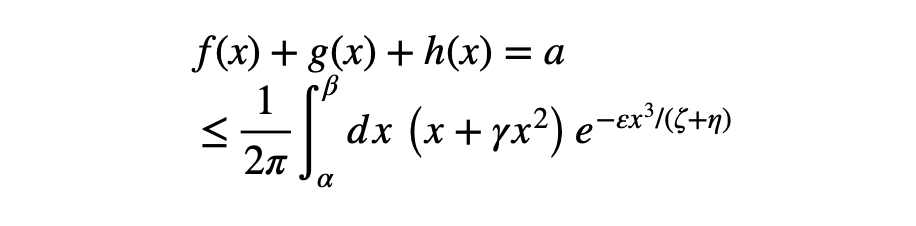
        • Example:
      2. Modify the default formatting if necessary (a) to reduce the number of lines used in a PRL submission or (b) if the initial = appears awkwardly far to the right.
        • Example of (b):
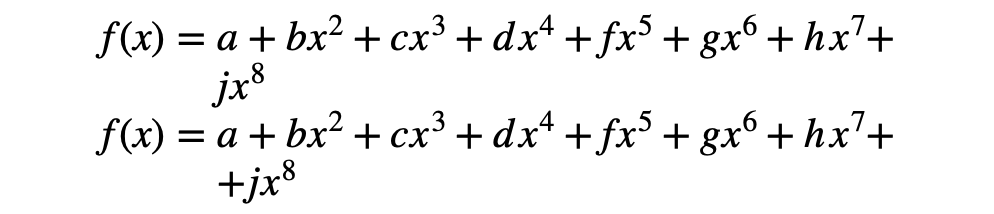
      3. Suppose a new line begins with a term or factor, such as the jx^8 in the example under (A). Put the corresponding +, –, \times, or / at the beginning of the new line, not at the end of the previous line.
        • Examples of inappropriate placement:
    14. The symbol \approx means “approximately equals”; and ~, “scales as.” Approximations convey more information than scaling relations do.
    15. Use big-O-type notation or ~ symbols, not both; they’re partially redundant.
    16. \ldots, rather than \cdots, should stand in for elements that fit a pattern.
      • Example: x_1,x_2,\ldots,x_n
    17. When using \ldots as in the previous rule, present at least two initial examples of the pattern. One can’t define the pattern.
      • Contains insufficient examples: x_1,\ldots,x_n \, . For example, if n is odd, then x_1, x_2, \ldots, x_n and x_1, x_3, \ldots, x_n fit the template.
    18. Parentheses (), square brackets [], and curly braces {} are delimiters. If you nest them, do so in the order dictated by the Physical Review style guide.
    19. If delimiters enclose a symbol, it shouldn’t protrude above or below them (unless the delimiters would have to be grotesquely enormous). Use the \left and \right commands if the delimiters appear on the same line.
    20. An operator O isn’t a matrix; a matrix represents an operator in terms of a particular basis. Therefore, no equals sign should interrelate an O and a matrix. An arrow can.
      • Example: O\to\begin{bmatrix}1&0\\0&2\end{bmatrix}
    21. Every real number is complex. Don’t say “complex” if you mean “nonreal.”
    22. Consider introducing a mathematical symbol in a prose sentence without using a comma or colon. Put the symbol immediately after the word that names the object represented by the symbol.
      • Example of inappropriate placement: the set of real numbers \{ a, b \}
      • Examples of appropriate placements
        • the set \{a, b\} of real numbers
        • the set of real numbers a and b
        • Recall the set of real numbers, \{a, b\}, in Lemma 1.
  5. More mechanics of writing
    1. Use concise sentences, as advocated for in The Elements of Style. The reader can hold only so many ideas in their head at once.
    2. Structure sentences simply, as advocated for in The Elements of Style. The reader should be able to grasp each sentence easily.
      • Avoid nesting ideas within a sentence, to avoid convoluting the sentence’s structure.
        • Example of sentence with convoluted, nested structure: Any model of equilibrium and nonequilibrium behaviors of systems observed in tabletop experiments and high-energy colliders must obey the laws of relativistic quantum mechanics.
        • Visualization of the nesting: [Any model of ([(equilibrium and nonequilibrium) behaviors] of {systems observed in [(tabletop experiments) and (high-energy colliders)]})] must obey [the laws of (relativistic quantum mechanics)].
    3. The ideal paper title has the structure of a newspaper headline: it presents a claim, containing a subject and a predicate.
    4. Regarding abbreviations:
      1. Don’t abbreviate the first word in any sentence.
      2. Abbreviate “Figure,” “Section,” “Professor,” and “Appendix” if such a word appears partway through a sentence.
      3. Don’t abbreviate “Sections.”
    5. Regarding acronyms:
      1. Write every acronym in capital letters, as per the Physical Review style guide.
      2. Introduce each acronym the first time you use it.
      3. Thereafter, use only the acronym, not the spelled-out phrase, throughout the rest of the document’s main text. You may spell out the phrase in section, figure, and table titles if doing so improves the document’s clarity.
    6. Every paragraph should contain at least three sentences.
    7. Wherever you insert a blank line into your LateX code, a new paragraph begins in the corresponding PDF. Insert a blank line only if you wish to begin a new paragraph. This advice applies immediately before and after set-off equations.
    8. Never begin a subsection immediately after a section title. Between the two titles, overview the section. Analogous rules govern subsections and subsubsections.
    9. Put the word “only” in the appropriate place.
      • For example, suppose you’ve sampled data at a point x=0 in parameter space and sampled data at no other points. “We sampled data only at x=0” is correct; “We only sampled data at x=0” is probably not. The latter claim means that (i) you might have sampled data at x=0 and (ii) you did nothing to the x=0 data apart from sample it: you didn’t analyze the x=0 data, discuss the x=0 data, etc.
  6. When in doubt, consult the Physical Review style guide or The Elements of Style.
    • If those references don’t contain the information you seek, search for it in online writing guides. Not all such guides have equal merit, however. Lean toward guides written by human editors or published by college writing centers.

1 Collaborators have wondered why I use green; a student guessed it’s my favorite color. It isn’t; but I bleed green, having graduated from the Big Green, also known as Dartmouth College. Sometimes, I highlight certain pieces of text for one reason (e.g., to point out logical inconsistencies) and other text for another reason (e.g., to point out grammatical inconsistencies). Green distinguishes the first highlightings, while orange distinguishes the second: when not bleeding Dartmouth green, I bleed Caltech orange.

2 Don’t learn how to write from physics papers. 

Wise guy

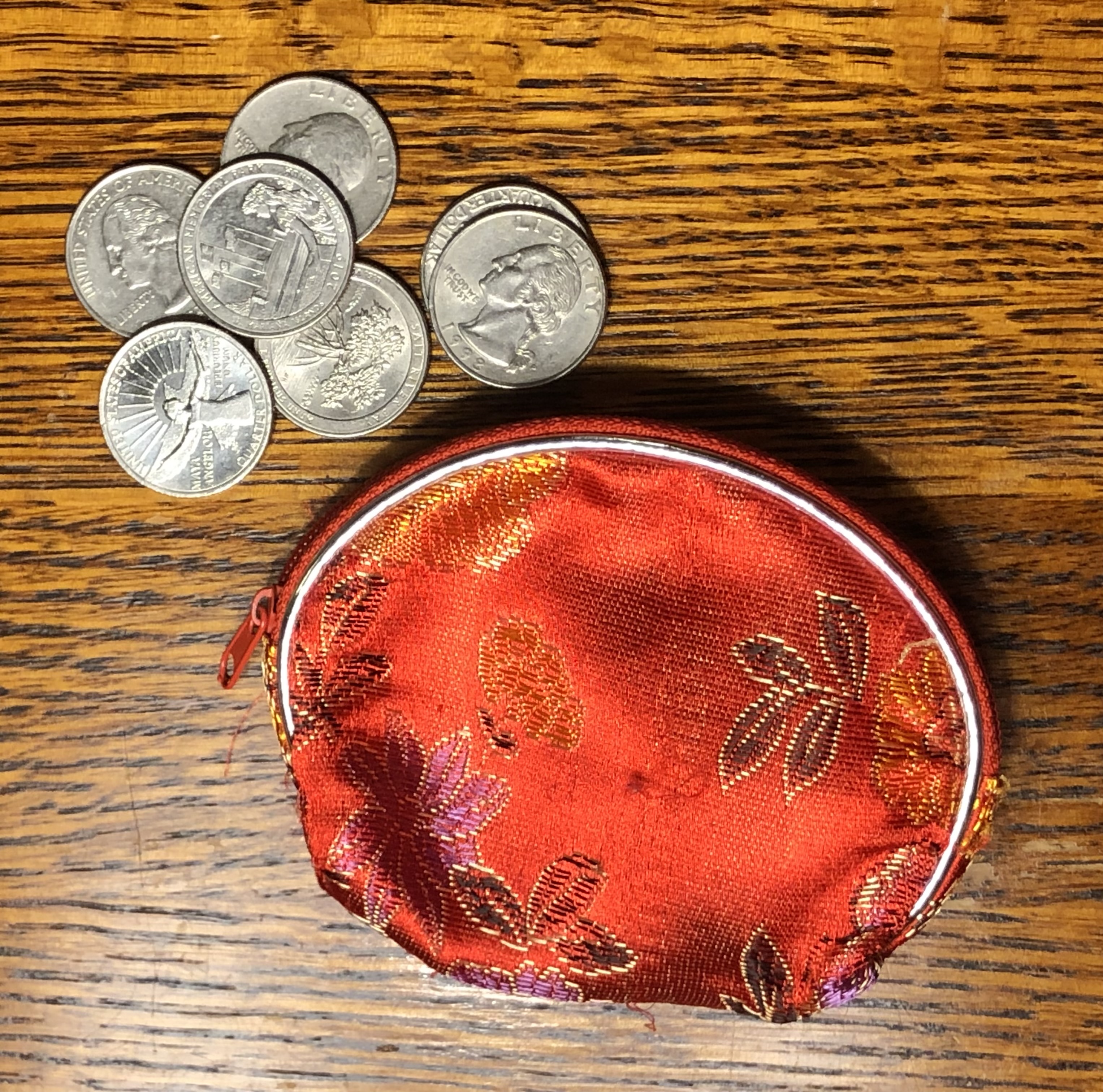
In my closet, in a basket labeled “Random stuff,” sits a bag of quarters. They total only a few dollars, but their worth to me exceeds their monetary value. I received the quarters from Mark Wise.

Mark taught a course about the Standard Model of particle physics at my master’s program at the Perimeter Institute for Theoretical Physics, near Toronto. Perimeter borrowed him from Caltech, to whose faculty he belonged. Mark had grown up in Canada and studied at the University of Toronto; so he didn’t mind visiting Canada even in the depths of winter. 

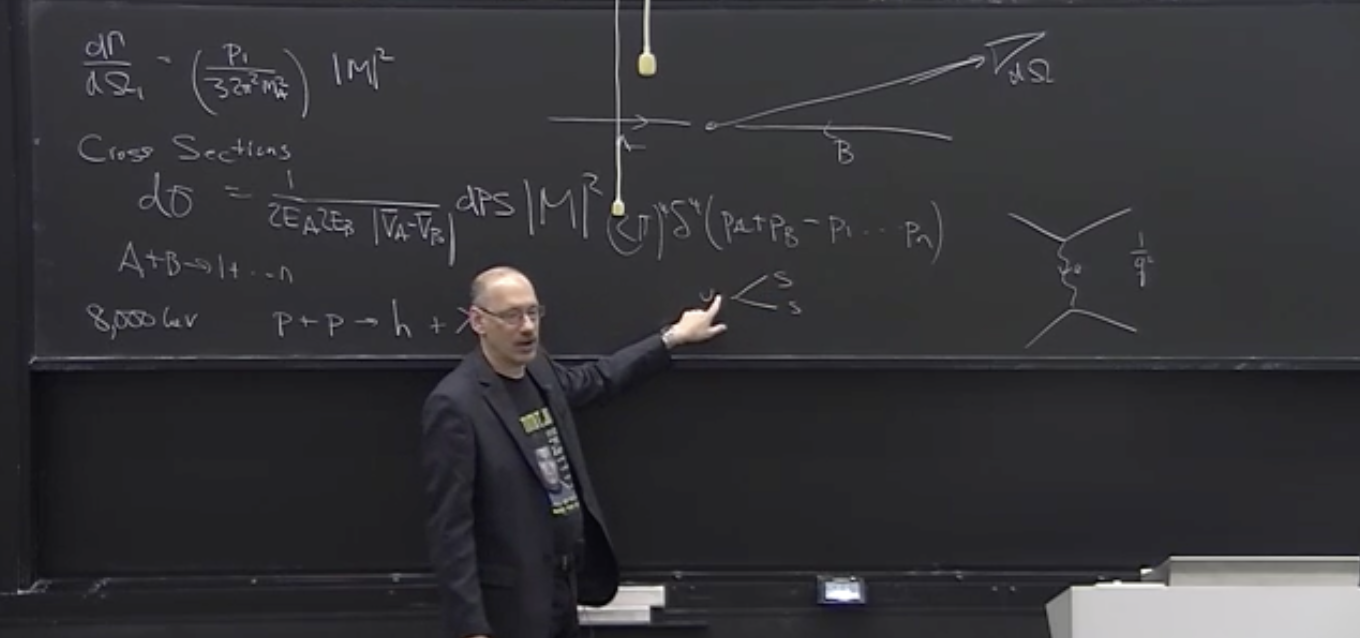
What would Mark have minded? He projected a mild manner—an innocuousness—that suited his sense of humor, which he often directed at himself. Mark had a bald patch and glasses, and he wore a mustache. Physics jokes and science-fiction references decorated his T-shirts, one of which he wore beneath a black suit jacket to our first class. His voice was nasal; it grated a little. But I relished listening to Mark’s lectures.

Mark’s lecturing exemplified clarity, because he knew particle physics so deeply. When he walked us through its Lagrangians and scattering diagrams, his conclusions seemed inescapable. His lectures’ logic and structure appealed to me as someone who’s been hyper-organized since at least fourth grade.

Yet Mark cared about us students beyond the requirements of pedagogy. His T-shirts invited conversation from those who arrived to class early. Whenever a student answered or asked a question, he tossed them a quarter. Sometimes, he’d pause to examine the quarter, deliberate about whether to toss a Canadian quarter or an American one, or opine about the motto printed on the coin. (Mark confessed to having lower standards than those ingrained in the New Hampshire state motto, “Live free or die.” Where he came from, “We just wanna live!”) 

Some days, Mark found little change in his pocket and announced that he needed to return to the bank for more quarters. The announcements sounded like complaints. He didn’t need to return to the bank, though, as nobody needs to bring doughnuts to the office for sharing.

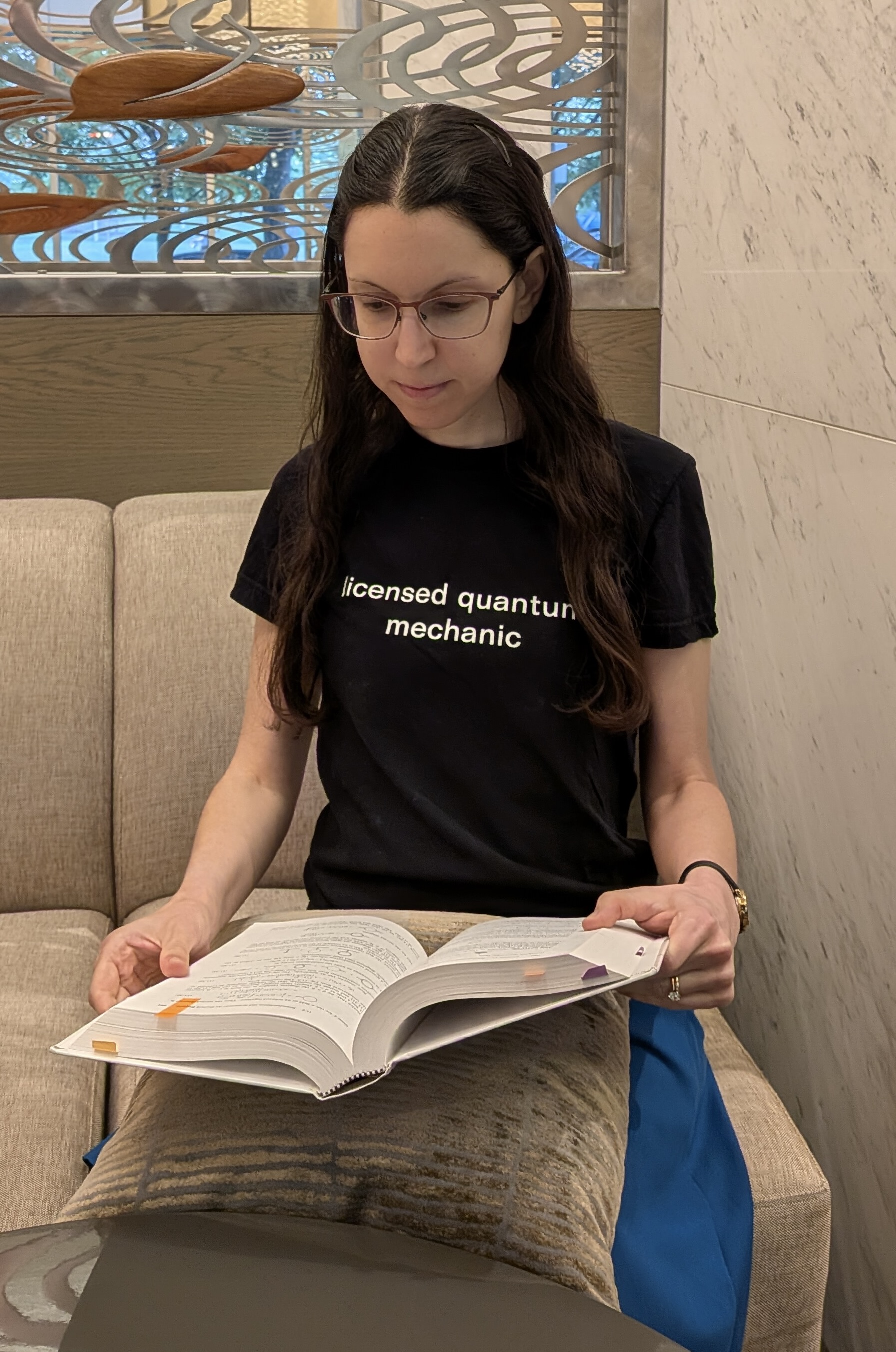
I discovered the icing on the doughnut two years later, as a PhD student at Caltech. I sat in on part of a quantum course taught by Mark. To every student who completed the course, Mark gave a T-shirt that read, “Licensed quantum mechanic.” I received a T-shirt, although I only sat in on part of the course. I’ve never worn it, because I’ve wanted never to wear it out.

In 2024 and 2025, I co-taught a course on quantum-steampunk creative writing. Students learned about quantum physics, quantum technologies, and thermodynamics. Quanta are discrete units. For example, a photon is a quantum of energy. I illustrated quanta with coins, which are discrete units of money. From then on, I tossed a quarter to every student who answered or asked a question about quantum physics. (I joked that I should have tossed pennies, the minimal units of money, but chose quarters because inflation had been high recently.) I adapted Mark’s tradition to thermodynamics—the study of energy—by tossing Hershey’s kisses—dense packets of energy. 

Before moving out of Caltech, I said goodbye to Mark. He worked among the high-energy theorists, rather than the quantum information or condensed-matter theorists, so I had to hunt down his office. He smiled and made a joke, of course.

Mark passed away this summer. His Caltech colleague John Preskill published a eulogy as a blog post here. (I learned from John’s post that inflation led Mark to upgrade his quarters to dollar coins. So much for feeling generous about upgrading from pennies to quarters.) When asked about the student experience at Caltech, Mark would say, “Caltech is heaven for professors.” Irony would creep into his voice and body language as he’d continue, “Doesn’t that mean it’s heaven for students, too?” I worked my rear off as a student at Caltech and Perimeter, but I’d call both environments fairly heavenly. Mark and his ilk are reasons why.

The physicists of Florence

A scientist in Florence can’t avoid bumping into colleagues. 

When visiting the Renaissance’s birthplace last summer, I ran into a fellow physicist even on a Saturday morning. I was wandering around the Uffizi Gallery, a museum blessed with some of the greatest hits in western art. A familiar face arrested me on the first floor.

Another colleague cropped up outside the museum. (Some might classify him as an applied physicist or an engineer, but he exhibited a theoretical physicist’s overactive imagination.)

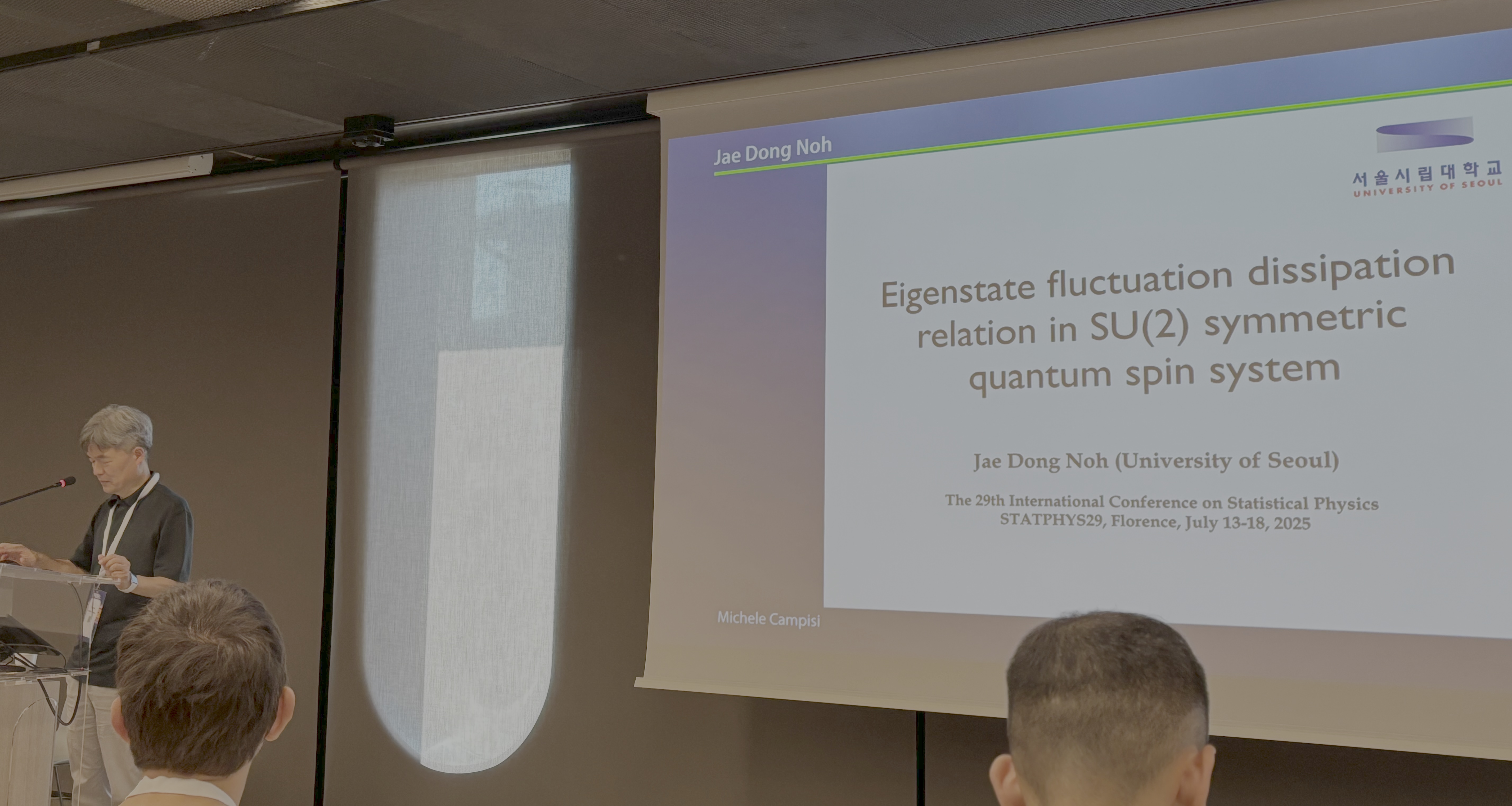
One colleague, I’d been looking forward to meeting for over four years. Jae Dong Noh is a professor of physics at the University of Seoul in South Korea. He’d conducted the first numerical tests (classical-computer simulations) of an idea I’d helped midwife, the non-Abelian eigenstate thermalization hypothesis (NAETH). An earlier blog post described this mouthful, which predicts how certain quantum many-particle systems thermalize, or experience the flow of time. These systems’ dynamics conserve properties, analogous to energy, that are incompatible: one can’t measure the properties simultaneously, as one can’t measure a quantum particle’s position and momentum simultaneously. Because incompatibility helps distinguish quantum from classical physics, such systems’ thermodynamics qualifies as particularly quantum.

Jae Dong modeled such a system and others numerically in a paper. I admired his computational techniques and his grasp of symmetries (for experts: how non-Abelian symmetries affect chaotic quantum systems’ energy-level statistics). My postdoc Aleks Lasek was planning a more thorough numerical test of the NAETH, so I reached out to Jae Dong, and a collaboration crystallized. 

Seoul operates thirteen hours ahead of Maryland, but we managed to Zoom because Jae Dong is a night owl and I’m an early bird.1 Zoom introduced me to a man perpetually dressed in a neat button-down shirt and sweater, silver overriding the black in his hair. The neatness extended to Jae Dong’s explanations: if Aleks and I didn’t understand one of his emails, he’d explain it quietly and calmly, untangling the confusion as though pulling a comb through wool.

The collaboration settled into a rhythm: I’d pose a question or propose a goal, Jae Dong would respond with an analytical calculation,2 I’d find holes in the calculation, Jae Dong would plug the holes, I’d re-check the argument’s logic, and we’d repeat the cycle. Had I been in Jae Dong’s shoes, I’d have swallowed the constant objections as I’ve swallowed grape-flavored cough medicine,3 but he always responded with equanimity—sometimes even good cheer—and a possible solution. Meanwhile, Aleks and then-undergraduate Jade LeSchack checked our analytical arguments numerically.

Florence flaunted a little steampunk during my visit.

So smoothly did the collaboration hum along that we coauthored two papers before ever meeting in person. One demonstrates numerically that two quantum many-body systems (for experts: nonintegrable Heisenberg models) obey the NAETH.4 In the other paper, we derive a symmetry relation from the NAETH. If the 17-syllable NAETH is a mouthful, the symmetry’s name is half a mouthful: a Kubo–Martin–Schwinger (KMS) relation. It’s important because (i) it enables us to calculate how rapidly a thermodynamic system responds to a stimulus, such as a weak magnetic field, and (ii) physicists go gaga over symmetries generally. 

The KMS relation constrains thermal states—essentially, systems that have temperatures. Your typical isolated many-particle quantum system looks thermal if you can observe just a small chunk of it at a time. Accordingly, Jae Dong and collaborators had proved that isolated many-particle quantum systems obey the KMS relation approximately. The larger the system, the more accurate the approximation. 

We extended his argument to systems whose dynamics conserve incompatible properties. Such an extension might sound simple, but its proof filled 24 pages of appendices. (For experts: Clebsch–Gordan coefficients are tricky blighters.) We discovered that, under certain conditions, incompatible conserved quantities can reduce the extent to which a quantum system obeys the KMS relation. Quantum incompatibility can augment deviations from conventional thermodynamics.

Italy’s architecture impressed me.

Jae Dong planned to present about our work at StatPhys, an international statistical-physics conference, which Florence was hosting in 2024. Throughout the two-and-a-half months before the conference, the KMS relation consumed our team. (For experts: Clebsch–Gordan coefficients are very tricky blighters.) I even hid in my hotel room, working and reworking our proofs, during another conference during that time. 

The toil paid off. We submitted our KMS manuscript for public scrutiny the day I flew to Florence—because not only Jae Dong would be representing our team at StatPhys. I was looking forward to meeting him there for the first time.

A corner of the hall where the StatPhys opening ceremony took place.

The StatPhys committee outdid itself. The opening ceremony unfolded in Florence’s Palazzo Vecchio, where members of the Medici dynasty once lived. Giorgio Parisi, who won a Nobel Prize for statistical physics in 2021, lectured at the ceremony.

Giorgio Parisi, with another history maker.

The meat of the conference took place in two other palaces, the Palazzo dei Congressi and the Palazzo degli Affari. In one of them, I met Jae Dong. Although we’d shown that quantum incompatibility can defy thermodynamic predictions, he met my expectations.

We discovered another thermodynamic phenomenon challenged by incompatible conserved quantities, so stay tuned for another paper and blog post. Some colleagues, one can’t avoid; others are worth engaging with again and again.

1 Aleks has confessed to night-owl habits, but physics motivates him to adapt. Some days, he’s emailed me results before even I’ve woken up. Who needs coffee when the thrill of discovery electrifies one minutes after one hops out of bed?

2 An exact calculation written out on paper, as opposed to a numerical, or approximate, calculation performed by a silicon-based classical computer.

3 Does anyone like the grape flavor? Why do companies bother producing it?

4 Rohit Patil and Marcos Rigol, too, have checked numerically that a system obeys the NAETH.

Nicole’s guide to handling failure and rejection

It’s happening. 

Your inbox registers an email from the chair of a faculty-hiring committee. With trembling fingers, you click on the message. “We’ve been grateful for the opportunity to learn about your work…The decision was very difficult…many highly qualified candidates…” Months of labor, soul-searching, strain, and anxiety give way to despair. The committee has filled the position, and not with you.

I recently published advice about how to proceed if you receive an offer of a faculty position. But what if you don’t receive an offer—what if hiring committees reject you? Or scholarship committees, grant committees, admissions committees, or potential advisors? What if a journal referee shreds your magnum opus? Or a program committee declines your submission to a conference?

Failure suffuses science as dinner suffuses a nighttime diaper, for two reasons. First, undertaking science is difficult. By “undertaking science,” I mean formulating and proving theorems, cajoling equipment into working, identifying bugs in code, extracting meaning from noisy data, etc. Second, science doesn’t unfold in a vacuum. Human beings do science within a society fraught with opinions, emotions, and limited resources. These challenges lead to the failures and rejections that this article addresses most. (If you’re a member of my group and you’re facing a failure due to the difficulty of undertaking science, come talk with me.) 

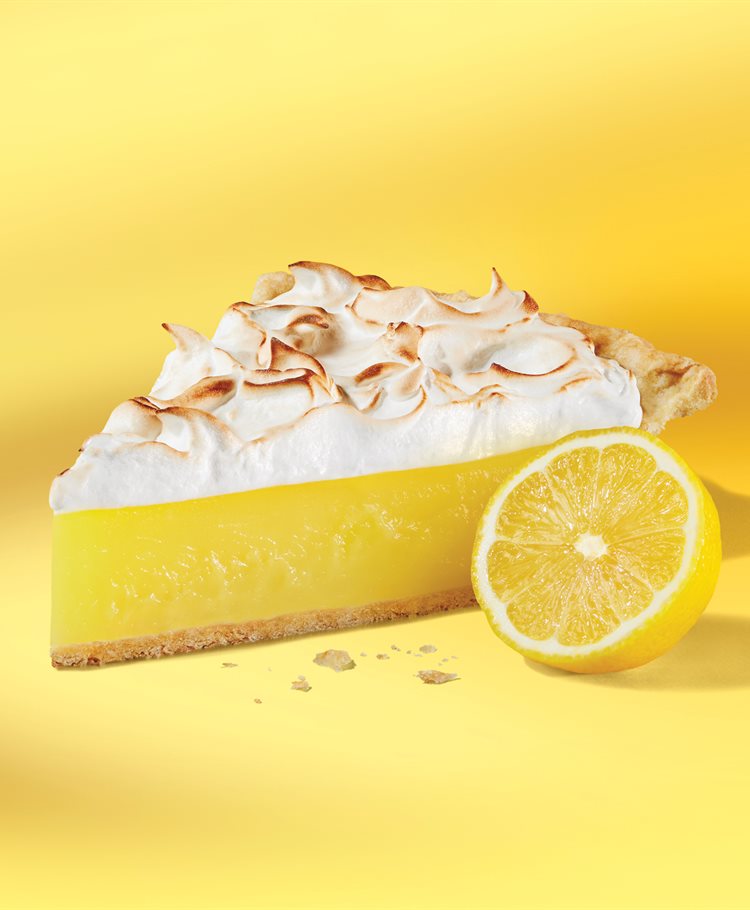
What can you do if failure or rejection ails thee? The rest of this article prescribes, in chronological order, steps that will help you recover. You can even turn your lemons into, if not lemonade, then not-entirely-unappetizing lemon meringue pie.

“O what can ail thee, knight-at-arms, alone and palely loitering?”
“The scientific life is rough.”

Immediately after receiving the news:

  • Read the communication once—or, if you must, twice. Don’t linger over the letter for longer than necessary.
  • Put the communication away, so you won’t see it unless you try to. If the news came via email, remove the message from your inbox.
  • Lower your heart rate. Electrified with anger? Expend that energy; go for a walk, for a run, or to the gym, if possible. If you can’t, breathe deeply for several minutes, extending your exhalations.
  • Review records of your successes. I maintain a folder called “Nice messages.” It contains notices of awards I’ve received, kudos on papers I’ve published, messages such as “Thanks for everything this past semester! Your class was probably my favorite one,” and every compliment I’ve received from the taciturn John Preskill via email. Review evidence—remind yourself—that you’re not a failure even though you’re experiencing failure or rejection.

Avoid thinking about the news for a few days. Imagine cutting yourself on a kitchen knife. The wound may sting and bleed initially. But the blood clots and the stinging diminishes if you cover the wound and don’t aggravate it. 

After experiencing a failure or rejection, invite a colleague to lunch, and ask about their recent reading and travels. Dive into a project that will absorb you. Visit a museum, or watch a movie. Remove the letdown from your thoughts.

Consider seeking input from a mentor, especially if you’ve never experienced a failure or rejection of this type before. Mentors have more experience and so can put obstacles in perspective. For example, suppose you’re a student who’s received an upsetting referee report from a journal. The report might look mild to a faculty member, who’s likely received far more, and more-upsetting, reports. What sounds harsh to you might sound quotidian to an advisor, whose lack of distress might reassure you. 

Also, mentors notice upsides that you’ve overlooked. Perhaps the referee trashed your presentation of an idea but tacitly approved of the idea itself. The trashing might have drowned out the approval during your reading. Yet the approval could justify a resubmission to the journal, upending your belief in the cause’s hopelessness. Relatedly, a mentor can help you identify strategies for moving past the failure. Maybe this journal won’t publish your paper but another journal is soliciting contributions to a relevant special collection.

As a PhD student, I applied for an internship at a company developing a quantum computer. I broke an obligation and flew out of state to interview for the position. No offer materialized. To process the outcome, I spoke with a more-advanced researcher I trusted. He not only offered a mature perspective, but also had access to inside information. The team liked me, he reported, but my interests didn’t overlap with theirs enough. In a sense, I’d grown too independent. As independence marks maturity in PhD students, the rejection came to double as a compliment. Today, I remain on friendly terms with multiple people from that team, and a student of mine just landed an internship at a quantum-computing company.

Someone more experienced than you should have your back. (For the story behind this photo, see this blog post.)

Chart a path past the failure or rejection. Cue the lemon meringue pie. Did a hiring committee reject an application of yours? Email the committee’s chair, thanking them for considering your application. Express your hope of improving your materials so that you can try again the following year. Ask if the chair would provide feedback via phone or Zoom.1 

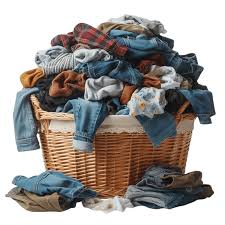
Pursue the path you’ve charted. To ease the burden, consider undertaking lighter tasks before more-arduous ones. I recently received a laundry list of requests about a manuscript from an editor—and when I say laundry, I mean the equivalent of hauling a multiple-pound bag to a stream, scrubbing everything by hand while the wind attempts to blow cleaned items into the mud, and then hauling everything back. I began with the tasks that required little effort. Dispatching them, I crossed about half the requests off my to-do list. The list looked more manageable as a result; I felt better-equipped to handle the trickiest work.

Celebrate your triumphs. Don’t let failures and rejections consume your attention; carve out time for your successes. If you recognize them, you’ll remember them the next time you face failure; they’ll cushion you when you fall.

I recently failed at a task over a hundred times (yes, I counted). After 28 months of trying, I succeeded. I celebrated by treating myself to lunch at the National Gallery of Art.2 Why not gather ye rosebuds while ye may? This success afforded me the opportunity to fail at a new task.

The National Gallery of Art sold a fairly steampunk book near its Garden Café recently.

Always remember, what matters in the long run is not any one failure or rejection, but your persistence despite failures and rejections. I progressed to the Rhodes Scholarship competition’s final round two years in a row. Each year, a committee interviewed and rejected me. I’d poured time, sweat, and blood into my applications and interview preparations. I felt like I had no more blood to squeeze into the applications I then had to write for graduate programs because of those rejections. Those rejections, though, led me to become a student of John Preskill’s. Over a decade later, I’m not kicking myself.

Result of two failures.

Share about your favorite failures in the comments section below!

1Not via email, which doesn’t offer the same freedom.

2Its Garden Café had enticed me for years, but I can rarely bring myself to pay for food when I can prepare it myself.

How I learned to stop worrying and…no, I’ve always adored entropy

When I was pursuing a PhD at Caltech, so was my friend Jeremy. He used to throw a dinner party every few months. The email invitations welcomed friends to partake of his cooking and, if we wished, to help him cook. I didn’t help cook; but, when I arrived, the mess of pots and pans drew me to the kitchen like vinegar drawing a pathological fly. I couldn’t sit still while cookware needed cleaning, so I scrubbed and rinsed the pans and spoons and bowls. Jeremy, an applied-physics student, commented on my adeptness at decreasing entropy.

It’s the story of my life, I replied.

In fourth grade, my classmates and I cleaned our desks every Friday afternoon. Once a student finished, my teacher dismissed him or her onto the playground. My neighbor’s desk horrified me like the disaster in a hurricane’s wake, so I neatened his desk after finishing with mine.1 Another friend requested the same favor. A third classmate offered to pay me for cleaning his desk, but I’d have undertaken the chore for its own sake. Ordering the world offered me fulfillment.

From cleaning a fourth-grade desk, I progressed to pursuing a PhD in theoretical physics. The two pursuits might seem to resemble each other no more than Dr. Jekyll and Mr. Hyde; yet, to me, the path between them is but a step. I trained as a theoretical physicist because I love organizing ideas. Caltech paid me to build models, propose definitions and theorems, and structure proofs—to dream up ideas and identify the optimal arrangements for them. I needed that pay, being an adult, as I hadn’t needed my fourth-grade classmate’s desk-cleaning fee. Yet I organized ideas for the same reason that drove me to organize my neighbor’s notebooks.

Many people have called entropy a measure of disorder. To see why, imagine that Jeremy’s crew has used thirty utensils while cooking. The chefs can have scattered the utensils across the kitchen in many ways: they may have dropped forks on the floor, left spoons in the sink, arranged spatulas on the drying rack, or filled a vase with knives like a modern-art bouquet. In few of these configurations do the forks lie in their compartment of the utensil drawer, the spoons lie in their compartment, etc. We call such configurations neat. Most of the other configurations, we call messy. 

A system’s entropy is the number of configurations consistent with known large-scale properties of the system, such as the number of forks.2 More configurations are consistent with messiness (and a fixed number of forks and so on) than with neatness (and the same number of forks and so on). Messiness tends to correlate with high entropy. People often say, therefore, that entropy quantifies messiness. Hence Jeremy’s complimenting me on my decreasing of entropy.

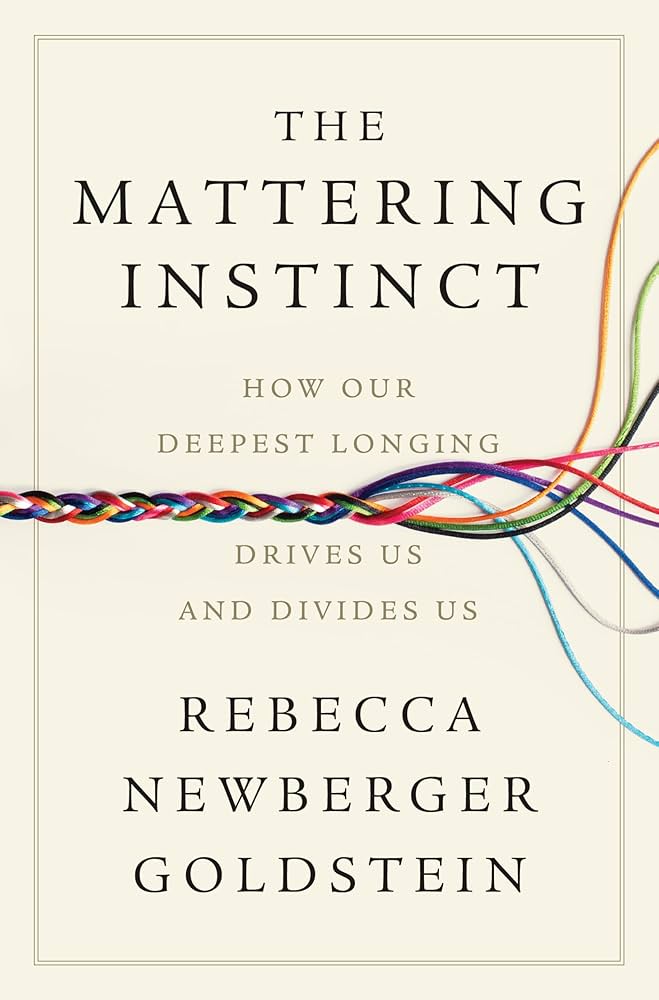
Jeremy’s dinner parties came to mind as I read the book The Mattering Instinct, published by Rebecca Newberger Goldstein this January. Rebecca is a philosopher of science and a writer. I had the good fortune to meet her through my undergraduate mentor Marcelo Gleiser, who’s had another cameo or two on Quantum Frontiers. Rebecca’s latest book covers what she calls the mattering instinct: the longing to know that we matter. 

We spend scads of energy and time on securing our “survival and flourishing,” as Rebecca says. We feed ourselves; work to earn money to purchase food; clean, shelter, and clothe ourselves; ingrain ourselves in societies that offer some degree of security; and more. Do we deserve all this effort? We long for assurance that, in the immortal words of L’Oreal, we’re worth it. 

Survival and flourishing, Rebecca writes, requires us to decrease entropy. Every closed, isolated system’s entropy increases or remains constant, according to the second law of thermodynamics. Entropy increases as a system becomes more uniform, loosely speaking. The system’s particles spread out across space, these particles’ temperature comes to equal those particles’ temperature, and so on. In contrast, your body exists because its particles clump together in a certain shape consistently. You withstand heat waves and snow because homeostasis maintains your temperature despite your environment’s temperature. You keep your body’s entropy low to survive. Rebecca therefore casts us as fighting entropy.

As a thermodynamicist, I agree with Rebecca. Yet I also adore entropy. It helps explain why time flows, quantifies uncertainty, and determines the maximal efficiencies with which we can perform tasks such as communication. What versatility and richness! Entropy also embodies tension and subtlety: its mathematical definition looks obscure at first glance, yet entropy helps explain familiar phenomena such as aging. For these reasons, before beginning my PhD, I told a potential advisor that I could imagine devoting the next five years of my life to entropy.

I therefore aspire to rehabilitate entropy’s reputation. Novelist Terry Pratchett endeared mortality to millions of readers through anthropomorphism. His character Death, a mainstay of the Discworld series of novels, elicits empathy and fondness. I won’t anthropomorphize entropy here,3 but I aim to replace conflict with cooperation in the narrative above. To survive and flourish, I hold, we partner with entropy. How? We create oodles of entropy in our environments. This entropy increase offsets the entropy decrease that supports life.

For example, imagine working at a desalination plant. You’d process high-entropy water throughout which salt has spread. You’d concentrate the salt in a tiny region, reducing the water’s entropy. This reduction, producing fresh water, could support your city’s drinking, cooking, and toothbrushing needs.

To reduce the water’s entropy, you’d create loads more entropy. You’d eat breakfast before work, consuming energy stored neatly in your waffle’s chemical bonds. Your body would later break the bonds, releasing the energy. Some energy would power your muscles, so you could program the desalination system, test its output, etc. But much of the chemical energy would transform into heat radiated by your body. The heat would warm up the air molecules around you, magnifying their random jigglings and jostlings. You’d increase the entropy of the air—your environment—to decrease the water’s entropy. The air’s entropy increase would outweigh the water’s entropy decrease.

Organisms survive and flourish by producing entropy in their environments. In fact, organisms have a knack for generating entropy. Entropy and life thereby further each other. A glass-half-full thinker could conclude that we partner with entropy.

So did I partner with entropy as a PhD student, applying it to solve problems in quantum information theory and thermodynamics. So did I partner with entropy in fourth grade and at Jeremy’s apartment, deriving satisfaction from my cleaning. Rebecca would call these activities’ ultimate aim (beyond the aim of, e.g., not sitting beside a pigsty in fourth grade) mattering. She writes that we reduce entropy (within our immediate vicinities) to satisfy the mattering instinct. Rebecca’s proposition describes my behaviors with uncanny precision, I realized upon reading her book.

Which I’ve now finished. So pardon me while I return to washing forks in the quantum kitchen of the universe. 

With thanks to Jeremy for his friendship…and food.

1I also ensured that my neighbor brought home, every afternoon, the sweater he’d brought to school that morning. Before I took charge, he’d ended up with three forgotten sweaters crammed into his cubby.

2At least, one entropy is. Many other entropies exist.

3If you anthropomorphize entropy elsewhere, let me know.

Nicole’s guide to navigating faculty-position offers

It’s happening. 

Your inbox registers an email from the chair of a faculty-hiring committee. With trembling fingers, you click on the message. “We were very impressed…we’re delighted to offer…” Months of labor, soul-searching, strain, and anxiety give way to jubilation. You hug your partner/roommate/mom/dog; throw an impromptu dance party; and forward the email, prefaced with five exclamation points, to your mentor.1 

As your heart rate returns to a level less likely to alarm a cardiologist, a new source of uncertainty puckers your brow. You’ve received an offer of a faculty position. What happens now? How should you proceed?

This article will address those questions. It follows my guide to faculty interviews, which follows my guide to writing research statements. Like the former guide, this one pertains most to theoretical physicists seeking assistant professorships at R1-level North American universities. Yet all the advice pertains to candidates outside this pool.

The institution will bring you (and, if relevant, your partner) over for a visit. Yes, you visited to interview; but you’re now visiting for another purpose. Assess whether you and your family could flourish if you accepted the offer. Which neighborhoods might you like to live in? Could you tolerate the commute to campus? Vide infra for more questions to keep in mind.

Politely notify the other hiring committees that interviewed you and that are still considering your application. You’ll do the other committees a kindness: their chances of hiring you have narrowed. If they wish to lure you, they’ll need to act quickly. The notice may bump you up in their priority lists. Did the first institution request that you decide about its offer by some deadline? If so, notify the other institutions.

Gather all the information you need. The department may offer to put you in touch with faculty members, deans, and more. Request more connections if necessary. Approach each conversation with a list of questions, and take notes. How will the tenure process unfold? How do early-career faculty members characterize their experiences with it? To what extent does the department shield early-career faculty from administrative duties (serving on committees)? How do the institutions’ policies address parental leave and elder care? If you have a child as an assistant professor, will your tenure clock pause for a year (will you be able to build your credentials for an extra year before applying for tenure)? In which neighborhoods should you search for a house?  

List your priorities. Rank them. Measure each offer against each criterion. Here are example priorities that you might wish to include:

  • Salary
  • Startup package
  • Type of environment: Do you want to live in a city, in the suburbs, or in the country? Do you drive, or would you learn to drive?
  • Length of commute
  • Geographical location: Do you prefer to live near family? 
  • Proximity, and means of transportation, to an airport: You might commute to and from that airport many times to participate in conferences, present seminars, etc. How much time and exhaustion would the experience cost?
  • Local school system: If you have or might have children, where would they learn?
  • Partner’s needs: Do you have a partner who would need to find a job near yours?
  • Proximity of faculty with whom you could collaborate
  • Courtesy positions in other departments: Suppose you’re a physicist who studies quantum computation. You might want to recruit students from the computer-science or math department occasionally. Could you? Would you need a courtesy position in the other department? A courtesy appointment offers you limited privileges at the cost of limited responsibilities: you probably won’t be able to vote in the other department’s faculty meetings. On the other hand, you probably won’t need to spend time on those faculty meetings.
  • Academic quality of undergraduate/graduate population
  • Presence of an institute/center dedicated to your specialization
  • Lab space: location, size, quality, renovations available, how soon and quickly the university would undertake those renovations
  • Help with finding housing: Some universities have apartments that new faculty can rent for a year or two. Other universities offer real-estate-agent services or help faculty obtain mortgages (*cough* San Francisco Bay area *cough*). 
  • Administrative assistance for you and your research group
  • Protection from onerous service to the department until you reach tenure
  • Teaching relief granted en route to tenure: At some universities, a new faculty member can avoid teaching their usual course load during one or two semesters. Such relief frees you to buff up your research program while pursuing tenure.
  • Deferral: Deferring an offer, you postpone the time at which you take up the new mantle. When I accepted a permanent position, I was completing year two of a three-year postdoctoral fellowship. I wanted to complete the final year before assuming my new role: I was still finishing projects with the community to which I belonged, and I wanted to continue deepening my ties with that community. Also, I enjoyed undertaking research without the distraction of a primary investigator’s administrative responsibilities. Other people defer their start dates for other reasons. For example, a partner might need time to fulfill a contract where they live and work. In my experience, people tend to defer PI positions for approximately twelve months, give or take six months. Some institutions don’t offer deferrals, though.

Identify everything you’ll need in a startup package. A startup package helps cover your research program’s costs until you’ve won your first grants. Multiple organizations within a university might contribute to a startup package—for example, a department and an institute that cuts across departments. The hiring committee might propose a startup package to you, or the committee might ask you what you need. Either way, you can (and should) negotiate the package. 

View the negotiation in terms of the question “What do I need to succeed?” List every item, and estimate its cost. Don’t skimp on rigor: estimate prices to the single-dollar level of precision. Such precision helps demonstrate the thoroughness of the research behind your list—helps demonstrate that you need every dollar you seek. 

Request more funding than you believe you’ll need, because you will need more than you believe. Build the breathing room into your estimates. For example, assume that your academic visitors will fly from across the country or across the world. Assume that you’ll fly such distances to present talks. Estimating how much you’ll pay a student or postdoc throughout the next few years? Don’t forget that the university might raise salaries and benefits under a cost-of-living adjustment (COLA) every year. COLAs fluctuate across years, so assume you’ll face steep ones. 

Here are examples of items that a startup package can include:

  • Summer salary: Your institution won’t pay your salary during the summer; you’ll need to fund yourself through grants. A startup package can cover the initial summers.
  • Lab equipment
  • Computers and tablets for you and your group members: Don’t forget protective cases, AppleCare or a non-Apple equivalent, implements for writing on tablets, external mice, and external monitors. Check whether your department or institute has spare mice or monitors that you can requisition.
  • Other computational resources: Does the department have a computational cluster that you intend to use? Do you need to access a national lab’s supercomputer or a quantum computer available on the cloud? How much will you pay per unit time and memory?
  • Postdoc costs: These costs include a salary, benefits, and the cost of moving to your institution. The salary will increase from year to year if the institution implements a COLA. The benefits include healthcare, dental care, and the like. Administrators might call benefits “fringe,” as I discovered after considerable confusion. 
  • Graduate-student costs: These costs include a research assistantship, benefits, and possibly tuition. The salary might increase as a student progresses through the stages of their PhD, particularly once they achieve candidacy. Their need for tuition might change, too. Check whether domestic students cost more than international students, and budget for international students.
  • Undergraduate researchers: Do you plan to employ an undergraduate during the summer? Throughout the academic year?2 
  • Travel for yourself: Budget several trips per year for yourself. You’ll need to spread the word about your research and to grow your network en route to tenure.
  • Travel for your postdocs and students: A mentor shared that she covers one conference per year per group member. You might want to budget also for a seminar or two per group member per year.
  • Visitors: Visitors can boost your research program. Budget for week-long visits if your institution can accommodate them.

Negotiate. Even if your dream school has offered you your dream job. Even if you receive only one offer. You might still garner resources that can help your research program and family to thrive. Don’t feel shy, sheepish, or ashamed to negotiate. If you remain polite and considerate, you won’t offend anyone. Besides, the hiring committee, department chair, and dean expect you to negotiate. The department chair might even hope that you do so; vide infra. 

When I was a PhD student, Caltech offered a workshop about negotiation to women grad students. The workshop helped participants build skills, knowledge, and self-assurance that would benefit us when we negotiated contracts. I recommend attending a workshop, taking a course, reading a book, or watching videos about negotiation. Contact your institution’s professional-development office about opportunities and suggestions. If you’re reading this blog post before applying for jobs—any jobs—start now.

What can you negotiate for? Many of the items on your list of priorities. Certain institutions might lack the freedom to negotiate certain items, though. For example, a union might determine salaries. Don’t let such a discovery discourage you; explore the options thoroughly.

View the department chair as an ally. The department chair negotiates on your behalf with administrators higher up in the university hierarchy, such as deans. The chair aims to garner as many resources as possible for you—and, by extension, for their department. Explain to the department chair (or to the committee chair who might explain to the department chair) what you need and why you need it, to help strengthen their argument.

As soon as you know you’ll decline an offer, decline it politely. Your notification will free the committee to attract another candidate. Imagine you’re Candidate #2 on the priority list. Wouldn’t you want the current offer recipient to decline their offer as soon as their conscience allows? Now, imagine you’re the hiring-committee chair. You’re worried that Candidate #1 will decline—and, by the time they decline, other institutions will have snapped up the other top candidates. As Candidate #1, demonstrate toward the committee chair and toward Candidate #2 the consideration that you’d value if in their shoes.

Savor the moment. You’ve just survived the faculty-application process, one of the most stressful periods of your life. The faculty life is no walk in the park, either. Nor will you necessarily sleep soundly between the receipt of your first offer and your signing of a contract. The prospect of more offers could leave you in limbo. If you receive multiple offers, choosing between them—choosing the course of your and your family’s life—may stress you as much as applying did. So remember to feel grateful for the source of your anxiety. Give yourself credit for your accomplishment. 

Congratulations!

1Please do! They’ll want to celebrate with you.

2I recommend targeting undergrads who’ll work with you for more than a summer. Training an undergrad takes nearly a summer; you and the student will benefit from having time to take advantage of that training.

Quantum cartography

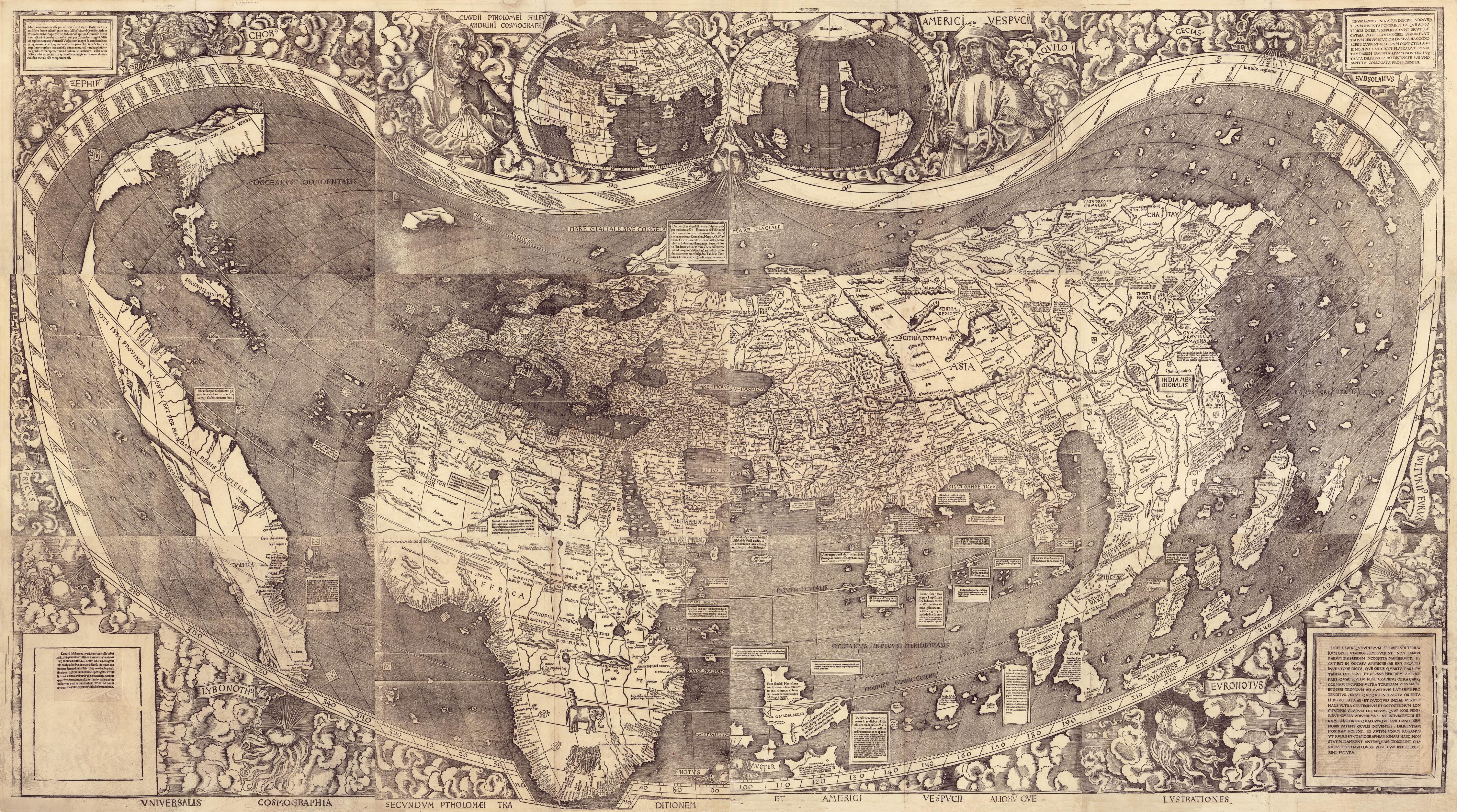
My husband and I visited the Library of Congress on the final day of winter break this year. In a corner, we found a facsimile of a hand-drawn map: the world as viewed by sixteenth-century Europeans. North America looked like it had been dieting, having shed landmass relative to the bulk we knew. Australia didn’t appear. Yet the map’s aesthetics hit home: yellowed parchment, handwritten letters, and symbolism abounded. Never mind street view; I began hungering for an “antique” setting on Google maps.

1507 Waldseemüller Map, courtesy of the Library of Congress

Approximately four weeks after that trip, I participated in the release of another map: the publication of the review “Roadmap on quantum thermodynamics” in the journal Quantum Science and Technology. The paper contains 24 chapters, each (apart from the introduction) profiling one opportunity within the field of quantum thermodynamics. My erstwhile postdoc Aleks Lasek and I wrote the chapter about the thermodynamics of incompatible conserved quantities, as Quantum Frontiers fans1 might guess from earlier blog posts.

Allow me to confess an ignoble truth: upon agreeing to coauthor the roadmap, I doubted whether it would impact the community enough to merit my time. Colleagues had published the book Thermodynamics in the Quantum Regime seven years earlier. Different authors had contributed different chapters, each about one topic on the rise. Did my community need such a similar review so soon after the book’s publication? If I printed a map of a city the last time I visited, should I print another map this time?

Apparently so. I often tout the swiftness with which quantum thermodynamics is developing, yet not even I predicted the appetite for the roadmap. Approximately thirty papers cited the arXiv version of the paper during the first nine months of its life—before the journal publication. I shouldn’t have likened the book and roadmap to maps of a city; I should have likened them to maps of a terra incognita undergoing exploration. Such maps change constantly, let alone over seven years.

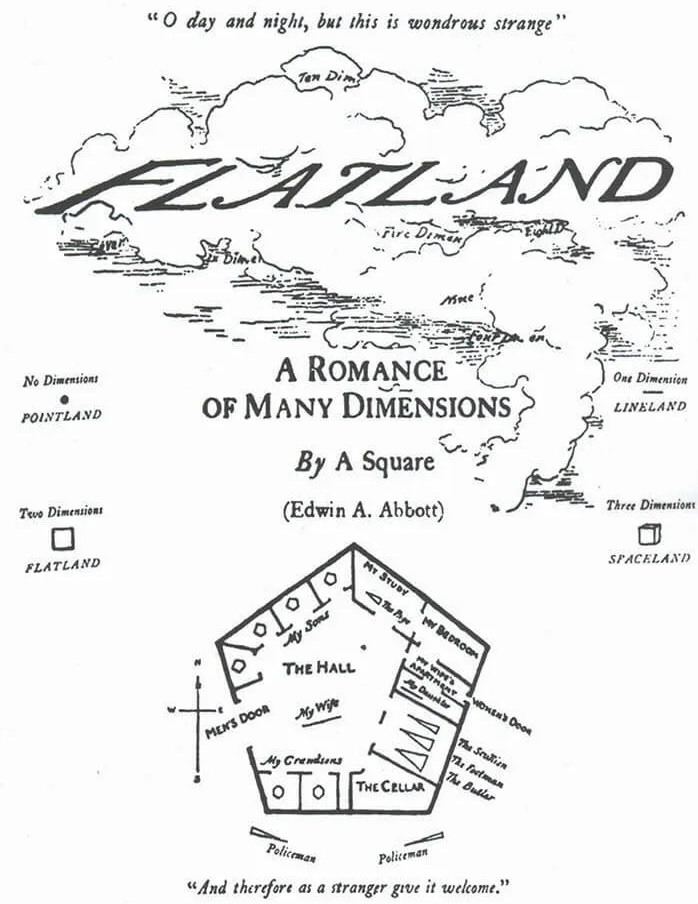
A favorite map of mine, from a book

Two trends unite many of the roadmap’s chapters, like a mountain range and a river. First, several chapters focus on experiments. Theorists founded quantum thermodynamics and dominated the field for decades, but experimentalists are turning the tables. Even theory-heavy chapters, like Aleks’s and mine, mention past experiments and experimental opportunities.

Second, several chapters blend quantum thermodynamics with many-body physics. Many-body physicists share interests with quantum thermodynamicists: thermalization and equilibrium, the absence thereof, and temperature. Yet many-body physicists belong to another tribe. They tend to interact with each other differently than quantum thermodynamicists do, write papers differently, adhere to different standards, and deploy different mathematical toolkits. Many-body-physicists use random-matrix theory, mean field theory, Wick transformations, and the like. Quantum thermodynamicists tend to cultivate and apply quantum information theory. Yet the boundary between the communities has blurred, and many scientists (including yours truly) shuttle between the two.

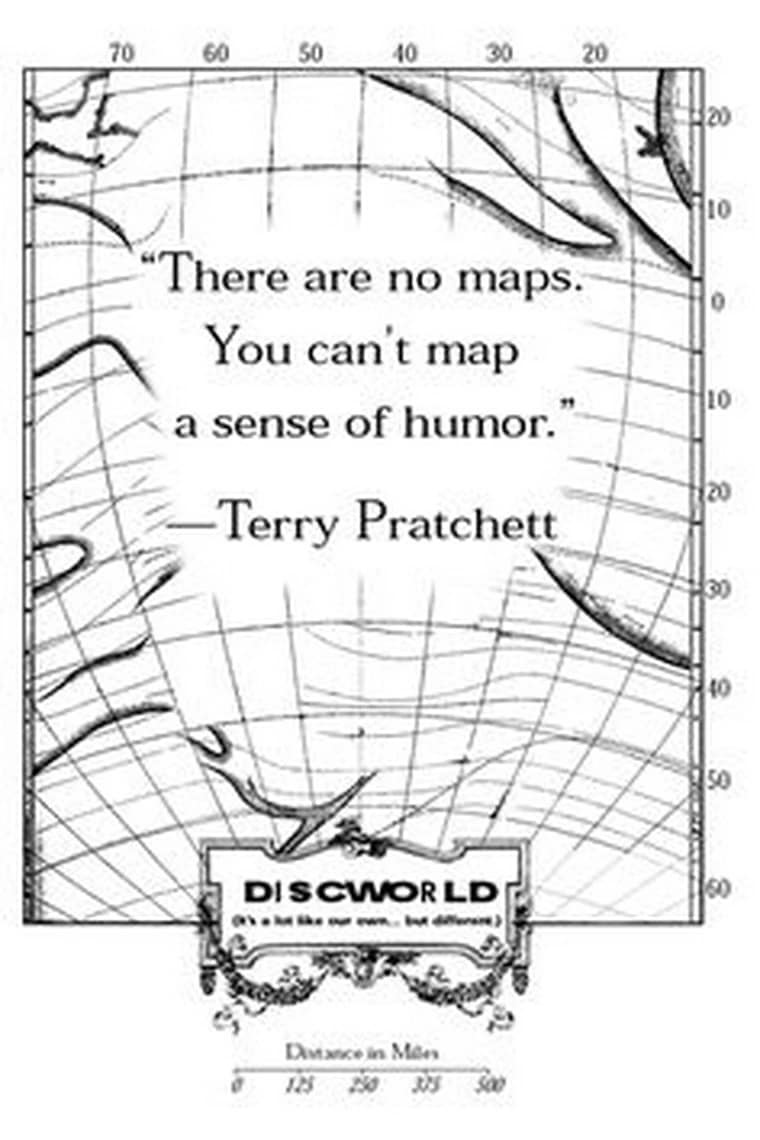
My favorite anti-map, from another book (series)

When Quantum Science and Technology published the roadmap, lead editor Steve Campbell announced the event to us coauthors. He’d wrangled the 69 of us into agreeing to contribute, choosing topics, drafting chapters, adhering to limitations on word counts and citations, responding to referee reports, and editing. An idiom refers to the herding of cats, but it would gain in poignancy by referring to the herding of academics. Little wonder Steve wrote in his email, “I’ll leave it to someone else to pick up the mantle and organise Roadmap #2.” I look forward to seeing that roadmap—and, perhaps, contributing to it. Who wants to pencil in Australia with me?


1Hi, Mom and Dad.

Nicole’s guide to interviewing for faculty positions

Snow is haunting weather forecasts, home owners are taking down Christmas lights, stores are discounting exercise equipment, and faculty-hiring committees are winnowing down applications. In-person interviews often take place between January and March but can extend from December to April. If you applied for faculty positions this past fall and you haven’t begun preparing for interviews, begin. This blog post relates my advice about in-person interviews. It most directly addresses assistant professorships in theoretical physics at R1 North American universities, but the advice generalizes to other contexts. 

Top takeaway: Your interviewers aim to confirm that they’ll enjoy having you as a colleague. They’ll want to take pleasure in discussing a colloquium with you over coffee, consult you about your area of expertise, take pride in your research achievements, and understand you even if your specialty differs from theirs. You delight in learning and sharing about physics, right? Focus on that delight, and let it shine.

Anatomy of an interview: The typical interview lasts for one or two days. Expect each day to begin between 8:00 and 10:00 AM and to end between 7:00 and 8:30 PM. Yes, you’re justified in feeling exhausted just thinking about such a day. Everyone realizes that faculty interviews are draining, including the people who’ve packed your schedule. But fear not, even if you’re an introvert horrified at the thought of talking for 12 hours straight! Below, I share tips for maintaining your energy level. Your interview will probably involve many of the following components:

  • One-on-one meetings with faculty members: Vide infra for details and advice.
  • A meeting with students: Such meetings often happen over lunch or coffee.
  • Scientific talk: Vide infra.
  • Chalk talk: Vide infra.
  • Dinner: Faculty members will typically take you out to dinner. However, as an undergrad, I once joined a student dinner with a faculty candidate. Expect dinner to last a couple of hours, ending between 8:00 and 8:30 PM.
  • Breakfast: Interviews rarely extend to breakfast, in my experience. But I once underwent an interview whose itinerary was so packed, a faculty member squeezed himself onto the schedule by coming to my hotel’s restaurant for banana bread and yogurt.

After receiving the interview invitation, politely request that your schedule include breaks. First, of course, you’ll thank the search-committee chair (who probably issued the invitation), convey your enthusiasm, and opine about possible interview dates. After accomplishing those tasks, as a candidate, I asked that a 5-to-10-minute break separate consecutive meetings and that 30–45 minutes of quiet time precede my talk (or talks). Why? For two reasons.

First, the search committee was preparing to pack my interview day (or days) to the gills. I’d have to talk for about twelve hours straight. And—much as I adore the physics community, adore learning about physics from colleagues, and adore sharing physics—I’m an introvert. Such a schedule exhausts me. It would probably exhaust all but the world champions of extroversion, and few physicists could even qualify for that competition. After nearly every meeting, I’d find a bathroom, close my eyes, and breathe. (I might also peek at my notes about my next interviewee; vide infra.) The alone time replenished my energy.

Second, committees often schedule interviews back to back. Consecutive interviews might take place in different buildings, though, and walking between buildings doesn’t take zero minutes. Also, physicists love explaining their research. Interviewer #1 might therefore run ten minutes over their allotted time before realizing they had to shepherd me to another building in zero minutes. My lateness would disrespect Interviewer #2. Furthermore, many interviews last only 30 minutes each. Given 30 - 10 - (\gtrsim 0) \approx 15 minutes, Interviewer #2 and I could scarcely make each other’s acquaintance. So I smuggled travel time into my schedule.

Feel awkward about requesting breaks? Don’t worry; everyone knows that interview days are draining. Explain honestly, simply, and respectfully that you’re excited about meeting everyone and that breaks will keep you energized throughout the long day.

Research your interviewers: A week before your interview, the hiring committee should have begun drafting a schedule for you. The schedule might continue to evolve until—and during—your interview. But request the schedule a week in advance, and research everyone on it.

When preparing for an interview, I’d create a Word/Pages document with one page per person. On Interviewer X’s page, I’d list relevant information culled from their research-group website, university faculty pages, arXiv page, and Google Scholar page. Does X undertake theoretical or experimental research? Which department do they belong to? Which experimental platform/mathematical toolkit do they specialize in? Which of their interests overlap with which of mine? Which papers of theirs intrigue me most? Could any of their insights inform my research or vice versa? Do we share any coauthors who might signal shared research goals? I aimed to be able to guide a conversation that both X and I would enjoy and benefit from.

Ask your advisors if they know anybody on your schedule or in the department you’re visiting. Advisors know and can contextualize many of their peers. For example, perhaps X grew famous for discovery Y, founded subfield Z, or harbors a covert affection for the foundations of quantum physics. An advisor of yours might even have roomed with X in college.

Prepare an elevator pitch for your research program: Cross my heart and hope to die, the following happened to me when I visited another institution (although not to interview). My host and I stepped into elevator occupied by another faculty member. Our conversation could have served as the poster child for the term “elevator pitch”:

Host: Hi, Other Faculty Member; good to see you. By the way, this is Nicole from Maryland. She’s giving the talk today.

Other Faculty Member: Ah, good to meet you, Nicole. What do you work on?

Be able to answer that question—to synopsize your research program—before leaving the elevator. Feel free start with your subfield: artificial active matter, the many-body physics of quantum information, dark-matter detection, etc. But the subfield doesn’t suffice. Oodles of bright-eyed, bushy-tailed young people study the many-body physics of quantum information. How does your research stand out? Do you apply a unique toolkit? Are you pursuing a unique goal? Can you couple together more qubits than any other experimentalist using the same platform? Make Other Faculty Member think, Ah. I’d like to attend that talk.

Dress neatly and academically: Interview clothing should demonstrate respect, while showing that you understand the department’s culture and belong there. Almost no North American physicists wear ties, even to present colloquia, so I advise against ties. Nor do I recommend suits. 

To those presenting as male, I’d recommend slacks; a button-down shirt; dark shoes (neither sneakers nor patent leather); and a corduroy or knit pullover, a corduroy or knit vest, or a sports jacket. If you prefer a skirt or dress, I’d recommend that it reach at least your knees. Wear comfortable shoes; you’ll stand and walk a great deal. Besides, many interviews take place during the winter, a season replete with snow and mud. I wore knee-height black leather boots that had short, thick heels.

Look the part. Act the part. Help your interviewers envision you in the position you want.

Pack snacks: A student group might whisk you off to lunch at 11:45, but dinner might not begin until 6:30. Don’t let your blood-sugar level drop too low. On my interview days, I packed apple slices and nuts: a balance of unprocessed sugar, protein, and fat.

One-on-one meetings: The hiring committee will cram these into your schedule like sardines into a tin. Typically, you’ll meet with each faculty member for approximately 30 minutes. The faculty member might work in your area of expertise, might belong to the committee (and so might subscribe to a random area of expertise), or might simply be curious about you. Prepare for these one-on-one meetings in advance, as described above. Review your notes on the morning of your interview. Be able to initiate and sustain a conversation of interest to you and your interlocutor, as well as to follow their lead. Your interlocutor might want to share their research, ask technical questions about your work, or hear a bird’s-eye overview of your research program. 

Other topics, such as teaching and faculty housing, might crop up. Feel free to address these subjects if your interlocutor introduces them. If you’re directing the conversation, though, I’d focus mostly on physics. You can ask about housing and other logistics if you receive an offer, and these topics often arise at faculty dinners.

The job talk: The interview will center on a scientific talk. You might present a seminar (perhaps billed as a “special seminar”) or a colloquium. The department will likely invite all its members to attend. Focus mostly on the research you’ve accomplished. Motivate your research program, to excite even attendees from outside your field. (This blog post describes what I look for in a research program when evaluating applications.) But also demonstrate your technical muscle; show how your problems qualify as difficult and how you’ve innovated solutions. Hammer home your research’s depth, but also dedicate a few minutes to its breadth, to demonstrate your research maturity. At the end, offer a glimpse of your research plans. The hiring committee might ask you to dwell more on those in a chalk talk (vide infra). 

Practice your talk alone many times, practice in front of an audience, revise the talk, practice it alone again many times, and practice it in front of another audience. And then—you guessed it—practice the talk again. Enlist listeners from multiple subfields of physics, including yours. Also, enlist grad students, postdocs, and faculty members. Different listeners can help ensure that you’re explaining concepts understandably, that you’ve brushed up on the technicalities, and that you’re motivating your research convincingly.

A faculty member once offered the following advice about questions asked during job talks: if you don’t know an answer, you can offer to look it up after the talk. But you can play this “get out of jail free” card only once. I’ll expand on the advice: if you promise to look up an answer, then follow through, and email the answer to the inquirer. Also, even if you don’t know an answer, you can answer a related question that’ll satisfy the inquirer partially. For example, suppose someone asks whether a particular experiment supports a prediction you’ve made. Maybe you haven’t checked—but maybe you have checked numerical simulations of similar experiments.

The chalk talk: The hiring committee might or might not request a chalk talk. I have the impression that experimentalists receive the request more than theorists do. Still, I presented a couple of chalk talks as a theorist. Only the hiring committee, or at least only faculty members, will attend such a talk. They’ll probably have attended your scientific talk, so don’t repeat much of it. 

The name “chalk talk” can deceive us in two ways. First, one committee requested that I prepare slides for my chalk talk. Another committee did limit me to chalk, though. Second, the chalk “talk” may end up a conversation, rather than a presentation.

The hiring-committee chair should stipulate in advance what they want from your chalk talk. If they don’t, ask for clarification. Common elements include the following:

  • Describe the research program you’ll pursue over the next five years.
  • Where will you apply for funding? Offer greater detail than “the NSF”: under which NSF programs does your research fall? Which types of NSF grants will you apply for at which times?
  • How will you grow your group? How many undergrads, master’s students, PhD students, and postdocs will you hire during each of the next five years? When will your group reach a steady state? How will the steady state look?
  • Describe the research project you’ll give your first PhD/master’s/undergraduate student.
  • What do you need in a startup package? (A startup package consists of university-sourced funding. It enables you to hire personnel, buy equipment, and pay other expenses before landing your first grants.)
  • Which experimental/computational equipment will you purchase first? How much will it cost?
  • Which courses do you want to teach? Identify undergraduate courses, core graduate-level courses, and one or two specialized seminars.

Sample interview questions: Sketch your answers to the following questions in bullet points. Writing the answers out will ensure that you think through them and will help you remember them. Using bullet points will help you pinpoint takeaways.

  • The questions under “The chalk talk”
  • What sort of research do you do?
  • What are you most excited about?
  • Where do you think your field is headed? How will it look in five, ten, or twenty years?
  • Which paper are you proudest of?
  • How will you distinguish your research program from your prior supervisors’ programs?
  • Do you envision opportunities for theory–experiment collaborations?
  • What teaching experience do you have? (Research mentorship counts as teaching. Some public outreach can count, too.)
  • Which mathematical tools do you use most?
  • How do you see yourself fitting into the department? (Does the department host an institute for your subfield? Does the institute have oodles of theorists whom you’ll counterbalance as an experimentalist? Will you bridge multiple research groups through your interdisciplinary work? Will you anchor a new research group that the department plans to build over the next decade?)

Own your achievements, but don’t boast: At a workshop late in my PhD, I heard a professor describe her career. She didn’t color her accomplishments artificially; she didn’t sound arrogant; she didn’t even sound as though she aimed to impress her audience. She sounded as though the workshop organizer had tasked her with describing her work and she was following his instructions straightforwardly, honestly, and simply. Her achievements spoke for themselves. They might as well have been reciting Shakespeare, they so impressed me. Perhaps we early-career researchers need another few decades before we can hope to emulate that professor’s poise and grace. But when compelled to describe what I’ve done, I lift my gaze mentally to her.

My schooling imprinted on me an appreciation for modesty. Therefore, the need to own my work publicly used to trouble me. But your interviewers need to know of your achievements: they need to respect you, to see that you deserve a position in their department. Don’t downplay your contributions to collaborations, and don’t shy away from claiming your proofs. But don’t brag or downplay your collaborators’ contributions. Describe your work straightforwardly; let it speak for itself.

Evaluators shouldn’t ask about your family: Their decision mustn’t depend on whether you’re a single adult who can move at the drop of a hat, whether you’re engaged to someone who’ll have to approve the move, or whether you have three children rooted in their school district. This webpage elaborates on the US’s anti-discrimination policy. What if an evaluator asks a forbidden question? One faculty member has recommended the response, “Does the position depend on that information?”

Follow up: Thank each of your interviewers individually, via email, within 24 hours of the conversation. Time is to faculty members as water is to Californians during wildfire season. As an interviewee, I felt grateful to all the faculty who dedicated time to me. (I mailed hand-written thank-you cards in addition to writing emails, but I’d expect almost nobody else to do that.)

How did I compose thank-you messages? I’d learned some nugget from every meeting, and I’d enjoyed some element of almost every meeting. I described what I learned and enjoyed, and I expressed the gratitude I felt.

Try to enjoy yourself: A committee chose your application from amongst hundreds. Cherish the compliment. Cherish the opportunity to talk physics with smart people. During my interviews, I learned about quantum information, thermodynamics, cosmology, biophysics,  and dark-matter detection. I connected with faculty members whom I still enjoy greeting at conferences; unknowingly recruited a PhD student into quantum thermodynamics during a job talk; and, for the first time, encountered a dessert shaped like sushi (at a faculty dinner. I stuck with a spicy tuna roll, but the dessert roll looked stunning). Retain an attitude of gratitude, and you won’t regret your visit.
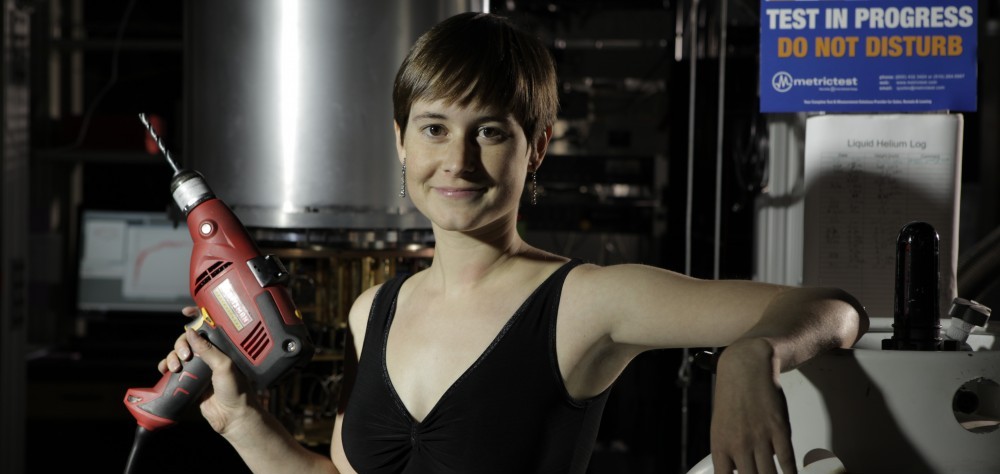
Make use of time, let not advantage slip

During the spring of 2022, I felt as though I kept dashing backward and forward in time. 

At the beginning of the season, hay fever plagued me in Maryland. Then, I left to present talks in southern California. There—closer to the equator—rose season had peaked, and wisteria petals covered the ground near Caltech’s physics building. From California, I flew to Canada to present a colloquium. Time rewound as I traveled northward; allergies struck again. After I returned to Maryland, the spring ripened almost into summer. But the calendar backtracked when I flew to Sweden: tulips and lilacs surrounded me again.

Caltech wisteria in April 2022: Thou art lovely and temperate.

The zigzagging through horticultural time disoriented my nose, but I couldn’t complain: it echoed the quantum information processing that collaborators and I would propose that summer. We showed how to improve quantum metrology—our ability to measure things, using quantum detectors—by simulating closed timelike curves.

Swedish wildflowers in June 2022

A closed timelike curve is a trajectory that loops back on itself in spacetime. If on such a trajectory, you’ll advance forward in time, reverse chronological direction to advance backward, and then reverse again. Author Jasper Fforde illustrates closed timelike curves in his novel The Eyre Affair. A character named Colonel Next buys an edition of Shakespeare’s works, travels to the Elizabethan era, bestows them on a Brit called Will, and then returns to his family. Will copies out the plays and stages them. His colleagues publish the plays after his death, and other editions ensue. Centuries later, Colonel Next purchases one of those editions to take to the Elizabethan era.1 

Closed timelike curves can exist according to Einstein’s general theory of relativity. But do they exist? Nobody knows. Many physicists expect not. But a quantum system can simulate a closed timelike curve, undergoing a process modeled by the same mathematics.

How can one formulate closed timelike curves in quantum theory? Oxford physicist David Deutsch proposed one formulation; a team led by MIT’s Seth Lloyd proposed another. Correlations distinguish the proposals. 

Two entities share correlations if a change in one entity tracks a change in the other. Two classical systems can correlate; for example, your brain is correlated with mine, now that you’ve read writing I’ve produced. Quantum systems can correlate more strongly than classical systems can, as by entangling

Suppose Colonel Next correlates two nuclei and gives one to his daughter before embarking on his closed timelike curve. Once he completes the loop, what relationship does Colonel Next’s nucleus share with his daughter’s? The nuclei retain the correlations they shared before Colonel Next entered the loop, according to Seth and collaborators. When referring to closed timelike curves from now on, I’ll mean ones of Seth’s sort.

Toronto hadn’t bloomed by May 2022.

We can simulate closed timelike curves by subjecting a quantum system to a circuit of the type illustrated below. We read the diagram from bottom to top. Along this direction, time—as measured by a clock at rest with respect to the laboratory—progresses. Each vertical wire represents a qubit—a basic unit of quantum information, encoded in an atom or a photon or the like. Each horizontal slice of the diagram represents one instant. 

At the bottom of the diagram, the two vertical wires sprout from one curved wire. This feature signifies that the experimentalist prepares the qubits in an entangled state, represented by the symbol | \Psi_- \rangle. Farther up, the left-hand wire runs through a box. The box signifies that the corresponding qubit undergoes a transformation (for experts: a unitary evolution). 

At the top of the diagram, the vertical wires fuse again: the experimentalist measures whether the qubits are in the state they began in. The measurement is probabilistic; we (typically) can’t predict the outcome in advance, due to the uncertainty inherent in quantum physics. If the measurement yields the yes outcome, the experimentalist has simulated a closed timelike curve. If the no outcome results, the experimentalist should scrap the trial and try again.

So much for interpreting the diagram above as a quantum circuit. We can reinterpret the illustration as a closed timelike curve. You’ve probably guessed as much, comparing the circuit diagram to the depiction, farther above, of Colonel Next’s journey. According to the second interpretation, the loop represents one particle’s trajectory through spacetime. The bottom and top show the particle reversing chronological direction—resembling me as I flew to or from southern California.

Me in southern California in spring 2022. Photo courtesy of Justin Dressel.

How can we apply closed timelike curves in quantum metrology? In Fforde’s books, Colonel Next has a brother, named Mycroft, who’s an inventor.2 Suppose that Mycroft is studying how two particles interact (e.g., by an electric force). He wants to measure the interaction’s strength. Mycroft should prepare one particle—a sensor—and expose it to the second particle. He should wait for some time, then measure how much the interaction has altered the sensor’s configuration. The degree of alteration implies the interaction’s strength. The particles can be quantum, if Mycroft lives not merely in Sherlock Holmes’s world, but in a quantum-steampunk one.

But how should Mycroft prepare the sensor—in which quantum state? Certain initial states will enable the sensor to acquire ample information about the interaction; and others, no information. Mycroft can’t know which preparation will work best: the optimal preparation depends on the interaction, which he hasn’t measured yet. 

Mycroft, as drawn by Sydney Paget in the 1890s

Mycroft can overcome this dilemma via a strategy published by my collaborator David Arvidsson-Shukur, his recent student Aidan McConnell, and me. According to our protocol, Mycroft entangles the sensor with a third particle. He subjects the sensor to the interaction (coupling the sensor to particle #2) and measures the sensor. 

Then, Mycroft learns about the interaction—learns which state he should have prepared the sensor in earlier. He effectively teleports this state backward in time to the beginning-of-protocol sensor, using particle #3 (which began entangled with the sensor).3 Quantum teleportation is a decades-old information-processing task that relies on entanglement manipulation. The protocol can transmit quantum states over arbitrary distances—or, effectively, across time.

We can view Mycroft’s experiment in two ways. Using several particles, he manipulates entanglement to measure the interaction strength optimally (with the best possible precision). This process is mathematically equivalent to another. In the latter process, Mycroft uses only one sensor. It comes forward in time, reverses chronological direction (after Mycroft learns the optimal initial state’s form), backtracks to an earlier time (to when the sensing protocol began), and returns to progressing forward in time (informing Mycroft about the interaction).

Where I stayed in Stockholm. I swear, I’m not making this up.

In Sweden, I regarded my work with David and Aidan as a lark. But it’s led to an experiment, another experiment, and two papers set to debut this winter. I even pass as a quantum metrologist nowadays. Perhaps I should have anticipated the metamorphosis, as I should have anticipated the extra springtimes that erupted as I traveled between north and south. As the bard says, there’s a time for all things.

More Swedish wildflowers from June 2022

1In the sequel, Fforde adds a twist to Next’s closed timelike curve. I can’t speak for the twist’s plausibility or logic, but it makes for delightful reading, so I commend the novel to you.

2You might recall that Sherlock Holmes has a brother, named Mycroft, who’s an inventor. Why? In Fforde’s novel, an evil corporation pursues Mycroft, who’s built a device that can transport him into the world of a book. Mycroft uses the device to hide from the corporation in Sherlock Holmes’s backstory.

3Experts, Mycroft implements the effective teleportation as follows: He prepares a fourth particle in the ideal initial sensor state. Then, he performs a two-outcome entangling measurement on particles 3 and 4: he asks “Are particles 3 and 4 in the state in which particles 1 and 3 began?” If the measurement yields the yes outcome, Mycroft has effectively teleported the ideal sensor state backward in time. He’s also simulated a closed timelike curve. If the measurement yields the no outcome, Mycroft fails to measure the interaction optimally. Figure 1 in our paper synopsizes the protocol.

What distinguishes quantum from classical thermodynamics?

Should you require a model for an Oxford don in a play or novel, look no farther than Andrew Briggs. The emeritus professor of nanomaterials speaks with a southern-English accent as crisp as shortbread, exhibits manners to which etiquette influencer William Hanson could aspire, and can discourse about anything from Bantu to biblical Hebrew. I joined Andrew for lunch at St. Anne’s College, Oxford, this month.1 Over vegetable frittata, he asked me what unifying principle distinguishes quantum from classical thermodynamics.

With a thermodynamic colleague at the Oxford University Museum of Natural History

I’d approached quantum thermodynamics from nearly every angle I could think of. I’d marched through the thickets of derivations and plots; I’d journeyed from subfield to subfield; I’d gazed down upon the discipline as upon a landscape from a hot-air balloon. I’d even prepared a list of thermodynamic tasks enhanced by quantum phenomena: we can charge certain batteries at greater powers if we entangle them than if we don’t, entanglement can raise the amount of heat pumped out of a system by a refrigerator, etc. But Andrew’s question flummoxed me.

I bungled the answer. I toted out the aforementioned list, but it contained examples, not a unifying principle. The next day, I was sitting in an office borrowed from experimentalist Natalia Ares in New College, a Gothic confection founded during the late 1300s (as one should expect of a British college called “New”). Admiring the view of ancient stone walls, I realized how I should have responded the previous day.

View from a window near the office I borrowed in New College. If I could pack that office in a suitcase and carry it home, I would.

My answer begins with a blog post written in response to a quantum-thermodynamics question from a don at another venerable university: Yoram Alhassid. He asked, “What distinguishes quantum thermodynamics to quantum statistical mechanics?” You can read the full response here. Takeaways include thermodynamics’s operational flavor. When using an operational theory, we imagine agents who perform tasks, using given resources. For example, a thermodynamic agent may power a steamboat, given a hot gas and a cold gas. We calculate how effectively the agents can perform those tasks. For example, we compute heat engines’ efficiencies. If a thermodynamic agent can access quantum resources, I’ll call them “quantum thermodynamic.” If the agent can access only everyday resources, I’ll call them “classical thermodynamic.”

A quantum thermodynamic agent may access more resources than a classical thermodynamic agent can. The latter can leverage work (well-organized energy), free energy (the capacity to perform work), information, and more. A quantum agent may access not only those resources, but also entanglement (strong correlations between quantum particles), coherence (wavelike properties of quantum systems), squeezing (the ability to toy with quantum uncertainty as quantified by Heisenberg and others), and more. The quantum-thermodynamic agent may apply these resources as described in the list I rattled off at Andrew.

With Oxford experimentalist Natalia Ares in her lab

Yet quantum phenomena can impede a quantum agent in certain scenarios, despite assisting the agent in others. For example, coherence can reduce a quantum engine’s power. So can noncommutation. Everyday numbers commute under multiplication: 11 times 12 equals 12 times 11. Yet quantum physics features numbers that don’t commute so. This noncommutation underlies quantum uncertainty, quantum error correction, and much quantum thermodynamics blogged about ad nauseam on Quantum Frontiers. A quantum engine’s dynamics may involve noncommutation (technically, the Hamiltonian may contain terms that fail to commute with each other). This noncommutation—a fairly quantum phenomenon—can impede the engine similarly to friction. Furthermore, some quantum thermodynamic agents must fight decoherence, the leaking of quantum information from a quantum system into its environment. Decoherence needn’t worry any classical thermodynamic agent.

In short, quantum thermodynamic agents can benefit from more resources than classical thermodynamic agents can, but the quantum agents also face more threats. This principle might not encapsulate how all of quantum thermodynamics differs from its classical counterpart, but I think the principle summarizes much of the distinction. And at least I can posit such a principle. I didn’t have enough experience when I first authored a blog post about Oxford, in 2013. People say that Oxford never changes, but this quantum thermodynamic agent does.

In the University of Oxford Natural History Museum in 2013, 2017, and 2025. I’ve published nearly 150 Quantum Frontiers posts since taking the first photo!

1Oxford consists of colleges similarly to how neighborhoods form a suburb. Residents of multiple neighborhoods may work in the same dental office. Analogously, faculty from multiple colleges may work, and undergraduates from multiple colleges may major, in the same department.