What distinguishes quantum from classical thermodynamics?

Should you require a model for an Oxford don in a play or novel, look no farther than Andrew Briggs. The emeritus professor of nanomaterials speaks with a southern-English accent as crisp as shortbread, exhibits manners to which etiquette influencer William Hanson could aspire, and can discourse about anything from Bantu to biblical Hebrew. I joined Andrew for lunch at St. Anne’s College, Oxford, this month.1 Over vegetable frittata, he asked me what unifying principle distinguishes quantum from classical thermodynamics.

With a thermodynamic colleague at the Oxford University Museum of Natural History

I’d approached quantum thermodynamics from nearly every angle I could think of. I’d marched through the thickets of derivations and plots; I’d journeyed from subfield to subfield; I’d gazed down upon the discipline as upon a landscape from a hot-air balloon. I’d even prepared a list of thermodynamic tasks enhanced by quantum phenomena: we can charge certain batteries at greater powers if we entangle them than if we don’t, entanglement can raise the amount of heat pumped out of a system by a refrigerator, etc. But Andrew’s question flummoxed me.

I bungled the answer. I toted out the aforementioned list, but it contained examples, not a unifying principle. The next day, I was sitting in an office borrowed from experimentalist Natalia Ares in New College, a Gothic confection founded during the late 1300s (as one should expect of a British college called “New”). Admiring the view of ancient stone walls, I realized how I should have responded the previous day.

View from a window near the office I borrowed in New College. If I could pack that office in a suitcase and carry it home, I would.

My answer begins with a blog post written in response to a quantum-thermodynamics question from a don at another venerable university: Yoram Alhassid. He asked, “What distinguishes quantum thermodynamics to quantum statistical mechanics?” You can read the full response here. Takeaways include thermodynamics’s operational flavor. When using an operational theory, we imagine agents who perform tasks, using given resources. For example, a thermodynamic agent may power a steamboat, given a hot gas and a cold gas. We calculate how effectively the agents can perform those tasks. For example, we compute heat engines’ efficiencies. If a thermodynamic agent can access quantum resources, I’ll call them “quantum thermodynamic.” If the agent can access only everyday resources, I’ll call them “classical thermodynamic.”

A quantum thermodynamic agent may access more resources than a classical thermodynamic agent can. The latter can leverage work (well-organized energy), free energy (the capacity to perform work), information, and more. A quantum agent may access not only those resources, but also entanglement (strong correlations between quantum particles), coherence (wavelike properties of quantum systems), squeezing (the ability to toy with quantum uncertainty as quantified by Heisenberg and others), and more. The quantum-thermodynamic agent may apply these resources as described in the list I rattled off at Andrew.

With Oxford experimentalist Natalia Ares in her lab

Yet quantum phenomena can impede a quantum agent in certain scenarios, despite assisting the agent in others. For example, coherence can reduce a quantum engine’s power. So can noncommutation. Everyday numbers commute under multiplication: 11 times 12 equals 12 times 11. Yet quantum physics features numbers that don’t commute so. This noncommutation underlies quantum uncertainty, quantum error correction, and much quantum thermodynamics blogged about ad nauseam on Quantum Frontiers. A quantum engine’s dynamics may involve noncommutation (technically, the Hamiltonian may contain terms that fail to commute with each other). This noncommutation—a fairly quantum phenomenon—can impede the engine similarly to friction. Furthermore, some quantum thermodynamic agents must fight decoherence, the leaking of quantum information from a quantum system into its environment. Decoherence needn’t worry any classical thermodynamic agent.

In short, quantum thermodynamic agents can benefit from more resources than classical thermodynamic agents can, but the quantum agents also face more threats. This principle might not encapsulate how all of quantum thermodynamics differs from its classical counterpart, but I think the principle summarizes much of the distinction. And at least I can posit such a principle. I didn’t have enough experience when I first authored a blog post about Oxford, in 2013. People say that Oxford never changes, but this quantum thermodynamic agent does.

In the University of Oxford Natural History Museum in 2013, 2017, and 2025. I’ve published nearly 150 Quantum Frontiers posts since taking the first photo!

1Oxford consists of colleges similarly to how neighborhoods form a suburb. Residents of multiple neighborhoods may work in the same dental office. Analogously, faculty from multiple colleges may work, and undergraduates from multiple colleges may major, in the same department.

The sequel

This October, fantasy readers are devouring a sequel: the final installment in Philip Pullman’s trilogy The Book of Dust. The series follows student Lyra Silvertongue as she journeys from Oxford to the far east. Her story features alternate worlds, souls that materialize as talking animals, and a whiff of steampunk. We first met Lyra in the His Dark Materials trilogy, which Pullman began publishing in 1995. So some readers have been awaiting the final Book of Dust volume for 30 years. 

Another sequel debuts this fall. It won’t spur tens of thousands of sales; nor will Michael Sheen narrate an audiobook version of it. Nevertheless, the sequel should provoke as much thought as Pullman’s: the sequel to the Maryland Quantum-Thermodynamics Hub’s first three years.

More deserving of a Carnegie Medal than our hub, but the hub deserves no less enthusiasm!

The Maryland Quantum-Thermodynamics Hub debuted in 2022, courtesy of a grant from the John F. Templeton Foundation. Six theorists, three based in Maryland, have formed the hub’s core. Our mission has included three prongs: research, community building, and outreach. During the preceding decade, quantum thermodynamics had exploded, but mostly outside North America. We aimed to provide a lodestone for the continent’s quantum-thermodynamics researchers and visitors.

Also, we aimed to identify the thermodynamics of how everyday, classical physics emerges from quantum physics. Quantum physics is reversible (doesn’t distinguish the past from the future), is delicate (measuring a quantum system can disturb it), and features counterintuitive phenomena such as entanglement. In contrast, our everyday experiences include irreversibility (time has an arrow), objectivity (if you and I read this article, we should agree about its contents), and no entanglement. How does quantum physics give rise to classical physics at large energy and length scales? Thermodynamics has traditionally described macroscopic, emergent properties. So quantum thermodynamics should inform our understanding of classical reality’s emergence from quantum mechanics.

Our team has approached this opportunity from three perspectives. One perspective centers on quantum Darwinism, a framework for quantifying how interactions spread information about an observed quantum system. Another perspective highlights decoherence, the contamination of a quantum system by its environment. The third perspective features incompatible exchanged quantities, described in an earlier blog post. Or two. Or at least seven

Each perspective led us to discover a tension, or apparent contradiction, that needs resolving. One might complain that we failed to clinch a quantum-thermodynamic theory of the emergence of classical reality. But physicists adore apparent contradictions as publishers love splashing “New York Times bestseller” on their book covers. So we aim to resolve the tensions over the next three years.

Physicists savor paradoxes and their ilk.

I’ll illustrate the tensions with incompatible exchanged quantities, of course. Physicists often imagine a small system, such as a quantum computer, interacting with a large environment, such as the surrounding air and the table on which the quantum computer sits. The system and environment may exchange energy, particles, electric charge, etc. Typically, the small system thermalizes, or reaches a state mostly independent of its initial conditions. For example, after exchanging enough energy with its environment, the system ends up at the environment’s temperature, mostly regardless of the system’s initial temperature. 

For decades, physicists implicitly assumed that the exchanged quantities are compatible: one can measure them simultaneously. But one can’t measure all of a quantum system’s properties simultaneously. Position and momentum form the most famous examples. Incompatibility epitomizes quantum physics, underlying Heisenberg’s uncertainty relation, quantum error correction, and more. So collaborators and I ask how exchanged quantities’ incompatibility alters thermalization, which helps account for time’s arrow. 

Our community has discovered that such incompatibility can hinder certain facets of thermalization—in a sense, stave off certain aspects of certain quantum systems’ experience of time. But incompatible exchanged quantities enhance other features of thermalization. How shall we reconcile the hindrances with the enhancements? Does one of the two effects win out? I hope to report back in three years. For now, I’m rooting for Team Hindrance.

In addition to resolving apparent conflicts, we’re adding a fourth perspective to our quiver—a gravitational one. In our everyday experiences, space-time appears smooth; unlike Lyra’s companion Will in The Subtle Knife, we don’t find windows onto other worlds. But quantum physics, combined with general relativity, suggests that you’d find spikes and dips upon probing space-time over extremely short length scales. How does smooth space-time emerge from its quantum underpinnings? Again, quantum thermodynamics should help us understand.

To address these challenges, we’re expanding the hub’s cast of characters. The initial cast included six theorists. Two more are joining the crew, together with the hub’s first two experimentalists. So is our first creative-writing instructor, who works at the University of Maryland (UMD) Jiménez-Porter Writers’ House.

As the hub has grown, so has the continent’s quantum-thermodynamics community. We aim to continue expanding that community and strengthening its ties to counterparts abroad. As Lyra learned in Pullman’s previous novel, partnering with Welsh miners and Czech book sellers and Smyrnan princesses can further one’s quest. I don’t expect the Maryland Quantum-Thermodynamics Hub to attract Smyrnan princesses, but a girl can dream. The hub is already partnering with the John F. Templeton Foundation, Normal Computing, the Fidelity Center for Applied Technology, the National Quantum Laboratory, Maryland’s Capital of Quantum team, and more. We aim to integrate quantum thermodynamics into North America’s scientific infrastructure, so that the field thrives here even after our new grant terminates. Reach out if you’d like to partner with us.

To unite our community, the hub will host a gathering—a symposium or conference—each year. One conference will feature quantum thermodynamics and quantum-steampunk creative writing. Scientists and authors will present. We hope that both groups will inspire each other, as physicist David Deutsch’s work on the many-worlds formulation of quantum theory inspired Pullman.

That conference will follow a quantum-steampunk creative-writing course to take place at UMD during spring 2026. I’ll co-teach the course with creative-writing instructor Edward Daschle. Students will study quantum thermodynamics, read published science-fiction stories, write quantum-steampunk stories, and critique each other’s writing. Five departments have cross-listed the course: physics, arts and humanities, computer science, chemistry, and mechanical engineering. If you’re a UMD student, you can sign up in a few weeks. Do so early; seats are limited! We welcome graduate students and undergrads, the latter of whom can earn a GSSP general-education credit.1 Through the course, the hub will spread quantum thermodynamics into Pullman’s world—into literature.

Pullman has entitled his latest novel The Rose Field. The final word refers to an object studied by physicists. A field, such as an electric or gravitational field, is a physical influence spread across space. Hence fiction is mirroring physics—and physics can take its cue from literature. As ardently as Lyra pursues the mysterious particle called Dust, the Maryland Quantum-Thermodynamics Hub is pursuing a thermodynamic understanding of the classical world’s emergence from quantum physics. And I think our mission sounds as enthralling as Lyra’s. So keep an eye on the hub for physics, community activities, and stories. The telling of Lyra’s tale may end this month, but the telling of the hub’s doesn’t.

1Just don’t ask me what GSSP stands for.

Blending science with fiction in Baltimore

I judge a bookstore by the number of Diana Wynne Jones novels it stocks. The late British author wrote some of the twentieth century’s most widely lauded science-fiction and fantasy (SFF). She clinched more honors than I should list, including two World Fantasy Awards. Neil Gaiman, author of American Gods, called her “the best children’s writer of the last forty years” in 2010—and her books suit children of all ages.1 But Wynne Jones passed away as I was finishing college, and her books have been disappearing from American bookshops. The typical shop stocks, at best, a book in the series she began with Howl’s Moving Castle, which Hayao Miyazaki adapted into an animated film.

I don’t recall the last time I glimpsed Deep Secret in a bookshop, but it ranks amongst my favorite Wynne Jones books—and favorite books, full-stop. So I relished living part of that book this spring.

Deep Secret centers on video-game programmer Rupert Venables. Outside of his day job, he works as a Magid, a magic user who helps secure peace and progress across the multiple worlds. Another Magid has passed away, and Rupert must find a replacement for him. How does Rupert track down and interview his candidates? By consolidating their fate lines so that the candidates converge on an SFF convention. Of course.

My fate line drew me to an SFF convention this May. Balticon takes place annually in Baltimore, Maryland. It features not only authors, agents, and publishers, but also science lecturers. I received an invitation to lecture about quantum steampunk—not video-game content,2 but technology-oriented like Rupert’s work. I’d never attended an SFF convention,3 so I reread Deep Secret as though studying for an exam.

Rupert, too, is attending his first SFF convention. A man as starched as his name sounds, Rupert packs suits, slacks, and a polo-neck sweater for the weekend—to the horror of a denim-wearing participant. I didn’t bring suits, in my defense. But I did dress business-casual, despite having anticipated that jeans, T-shirts, and capes would surround me.

I checked into a Renaissance Hotel for Memorial Day weekend, just as Rupert checks into the Hotel Babylon for Easter weekend. Like him, I had to walk an inordinately long distance from the elevators to my room. But Rupert owes his trek to whoever’s disrupted the magical node centered on his hotel. My hotel’s architects simply should have installed more elevator banks.

Balticon shared much of its anatomy with Rupert’s con, despite taking place in a different century and country (not to mention world). Participants congregated downstairs at breakfast (continental at Balticon, waitered at Rupert’s hotel). Lectures and panels filled most of each day. A masquerade took place one night. (I slept through Balticon’s; impromptu veterinary surgery occupies Rupert during his con’s.) Participants vied for artwork at an auction. Booksellers and craftspeople hawked their wares in a dealer’s room. (None of Balticon’s craftspeople knew their otherworldly subject matter as intimately as Rupert’s Magid colleague Zinka Fearon does, I trust. Zinka paints her off-world experiences when in need of cash.)

In our hotel room, I read out bits of Deep Secret to my husband, who confirmed the uncanniness with which they echoed our experiences. Both cons featured floor-length robes, Batman costumes, and the occasional slinky dress. Some men sported long-enough locks, and some enough facial hair, to do a Merovingian king proud. Rupert registers “a towering papier-mâché and plastic alien” one night; on Sunday morning, a colossal blow-up unicorn startled my husband and me. We were riding the elevator downstairs to breakfast, pausing at floor after floor. Hotel guests packed the elevator like Star Wars fans at a Lucasfilm debut. Then, the elevator halted again. The doors opened on a bespectacled man, 40-something years old by my estimate, dressed as a blue-and-white unicorn. The costume billowed out around him; the golden horn towered multiple feet above his head. He gazed at our sardine can, and we gazed at him, without speaking. The elevator doors shut, and we continued toward breakfast.

Photo credit: Balticon

Despite having read Deep Secret multiple times, I savored it again. I even laughed out loud. Wynne Jones paints the SFF community with the humor, exasperation, and affection one might expect of a middle-school teacher contemplating her students. I empathize, belonging to a community—the physics world—nearly as idiosyncratic as the SFF community.4 Wynne Jones’s warmth for her people suffuses Deep Secret; introvert Rupert surprises himself by enjoying a dinner with con-goers and wishing to spend more time with them. The con-goers at my talk exhibited as much warmth as any audience I’ve spoken to, laughing, applauding, and asking questions. I appreciated sojourning in their community for a weekend.5

This year, my community is fêting the physicists who founded quantum theory a century ago. Wynne Jones sparked imaginations two decades ago. Let’s not let her memory slip from our fingertips like a paperback over which we’re falling asleep. After all, we aren’t forgetting Louis de Broglie, Paul Dirac, and their colleagues. So check out a Wynne Jones novel the next time you visit a library, or order a novel of hers to your neighborhood bookstore. Deep Secret shouldn’t be an actual secret.

With thanks to Balticon’s organizers, especially Miriam Winder Kelly, for inviting me and for fussing over their speakers’ comfort like hens over chicks.

1Wynne Jones dedicated her novel Hexwood to Gaiman, who expressed his delight in a poem. I fancy the comparison of Gaiman, a master of phantasmagoria and darkness, to a kitten.

2Yet?

3I’d attended a steampunk convention, and spoken at a Boston SFF convention, virtually. But as far as such conventions go, attending virtually is to attending in person as my drawings are to a Hayao Miyazaki film.

4But sporting fewer wizard hats.

5And I wonder what the Diana Wynne Jones Conference–Festival is like.

Nicole’s guide to writing research statements

Sunflowers are blooming, stores are trumpeting back-to-school sales, and professors are scrambling to chart out the courses they planned to develop in July. If you’re applying for an academic job this fall, now is the time to get your application ducks in a row. Seeking a postdoctoral or faculty position? Your applications will center on research statements. Often, a research statement describes your accomplishments and sketches your research plans. What do evaluators look for in such documents? Here’s my advice, which targets postdoctoral fellowships and faculty positions, especially for theoretical physicists.

  • Keep your audience in mind. Will a quantum information theorist, a quantum scientist, a general physicist, a general scientist, or a general academic evaluate your statement? What do they care about? What technical language do and don’t they understand?
  • What thread unites all the projects you’ve undertaken? Don’t walk through your research history chronologically, stepping from project to project. Cast the key projects in the form of a story—a research program. What vision underlies the program?
  • Here’s what I want to see when I read a description of a completed project.
    • The motivation for the project: This point ensures that the reader will care enough to read the rest of the description.
    • Crucial background information
    • The physical setup
    • A statement of the problem
    • Why the problem is difficult or, if relevant, how long the problem has remained open
    • Which mathematical toolkit you used to solve the problem or which conceptual insight unlocked the solution
    • Which technical or conceptual contribution you provided
    • Whom you collaborated with: Wide collaboration can signal a researcher’s maturity. If you collaborated with researchers at other institutions, name the institutions and, if relevant, their home countries. If you led the project, tell me that, too. If you collaborated with a well-known researcher, mentioning their name might help the reader situate your work within the research landscape they know. But avoid name-dropping, which lacks such a pedagogical purpose and which can come across as crude.
    • Your result’s significance/upshot/applications/impact: Has a lab based an experiment on your theoretical proposal? Does your simulation method outperform its competitors by X% in runtime? Has your mathematical toolkit found applications in three subfields of quantum physics? Consider mentioning whether a competitive conference or journal has accepted your results: QIP, STOC, Physical Review Letters, Nature Physics, etc. But such references shouldn’t serve as a crutch in conveying your results’ significance. You’ll impress me most by dazzling me with your physics; name-dropping venues instead can convey arrogance.
  • Not all past projects deserve the same amount of space. Tell a cohesive story. For example, you might detail one project, then synopsize two follow-up projects in two sentences.
  • A research statement must be high-level, because you don’t have space to provide details. Use mostly prose; and communicate intuition, including with simple examples. But sprinkle in math, such as notation that encapsulates a phrase in one concise symbol.

  • Be concrete, and illustrate with examples. Many physicists—especially theorists—lean toward general, abstract statements. The more general a statement is, we reason, the more systems it describes, so the more powerful it is. But humans can’t visualize and intuit about abstractions easily. Imagine a reader who has four minutes to digest your research statement before proceeding to the next 50 applications. As that reader flys through your writing, vague statements won’t leave much of an impression. So draw, in words, a picture that readers can visualize. For instance, don’t describe only systems, subsystems, and control; invoke atoms, cavities, and lasers. After hooking your reader with an image, you can generalize from it.
  • A research statement not only describes past projects, but also sketches research plans. Since research covers terra incognita, though, plans might sound impossible. How can you predict the unknown—especially the next five years of the unknown (as required if you’re applying for a faculty position), especially if you’re a theorist? Show that you’ve developed a map and a compass. Sketch the large-scale steps that you anticipate taking. Which mathematical toolkits will you leverage? What major challenge do you anticipate, and how do you hope to overcome it? Let me know if you’ve undertaken preliminary studies. Do numerical experiments support a theorem you conjecture?
  • When I was applying for faculty positions, a mentor told me the following: many a faculty member can identify a result (or constellation of results) that secured them an offer, as well as a result that earned them tenure. Help faculty-hiring committees identify the offer result and the tenure result.
  • Introduce notation before using it. If you use notation and introduce it afterward, the reader will encounter the notation; stop to puzzle over it; tentatively continue; read the introduction of the notation; return to the earlier use of the notation, to understand it; and then continue forward, including by rereading the introduction of the notation. This back-and-forth breaks up the reading process, which should flow smoothly.
  • Avoid verbs that fail to relate that you accomplished anything: “studied,” “investigated,” “worked on,” etc. What did you prove, show, demonstrate, solve, calculate, compute, etc.?

  • Tailor a version of your research statement to every position. Is Fellowship Committee X seeking biophysicists, statistical physicists, mathematical physicists, or interdisciplinary scientists? Also, respect every application’s guidelines about length.
  • If you have room, end the statement with a recap and a statement of significance. Yes, you’ll be repeating ideas mentioned earlier. But your reader’s takeaway hinges on the last text they read. End on a strong note, presenting a coherent vision.

  • Read examples. Which friends and colleagues, when applying for positions, have achieved success that you’d like to emulate? Ask if those individuals would share their research statements. Don’t take offense if they refuse; research statements are personal.

  • Writing is rewriting, a saying goes. Draft your research statement early, solicit feedback from a couple of mentors, edit the draft, and solicit more feedback.

Little ray of sunshine

A common saying goes, you should never meet your heroes, because they’ll disappoint you. But you shouldn’t trust every common saying; some heroes impress you more, the better you know them. Ray Laflamme was such a hero.

I first heard of Ray in my undergraduate quantum-computation course. The instructor assigned two textbooks: the physics-centric “Schumacher and Westmoreland” and “Kaye, Laflamme, and Mosca,” suited to computer scientists. Back then—in 2011—experimentalists were toiling over single quantum logic gates, implemented on pairs and trios of qubits. Some of today’s most advanced quantum-computing platforms, such as ultracold atoms, resembled the scrawnier of the horses at a racetrack. My class studied a stepping stone to those contenders: linear quantum optics (quantum light). Laflamme, as I knew him then, had helped design the implementation. 

Imagine my awe upon meeting Ray the following year, as a master’s student at the Perimeter Institute for Theoretical Physics. He belonged to Perimeter’s faculty and served as a co-director of the nearby Institute for Quantum Computing (IQC). Ray was slim, had thinning hair of a color similar to mine, and wore rectangular glasses frames. He often wore a smile, too. I can hear his French-Canadian accent in my memory, but not without hearing him smile at the ends of most sentences.

Photo credit: IQC

My master’s program entailed a research project, which I wanted to center on quantum information theory, one of Ray’s specialties. He met with me and suggested a project, and I began reading relevant papers. I then decided to pursue research with another faculty member and a postdoc, eliminating my academic claim on Ray’s time. But he agreed to keep meeting with me. Heaven knows how he managed; institute directorships devour one’s schedule like ravens dining on a battlefield. Still, we talked approximately every other week.

My master’s program intimidated me, I confessed. It crammed graduate-level courses, which deserved a semester each, into weeks. My class raced through Quantum Field Theory I and Quantum Field Theory II—a year’s worth of material—in part of an autumn. General relativity, condensed matter, and statistical physics swept over us during the same season. I preferred to learn thoroughly, deeply, and using strategies I’d honed over two decades. But I didn’t have time, despite arriving at Perimeter’s library at 8:40 every morning and leaving around 9:30 PM.

In response, Ray confessed that his master’s program had intimidated him. Upon completing his undergraduate degree, Ray viewed himself as a nobody from nowhere. He chafed in the legendary, if idiosyncratically named, program he attended afterward: Part III of the Mathematical Tripos at the University of Cambridge. A Cambridge undergraduate can earn a master’s degree in three steps (tripos) at the Department of Applied Mathematics and Theoretical Physics. Other students, upon completing bachelor’s degrees elsewhere, undertake the third step to earn their master’s. Ray tackled this step, Part III.

He worked his rear off, delving more deeply into course material than lecturers did. Ray would labor over every premise in a theorem’s proof, including when nobody could explain the trickiest step to him.1 A friend and classmate helped him survive. The two studied together, as I studied with a few fellow Perimeter students; and Ray took walks with his friend on Sundays, as I planned lunches with other students on weekends.

Yet the program’s competitiveness appalled Ray. All students’ exam scores appeared on the same piece of paper, posted where everyone could read it. The department would retain the highest scorers in its PhD program; the other students would have to continue their studies elsewhere. Hearing about Ray’s program, I appreciated more than ever the collaboration characteristic of mine.

Ray addressed that trickiest proof step better than he’d feared, come springtime: his name appeared near the top of the exam list. Once he saw the grades, a faculty member notified him that his PhD advisor was waiting upstairs. Ray didn’t recall climbing those stairs, but he found Stephen Hawking at the top.

As one should expect of a Hawking student, Ray studied quantum gravity during his PhD. But by the time I met him, Ray had helped co-found quantum computation. He’d also extended his physics expertise as far from 1980s quantum gravity as one can, by becoming an experimentalist. The nobody from nowhere had earned his wings—then invented novel wings that nobody had dreamed of. But he descended from the heights every other week, to tell stories to a nobody of a master’s student.

The author’s copy of “Kaye, Laflamme, and Mosca”…
…in good company.

Seven and a half years later, I advertised openings in the research group I was establishing in Maryland. A student emailed from the IQC, whose co-directorship Ray had relinquished in 2017. The student had seen me present a talk, it had inspired him to switch fields into quantum thermodynamics, and he asked me to co-supervise his PhD. His IQC supervisor had blessed the request: Ray Laflamme.

The student was Shayan Majidy, now a postdoc at Harvard. Co-supervising him with Ray Laflamme reminded me of cooking in the same kitchen as Julia Child. I still wonder how I, green behind the ears, landed such a gig. Shayan delighted in describing the difference between his supervisors’ advising styles. An energetic young researcher,2 I’d respond to emails as early as 6:00 AM. I’d press Shayan about literature he’d read, walk him through what he hadn’t grasped, and toss a paper draft back and forth with him multiple times per day. Ray, who’d mellowed during his career, mostly poured out support and warmth like hollandaise sauce. 

Once, Shayan emailed Ray and me to ask if he could take a vacation. I responded first, as laconically as my PhD advisor would have: “Have fun!” Ray replied a few days later. He elaborated on his pleasure at Shayan’s plans and on how much Shayan deserved the break.

When I visited Perimeter in 2022, Shayan insisted on a selfie with both his PhD advisors.

This June, an illness took Ray earlier than expected. We physicists lost an intellectual explorer, a co-founder of the quantum-computing community, and a scientist of my favorite type: a wonderful physicist who was a wonderful human being. Days after he passed, I was holed up in a New York hotel room, wincing over a web search. I was checking whether a quantum system satisfies certain tenets of quantum error correction, and we call those tenets the Knill–Laflamme conditions. Our community will keep checking the Knill–Laflamme conditions, keep studying quantum gates implementable with linear optics, and more. Part of Ray won’t leave us anytime soon—the way he wouldn’t leave a nobody of a master’s student who needed a conversation.

1For the record, some of the most rigorous researchers I know work in Cambridge’s Department of Applied Mathematics and Theoretical Physics today. I’ve even blogged about some

2As I still am, thank you very much.

I know I am but what are you? Mind and Matter in Quantum Mechanics

Nowadays it is best to exercise caution when bringing the words “quantum” and “consciousness” anywhere near each other, lest you be suspected of mysticism or quackery. Eugene Wigner did not concern himself with this when he wrote his “Remarks on the Mind-Body Question” in 1967. (Perhaps he was emboldened by his recent Nobel prize for contributions to the mathematical foundations of quantum mechanics, which gave him not a little no-nonsense technical credibility.) The mind-body question he addresses is the full-blown philosophical question of “the relation of mind to body”, and he argues unapologetically that quantum mechanics has a great deal to say on the matter. The workhorse of his argument is a thought experiment that now goes by the name “Wigner’s Friend”. About fifty years later, Daniela Frauchiger and Renato Renner formulated another, more complex thought experiment to address related issues in the foundations of quantum theory. In this post, I’ll introduce Wigner’s goals and argument, and evaluate Frauchiger’s and Renner’s claims of its inadequacy, concluding that these are not completely fair, but that their thought experiment does do something interesting and distinct. Finally, I will describe a recent paper of my own, in which I formalize the Frauchiger-Renner argument in a way that illuminates its status and isolates the mathematical origin of their paradox.

* * *

Wigner takes a dualist view about the mind, that is, he believes it to be non-material. To him this represents the common-sense view, but is nevertheless a newly mainstream attitude. Indeed,

[until] not many years ago, the “existence” of a mind or soul would have been passionately denied by most physical scientists. The brilliant successes of mechanistic and, more generally, macroscopic physics and of chemistry overshadowed the obvious fact that thoughts, desires, and emotions are not made of matter, and it was nearly universally accepted among physical scientists that there is nothing besides matter.

He credits the advent of quantum mechanics with

the return, on the part of most physical scientists, to the spirit of Descartes’s “Cogito ergo sum”, which recognizes the thought, that is, the mind, as primary. [With] the creation of quantum mechanics, the concept of consciousness came to the fore again: it was not possible to formulate the laws of quantum mechanics in a fully consistent way without reference to the consciousness.

What Wigner has in mind here is that the standard presentation of quantum mechanics speaks of definite outcomes being obtained when an observer makes a measurement. Of course this is also true in classical physics. In quantum theory, however, the principles of linear evolution and superposition, together with the plausible assumption that mental phenomena correspond to physical phenomena in the brain, lead to situations in which there is no mechanism for such definite observations to arise. Thus there is a tension between the fact that we would like to ascribe particular observations to conscious agents and the fact that we would like to view these observations as corresponding to particular physical situations occurring in their brains.

Once we have convinced ourselves that, in light of quantum mechanics, mental phenomena must be considered on an equal footing with physical phenomena, we are faced with the question of how they interact. Wigner takes it for granted that “if certain physico-chemical conditions are satisfied, a consciousness, that is, the property of having sensations, arises.” Does the influence run the other way? Wigner claims that the “traditional answer” is that it does not, but argues that in fact such influence ought indeed to exist. (Indeed this, rather than technical investigation of the foundations of quantum mechanics, is the central theme of his essay.) The strongest support Wigner feels he can provide for this claim is simply “that we do not know of any phenomenon in which one subject is influenced by another without exerting an influence thereupon”. Here he recalls the interaction of light and matter, pointing out that while matter obviously affects light, the effects of light on matter (for example radiation pressure) are typically extremely small in magnitude, and might well have been missed entirely had they not been suggested by the theory.

Quantum mechanics provides us with a second argument, in the form of a demonstration of the inconsistency of several apparently reasonable assumptions about the physical, the mental, and the interaction between them. Wigner works, at least implicitly, within a model where there are two basic types of object: physical systems and consciousnesses. Some physical systems (those that are capable of instantiating the “certain physico-chemical conditions”) are what we might call mind-substrates. Each consciousness corresponds to a mind-substrate, and each mind-substrate corresponds to at most one consciousness. He considers three claims (this organization of his premises is not explicit in his essay):

1. Isolated physical systems evolve unitarily.

2. Each consciousness has a definite experience at all times.

3. Definite experiences correspond to pure states of mind-substrates, and arise for a consciousness exactly when the corresponding mind-substrate is in the corresponding pure state.

The first and second assumptions constrain the way the model treats physical and mental phenomena, respectively. Assumption 1 is often paraphrased as the `”completeness of quantum mechanics”, while Assumption 2 is a strong rejection of solipsism – the idea that only one’s own mind is sure to exist. Assumption 3 is an apparently reasonable assumption about the relation between mental and physical phenomena.

With this framework established, Wigner’s thought experiment, now typically known as Wigner’s Friend, is quite straightforward. Suppose that an observer, Alice (to name the friend), is able to perform a measurement of some physical quantity q of a particle, which may take two values, 0 and 1. Assumption 1 tells us that if Alice performs this measurement when the particle is in a superposition state, the joint system of Alice’s brain and the particle will end up in an entangled state. Now Alice’s mind-substrate is not in a pure state, so by Assumption 3 does not have a definite experience. This contradicts Assumption 2. Wigner’s proposed resolution to this paradox is that in fact Assumption 1 is incorrect, and that there is an influence of the mental on the physical, namely objective collapse or, as he puts it, that the “statistical element which, according to the orthodox theory, enters only if I make an observation enters equally if my friend does”.

* * *

Decades after the publication of Wigner’s essay, Daniela Frauchiger and Renato Renner formulated a new thought experiment, involving observers making measurements of other observers, which they intended to remedy what they saw as a weakness in Wigner’s argument. In their words, “Wigner proposed an argument […] which should show that quantum mechanics cannot have unlimited validity”. In fact, they argue, Wigner’s argument does not succeed in doing so. They assert that Wigner’s paradox may be resolved simply by noting a difference in what each party knows. Whereas Wigner, describing the situation from the outside, does not initially know the result of his friend’s measurement, and therefore assigns the “absurd” entangled state to the joint system composed of both her body and the system she has measured, his friend herself is quite aware of what she has observed, and so assigns to the system either, but not both, of the states corresponding to definite measurement outcomes. “For this reason”, Frauchiger and Renner argue, “the Wigner’s Friend Paradox cannot be regarded as an argument that rules out quantum mechanics as a universally valid theory.”

This criticism strikes me as somewhat unfair to Wigner. In fact, Wigner’s objection to admitting two different states as equally valid descriptions is that the two states correspond to different sets of \textit{physical} properties of the joint system consisting of Alice and the system she measures. For Wigner, physical properties of physical systems are distinct from mental properties of consciousnesses. To engage in some light textual analysis, we can note that the word ‘conscious’, or ‘consciousness’, appears forty-one times in Wigner’s essay, and only once in Frauchiger and Renner’s, in the title of a cited paper. I have the impression that the authors pay inadequate attention to how explicitly Wigner takes a dualist position, including not just physical systems but also, and distinctly, consciousnesses in his ontology. Wigner’s argument does indeed achieve his goals, which are developed in the context of this strong dualism, and differ from the goals of Frauchiger and Renner, who appear not to share this philosophical stance, or at least do not commit fully to it.

Nonetheless, the thought experiment developed by Frauchiger and Renner does achieve something distinct and interesting. We can understand Wigner’s no-go theorem to be of the following form: “Within a model incorporating both mental and physical phenomena, a set of apparently reasonable conditions on how the model treats physical phenomena, mental phenomena, and their interaction cannot all be satisfied”. The Frauchiger-Renner thought experiment can be cast in the same form, with different choices about how to implement the model and which conditions to consider. The major difference in the model itself is that Frauchiger and Renner do not take consciousnesses to be entities in their own rights, but simply take some states of certain physical systems to correspond to conscious experiences. Within such a model, Wigner’s assumption that each mind has a single, definite conscious experience at all times seems far less natural than it did within his model, where consciousnesses are distinct entities from the physical systems that determine them. Thus Frauchiger and Renner need to weaken this assumption, which was so natural to Wigner. The weakening they choose is a sort of transitivity of theories of mind. In their words (Assumption C in their paper):

Suppose that agent A has established that “I am certain that agent A’, upon reasoning within the same theory as the one I am using, is certain that x =\xi at time t.” Then agent A can conclude that “I am certain that x=\xi at time t.”

Just as Assumption 3 above was, for Wigner, a natural restriction on how a sensible theory ought to treat mental phenomena, this serves as Frauchiger’s and Renner’s proposed constraint. Just as Wigner designed a thought experiment that demonstrated the incompatibility of his assumption with an assumption of the universal applicability of unitary quantum mechanics to physical systems, so do Frauchiger and Renner.

* * *

In my recent paper “Reasoning across spacelike surfaces in the Frauchiger-Renner thought experiment”, I provide two closely related formalizations of the Frauchiger-Renner argument. These are motivated by a few observations:

1. Assumption C ought to make reference to the (possibly different) times at which agents A and A' are certain about their respective judgments, since these states of knowledge change.

2. Since Frauchiger and Renner do not subscribe to Wigner’s strong dualism, an agent’s certainty about a given proposition, like any other mental state, corresponds within their implicit model to a physical state. Thus statements like “Alice knows that P” should be understood as statements about the state of some part of Alice’s brain. Conditional statements like “if upon measuring a quantity q Alice observes outcome x, she knows that P” should be understood as claims about the state of the composite system composed of the part of Alice’s brain responsible for knowing P and the part responsible for recording outcomes of the measurement of q.

3. Because the causal structure of the protocol does not depend on the absolute times of each event, an external agent describing the protocol can choose various “spacelike surfaces”, corresponding to fixed times in different spacetime embeddings of the protocol (or to different inertial frames). There is no reason to privilege one of these surfaces over another, and so each of them should be assigned a quantum state. This may be viewed as an implementation of a relativistic principle.

A visual representation of the formalization of the Frauchiger-Renner protocol and the arguments of the no-go theorem. The graphical conventions are explained in detail in “Reasoning across spacelike surfaces in the Frauchiger-Renner thought experiment”.

After developing a mathematical framework based on these observations, I recast Frauchiger’s and Renner’s Assumption C in two ways: first, in terms of a claim about the validity of iterating the “relative state” construction that captures how conditional statements are interpreted in terms of quantum states; and second, in terms of a deductive rule that allows chaining of inferences within a system of quantum logic. By proving that these claims are false in the mathematical framework, I provide a more formal version of the no-go theorem. I also show that the first claim can be rescued if the relative state construction is allowed to be iterated only “along” a single spacelike surface, and the second if a deduction is only allowed to chain inferences “along” a single surface. In other words, the mental transitivity condition desired by Frauchiger and Renner can in fact be combined with universal physical applicability of unitary quantum mechanics, but only if we restrict our analysis to a single spacelike surface. Thus I hope that the analysis I offer provides some clarification of what precisely is going on in Frauchiger and Renner’s thought experiment, what it tells us about combining the physical and the mental in light of quantum mechanics, and how it relates to Wigner’s thought experiment.

* * *

In view of the fact that “Quantum theory cannot consistently describe the use of itself” has, at present, over five hundred citations, and “Remarks on the Mind-Body Question” over thirteen hundred, it seems fitting to close with a thought, cautionary or exultant, from Peter Schwenger’s book on asemic, that is meaningless, writing. He notes that

commentary endlessly extends language; it is in the service of an impossible quest to extract the last, the final, drop of meaning.

I provide no analysis of this claim.

Quantum Algorithms: A Call To Action

Quantum computing finds itself in a peculiar situation. On the technological side, after billions of dollars and decades of research, working quantum computers are nearing fruition. But still, the number one question asked about quantum computers is the same as it was two decades ago: What are they good for? The honest answer reveals an elephant in the room: We don’t fully know yet. For theorists like me, this is an opportunity, a call to action.

Technological momentum

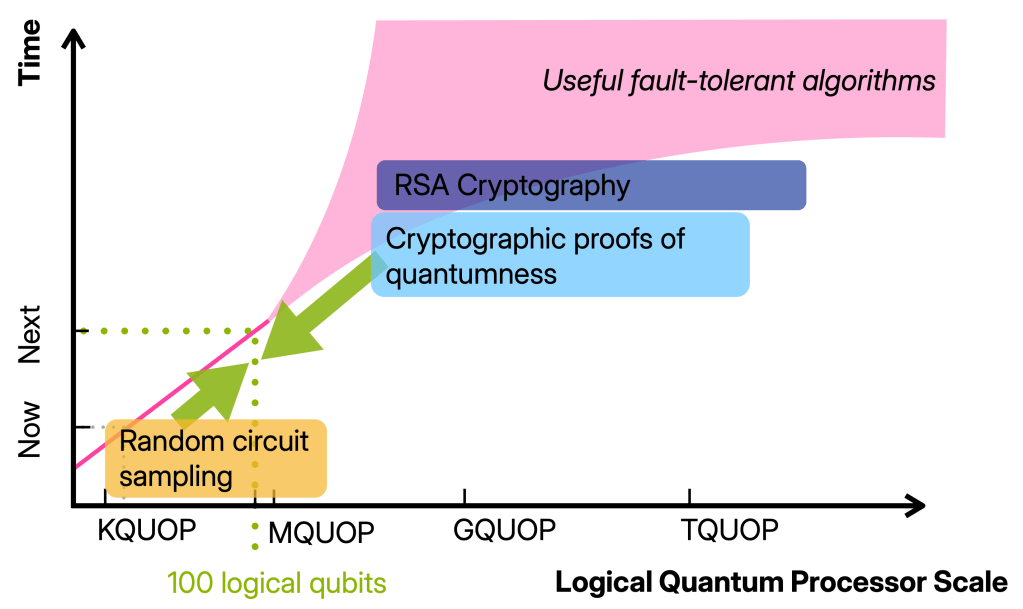
Suppose we do not have quantum computers in a few decades time. What will be the reason? It’s unlikely that we’ll encounter some insurmountable engineering obstacle. The theoretical basis of quantum error-correction is solid, and several platforms are approaching or below the error-correction threshold (Harvard, Yale, Google). Experimentalists believe today’s technology can scale to 100 logical qubits and 10^6 gates—the megaquop era. If mankind spends $100 billion over the next few decades, it’s likely we could build a quantum computer.

A more concerning reason that quantum computing might fail is that there is not enough incentive to justify such a large investment in R&D and infrastructure. Let’s make a comparison to nuclear fusion. Like quantum hardware, they have challenging science and engineering problems to solve. However, if a nuclear fusion lab were to succeed in their mission of building a nuclear fusion reactor, the application would be self-evident. This is not the case for quantum computing—it is a sledgehammer looking for nails to hit.

Nevertheless, industry investment in quantum computing is currently accelerating. To maintain the momentum, it is critical to match investment growth and hardware progress with algorithmic capabilities. The time to discover quantum algorithms is now.

Empowered theorists

Theory research is forward-looking and predictive. Theorists such as Geoffrey Hinton laid the foundations of the current AI revolution. But decades later, with an abundance of computing hardware, AI has become much more of an empirical field. I look forward to the day that quantum hardware reaches a state of abundance, but that day is not yet here.

Today, quantum computing is an area where theorists have extraordinary leverage. A few pages of mathematics by Peter Shor inspired thousands of researchers, engineers and investors to join the field. Perhaps another few pages by someone reading this blog will establish a future of world-altering impact for the industry. There are not many places where mathematics has such potential for influence. An entire community of experimentalists, engineers, and businesses are looking to the theorists for ideas.

The Challenge

Traditionally, it is thought that the ideal quantum algorithm would exhibit three features. First, it should be provably correct, giving a guarantee that executing the quantum circuit reliably will achieve the intended outcome. Second, the underlying problem should be classically hard—the output of the quantum algorithm should be computationally hard to replicate with a classical algorithm. Third, it should be useful, with the potential to solve a problem of interest in the real world. Shor’s algorithm comes close to meeting all of these criteria. However, demanding all three in an absolute fashion may be unnecessary and perhaps even counterproductive to progress.

Provable correctness is important, since today we cannot yet empirically test quantum algorithms on hardware at scale. But what degree of evidence should we require for classical hardness? Rigorous proof of classical hardness is currently unattainable without resolving major open problems like P vs NP, but there are softer forms of proof, such as reductions to well-studied classical hardness assumptions.

I argue that we should replace the ideal of provable hardness with a more pragmatic approach: The quantum algorithm should outperform the best known classical algorithm that produces the same output by a super-quadratic speedup.1 Emphasizing provable classical hardness might inadvertently impede the discovery of new quantum algorithms, since a truly novel quantum algorithm could potentially introduce a new classical hardness assumption that differs fundamentally from established ones. The back-and-forth process of proposing and breaking new assumptions is a productive direction that helps us triangulate where quantum advantage lies.

It may also be unproductive to aim directly at solving existing real-world problems with quantum algorithms. Fundamental computational tasks with quantum advantage are special and we have very few examples, yet they necessarily provide the basis for any eventual quantum application. We should search for more of these fundamental tasks and match them to applications later.

That said, it is important to distinguish between quantum algorithms that could one day provide the basis for a practically relevant computation, and those that will not. In the real world, computations are not useful unless they are verifiable or at least repeatable. For instance, consider a quantum simulation algorithm that computes a physical observable. If two different quantum computers run the simulation and get the same answer, one can be confident that this answer is correct and that it makes a robust prediction about the world. Some problems such as factoring are naturally easy to verify classically, but we can set the bar even lower: The output of a useful quantum algorithm should at least be repeatable by another quantum computer.

There is a subtle fourth requirement of paramount importance that is often overlooked, captured by the following litmus test: If given a quantum computer tomorrow, could you implement your quantum algorithm? In order to do so, you need not only a quantum algorithm but also a distribution over its inputs on which to run it. Classical hardness must then be judged in the average case over this distribution of inputs, rather than in the worst case.

I’ll end this section with a specific caution regarding quantum algorithms whose output is the expectation value of an observable. A common reason these proposals fail to be classically hard is that the expectation value exponentially concentrates over the distribution of inputs. When this happens, a trivial classical algorithm can replicate the quantum result by simply outputting the concentrated (typical) value for every input. To avoid this, we must seek ensembles of quantum circuits whose expectation values exhibit meaningful variation and sensitivity to different inputs.

We can crystallize these priorities into the following challenge:

The Challenge
Find a quantum algorithm and a distribution over its inputs with the following features:
— (Provable correctness.) The quantum algorithm is provably correct.
— (Classical hardness.) The quantum algorithm outperforms the best known classical algorithm that performs the same task by a super-quadratic speedup, in the average-case over the distribution of inputs.
— (Potential utility.) The output is verifiable, or at least repeatable.

Examples and non-examples

CategoryClassically verifiableQuantumly repeatablePotentially usefulProvable classical hardnessExamples
Search problemYesYesYesNoShor ‘99

Regev’s reduction: CLZ22, YZ24, Jor+24

Planted inference: Has20, SOKB24
Compute a valueNoYesYesNoCondensed matter physics?

Quantum chemistry?
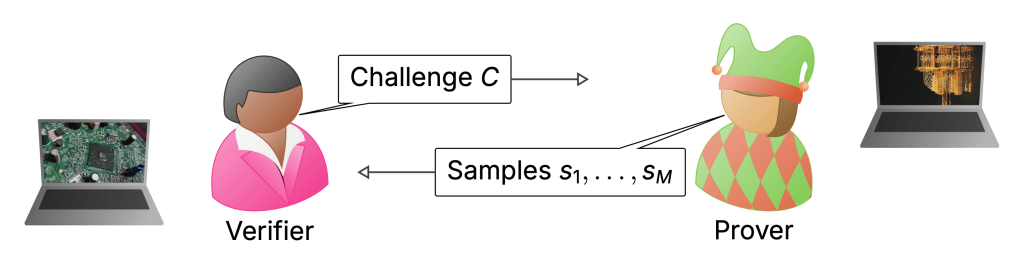
Proof of quantumnessYes, with keyYes, with respect to keyNoYes, under crypto assumptionsBCMVV21
SamplingNoNoNoAlmost, under complexity assumptionsBJS10, AA11, Google ‘20
We can categorize quantum algorithms by the form of their output. First, there are quantum algorithms for search problems, which produce a bitstring satisfying some constraints. This could be the prime factors of a number, a planted feature in some dataset, or the solution to an optimization problem. Next, there are quantum algorithms that compute a value to some precision, for example the expectation value of some physical observable. Then there are proofs of quantumness, which involve a verifier who generates a test using some hidden key, and the key can be used to verify the output. Finally, there are quantum algorithms which sample from some distribution.

Hamiltonian simulation is perhaps the most widely heralded source of quantum utility. Physics and chemistry contain many quantities that Nature computes effortlessly, yet remain beyond the reach of even our best classical simulations. Quantum computation is capable of simulating Nature directly, giving us strong reason to believe that quantum algorithms can compute classically-hard quantities.

There are already many examples where a quantum computer could help us answer an unsolved scientific question, like determining the phase diagram of the Hubbard model or the ground energy of FeMoCo. These undoubtedly have scientific value. However, they are isolated examples, whereas we would like evidence that the pool of quantum-solvable questions is inexhaustible. Can we take inspiration from strongly correlated physics to write down a concrete ensemble of Hamiltonian simulation instances where there is a classically-hard observable? This would gather evidence for the sustained, broad utility of quantum simulation, and would also help us understand where and how quantum advantage arises.

Over in the computer science community, there has been a lot of work on oracle separations such as welded trees and forrelation, which should give us confidence in the abilities of quantum computers. Can we instantiate these oracles in a way that pragmatically remains classically hard? This is necessary in order to pass our earlier litmus test of being ready to run the quantum algorithm tomorrow.

In addition to Hamiltonian simulation, there are several other broad classes of quantum algorithms, including quantum algorithms for linear systems of equations and differential equations, variational quantum algorithms for machine learning, and quantum algorithms for optimization. These frameworks sometimes come with proofs of BQP-completeness.

The issue with these broad frameworks is that they often do not specify a distribution over inputs. Can we find novel ensembles of inputs to these frameworks which exhibit super-quadratic speedups? BQP-completeness shows that one has translated the notion of quantum computation into a different language, which allows one to embed an existing quantum algorithm such as Shor’s algorithm into your framework. But in order to discover a new quantum algorithm, you must find an ensemble of BQP computations which does not arise from Shor’s algorithm.

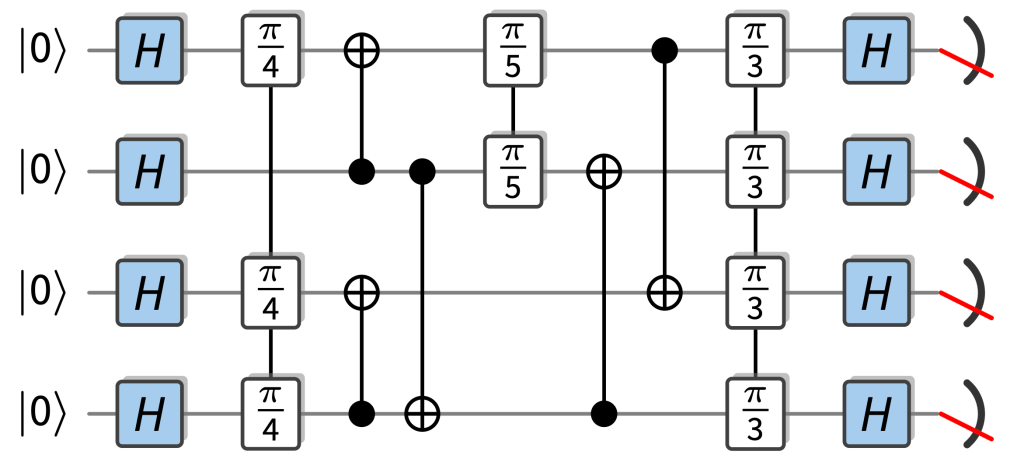
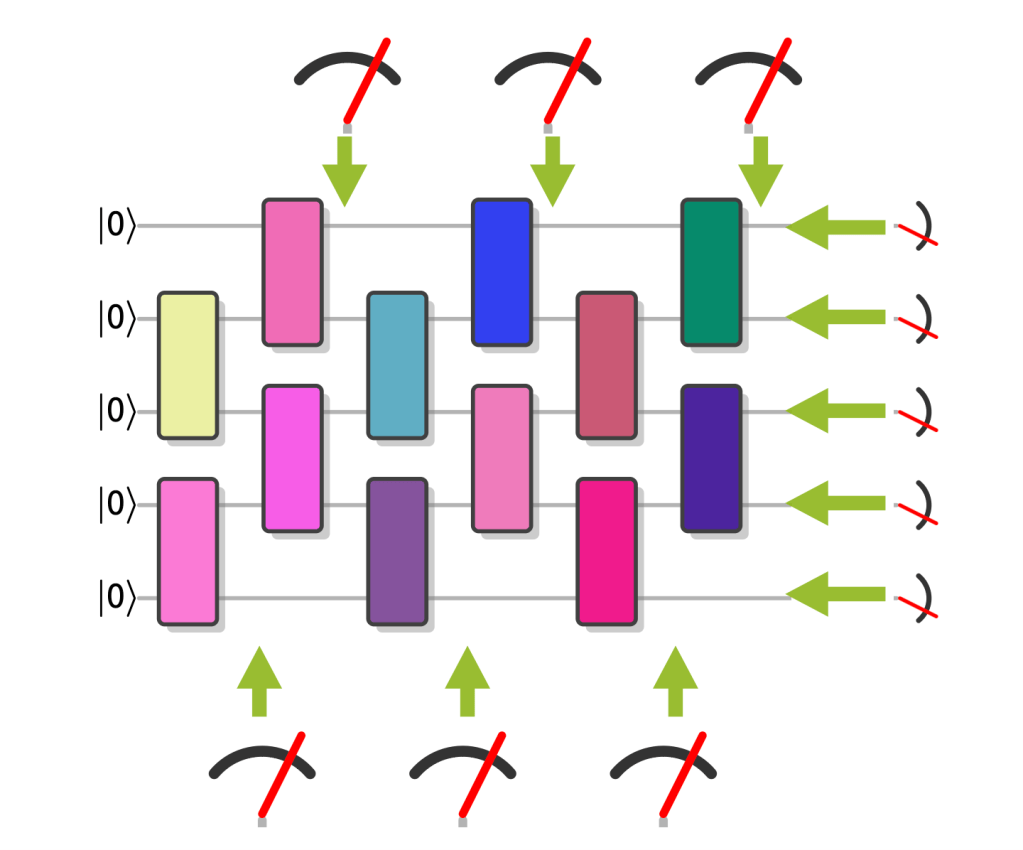
Table I claims that sampling tasks alone are not useful since they are not even quantumly repeatable. One may wonder if sampling tasks could be useful in some way. After all, classical Monte Carlo sampling algorithms are widely used in practice. However, applications of sampling typically use samples to extract meaningful information or specific features of the underlying distribution. For example, Monte Carlo sampling can be used to evaluate integrals in Bayesian inference and statistical physics. In contrast, samples obtained from random quantum circuits lack any discernible features. If a collection of quantum algorithms generated samples containing meaningful signals from which one could extract classically hard-to-compute values, those algorithms would effectively transition into the compute a value category.

Table I also claims that proofs of quantumness are not useful. This is not completely true—one potential application is generating certifiable randomness. However, such applications are generally cryptographic rather than computational in nature. Specifically, proofs of quantumness cannot help us solve problems or answer questions whose solutions we do not already know.

Finally, there are several exciting directions proposing applications of quantum technologies in sensing and metrology, communication, learning with quantum memory, and streaming. These are very interesting, and I hope that mankind’s second century of quantum mechanics brings forth all flavors of capabilities. However, the technological momentum is mostly focused on building quantum computers for the purpose of computational advantage, and so this is where breakthroughs will have the greatest immediate impact.

Don’t be too afraid

At the annual QIP conference, only a handful of papers out of hundreds each year attempt to advance new quantum algorithms. Given the stakes, why is this number so low? One common explanation is that quantum algorithm research is simply too difficult. Nevertheless, we have seen substantial progress in quantum algorithms in recent years. After an underwhelming lack of end-to-end proposals with the potential for utility between the years 2000 and 2020, Table I exhibits several breakthroughs from the past 5 years.

In between blind optimism and resigned pessimism, embracing a mission-driven mindset can propel our field forward. We should allow ourselves to adopt a more exploratory, scrappier approach: We can hunt for quantum advantages in yet-unstudied problems or subtle signals in the third decimal place. The bar for meaningful progress is lower than it might seem, and even incremental advances are valuable. Don’t be too afraid!

  1. Quadratic speedups are widespread but will not form the basis of practical quantum advantage due to the overheads associated with quantum error-correction. ↩︎

The first and second centuries of quantum mechanics

At this week’s American Physical Society Global Physics Summit in Anaheim, California, John Preskill spoke at an event celebrating 100 years of groundbreaking advances in quantum mechanics. Here are his remarks.

Welcome, everyone, to this celebration of 100 years of quantum mechanics hosted by the Physical Review Journals. I’m John Preskill and I’m honored by this opportunity to speak today. I was asked by our hosts to express some thoughts appropriate to this occasion and to feel free to share my own personal journey as a physicist. I’ll embrace that charge, including the second part of it, perhaps even more that they intended. But over the next 20 minutes I hope to distill from my own experience some lessons of broader interest.

I began graduate study in 1975, the midpoint of the first 100 years of quantum mechanics, 50 years ago and 50 years after the discovery of quantum mechanics in 1925 that we celebrate here. So I’ll seize this chance to look back at where quantum physics stood 50 years ago, how far we’ve come since then, and what we can anticipate in the years ahead.

As an undergraduate at Princeton, I had many memorable teachers; I’ll mention just one: John Wheeler, who taught a full-year course for sophomores that purported to cover all of physics. Wheeler, having worked with Niels Bohr on nuclear fission, seemed implausibly old, though he was actually 61. It was an idiosyncratic course, particularly because Wheeler did not refrain from sharing with the class his current research obsessions. Black holes were a topic he shared with particular relish, including the controversy at the time concerning whether evidence for black holes had been seen by astronomers. Especially notably, when covering the second law of thermodynamics, he challenged us to ponder what would happen to entropy lost behind a black hole horizon, something that had been addressed by Wheeler’s graduate student Jacob Bekenstein, who had finished his PhD that very year. Bekenstein’s remarkable conclusion that black holes have an intrinsic entropy proportional to the event horizon area delighted the class, and I’ve had had many occasions to revisit that insight in the years since then. The lesson being that we should not underestimate the potential impact of sharing our research ideas with undergraduate students.

Stephen Hawking made that connection between entropy and area precise the very next year when he discovered that black holes radiate; his resulting formula for black hole entropy, a beautiful synthesis of relativity, quantum theory, and thermodynamics ranks as one of the shining achievements in the first 100 years of quantum mechanics. And it raised a deep puzzle pointed out by Hawking himself with which we have wrestled since then, still without complete success — what happens to information that disappears inside black holes?

Hawking’s puzzle ignited a titanic struggle between cherished principles. Quantum mechanics tells us that as quantum systems evolve, information encoded in a system can get scrambled into an unrecognizable form, but cannot be irreversibly destroyed. Relativistic causality tells us that information that falls into a black hole, which then evaporates, cannot possibly escape and therefore must be destroyed. Who wins – quantum theory or causality? A widely held view is that quantum mechanics is the victor, that causality should be discarded as a fundamental principle. This calls into question the whole notion of spacetime — is it fundamental, or an approximate property that emerges from a deeper description of how nature works? If emergent, how does it emerge and from what? Fully addressing that challenge we leave to the physicists of the next quantum century.

I made it to graduate school at Harvard and the second half century of quantum mechanics ensued. My generation came along just a little too late to take part in erecting the standard model of particle physics, but I was drawn to particle physics by that intoxicating experimental and theoretical success. And many new ideas were swirling around in the mid and late 70s of which I’ll mention only two. For one, appreciation was growing for the remarkable power of topology in quantum field theory and condensed matter, for example the theory of topological solitons. While theoretical physics and mathematics had diverged during the first 50 years of quantum mechanics, they have frequently crossed paths in the last 50 years, and topology continues to bring both insight and joy to physicists. The other compelling idea was to seek insight into fundamental physics at very short distances by searching for relics from the very early history of the universe. My first publication resulted from contemplating a question that connected topology and cosmology: Would magnetic monopoles be copiously produced in the early universe? To check whether my ideas held water, I consulted not a particle physicist or a cosmologist, but rather a condensed matter physicist (Bert Halperin) who provided helpful advice. The lesson being that scientific opportunities often emerge where different subfields intersect, a realization that has helped to guide my own research over the following decades.

Looking back at my 50 years as a working physicist, what discoveries can the quantumists point to with particular pride and delight?

I was an undergraduate when Phil Anderson proclaimed that More is Different, but as an arrogant would be particle theorist at the time I did not appreciate how different more can be. In the past 50 years of quantum mechanics no example of emergence was more stunning than the fractional quantum Hall effect. We all know full well that electrons are indivisible particles. So how can it be that in a strongly interacting two-dimensional gas an electron can split into quasiparticles each carrying a fraction of its charge? The lesson being: in a strongly-correlated quantum world, miracles can happen. What other extraordinary quantum phases of matter await discovery in the next quantum century?

Another thing I did not adequately appreciate in my student days was atomic physics. Imagine how shocked those who elucidated atomic structure in the 1920s would be by the atomic physics of today. To them, a quantum measurement was an action performed on a large ensemble of similarly prepared systems. Now we routinely grab ahold of a single atom, move it, excite it, read it out, and induce pairs of atoms to interact in precisely controlled ways. When interest in quantum computing took off in the mid-90s, it was ion-trap clock technology that enabled the first quantum processors. Strong coupling between single photons and single atoms in optical and microwave cavities led to circuit quantum electrodynamics, the basis for today’s superconducting quantum computers. The lesson being that advancing our tools often leads to new capabilities we hadn’t anticipated. Now clocks are so accurate that we can detect the gravitational redshift when an atom moves up or down by a millimeter in the earth’s gravitational field. Where will the clocks of the second quantum century take us?

Surely one of the great scientific triumphs of recent decades has been the success of LIGO, the laser interferometer gravitational-wave observatory. If you are a gravitational wave scientist now, your phone buzzes so often to announce another black hole merger that it’s become annoying. LIGO would not be possible without advanced laser technology, but aside from that what’s quantum about LIGO? When I came to Caltech in the early 1980s, I learned about a remarkable idea (from Carl Caves) that the sensitivity of an interferometer can be enhanced by a quantum strategy that did not seem at all obvious — injecting squeezed vacuum into the interferometer’s dark port. Now, over 40 years later, LIGO improves its detection rate by using that strategy. The lesson being that theoretical insights can enhance and transform our scientific and technological tools. But sometimes that takes a while.

What else has changed since 50 years ago? Let’s give thanks for the arXiv. When I was a student few scientists would type their own technical papers. It took skill, training, and patience to operate the IBM typewriters of the era. And to communicate our results, we had no email or world wide web. Preprints arrived by snail mail in Manila envelopes, if you were lucky enough to be on the mailing list. The Internet and the arXiv made scientific communication far faster, more convenient, and more democratic, and LaTeX made producing our papers far easier as well. And the success of the arXiv raises vexing questions about the role of journal publication as the next quantum century unfolds.

I made a mid-career shift in research direction, and I’m often asked how that came about. Part of the answer is that, for my generation of particle physicists, the great challenge and opportunity was to clarify the physics beyond the standard model, which we expected to provide a deeper understanding of how nature works. We had great hopes for the new phenomenology that would be unveiled by the Superconducting Super Collider, which was under construction in Texas during the early 90s. The cancellation of that project in 1993 was a great disappointment. The lesson being that sometimes our scientific ambitions are thwarted because the required resources are beyond what society will support. In which case, we need to seek other ways to move forward.

And then the next year, Peter Shor discovered the algorithm for efficiently finding the factors of a large composite integer using a quantum computer. Though computational complexity had not been part of my scientific education, I was awestruck by this discovery. It meant that the difference between hard and easy problems — those we can never hope to solve, and those we can solve with advanced technologies — hinges on our world being quantum mechanical. That excited me because one could anticipate that observing nature through a computational lens would deepen our understanding of fundamental science. I needed to work hard to come up to speed in a field that was new to me — teaching a course helped me a lot.

Ironically, for 4 ½ years in the mid-1980s I sat on the same corridor as Richard Feynman, who had proposed the idea of simulating nature with quantum computers in 1981. And I never talked to Feynman about quantum computing because I had little interest in that topic at the time. But Feynman and I did talk about computation, and in particular we were both very interested in what one could learn about quantum chromodynamics from Euclidean Monte Carlo simulations on conventional computers, which were starting to ramp up in that era. Feynman correctly predicted that it would be a few decades before sufficient computational power would be available to make accurate quantitative predictions about nonperturbative QCD. But it did eventually happen — now lattice QCD is making crucial contributions to the particle physics and nuclear physics programs. The lesson being that as we contemplate quantum computers advancing our understanding of fundamental science, we should keep in mind a time scale of decades.

Where might the next quantum century take us? What will the quantum computers of the future look like, or the classical computers for that matter? Surely the qubits of 100 years from now will be much different and much better than what we have today, and the machine architecture will no doubt be radically different than what we can currently envision. And how will we be using those quantum computers? Will our quantum technology have transformed medicine and neuroscience and our understanding of living matter? Will we be building materials with astonishing properties by assembling matter atom by atom? Will our clocks be accurate enough to detect the stochastic gravitational wave background and so have reached the limit of accuracy beyond which no stable time standard can even be defined? Will quantum networks of telescopes be observing the universe with exquisite precision and what will that reveal? Will we be exploring the high energy frontier with advanced accelerators like muon colliders and what will they teach us? Will we have identified the dark matter and explained the dark energy? Will we have unambiguous evidence of the universe’s inflationary origin? Will we have computed the parameters of the standard model from first principles, or will we have convinced ourselves that’s a hopeless task? Will we have understood the fundamental constituents from which spacetime itself is composed?

There is an elephant in the room. Artificial intelligence is transforming how we do science at a blistering pace. What role will humans play in the advancement of science 100 years from now? Will artificial intelligence have melded with quantum intelligence? Will our instruments gather quantum data Nature provides, transduce it to quantum memories, and process it with quantum computers to discern features of the world that would otherwise have remained deeply hidden?

To a limited degree, in contemplating the future we are guided by the past. Were I asked to list the great ideas about physics to surface over the 50-year span of my career, there are three in particular I would nominate for inclusion on that list. (1) The holographic principle, our best clue about how gravity and quantum physics fit together. (2) Topological quantum order, providing ways to distinguish different phases of quantum matter when particles strongly interact with one another. (3) And quantum error correction, our basis for believing we can precisely control very complex quantum systems, including advanced quantum computers. It’s fascinating that these three ideas are actually quite closely related. The common thread connecting them is that all relate to the behavior of many-particle systems that are highly entangled.

Quantum error correction is the idea that we can protect quantum information from local noise by encoding the information in highly entangled states such that the protected information is inaccessible locally, when we look at just a few particles at a time. Topological quantum order is the idea that different quantum phases of matter can look the same when we observe them locally, but are distinguished by global properties hidden from local probes — in other words such states of matter are quantum memories protected by quantum error correction. The holographic principle is the idea that all the information in a gravitating three-dimensional region of space can be encoded by mapping it to a local quantum field theory on the two-dimensional boundary of the space. And that map is in fact the encoding map of a quantum error-correcting code. These ideas illustrate how as our knowledge advances, different fields of physics are converging on common principles. Will that convergence continue in the second century of quantum mechanics? We’ll see.

As we contemplate the long-term trajectory of quantum science and technology, we are hampered by our limited imaginations. But one way to loosely characterize the difference between the past and the future of quantum science is this: For the first hundred years of quantum mechanics, we achieved great success at understanding the behavior of weakly correlated many-particles systems relevant to for example electronic structure, atomic and molecular physics, and quantum optics. The insights gained regarding for instance how electrons are transported through semiconductors or how condensates of photons and atoms behave had invaluable scientific and technological impact. The grand challenge and opportunity we face in the second quantum century is acquiring comparable insight into the complex behavior of highly entangled states of many particles which are well beyond the reach of current theory or computation. This entanglement frontier is vast, inviting, and still largely unexplored. The wonders we encounter in the second century of quantum mechanics, and their implications for human civilization, are bound to supersede by far those of the first century. So let us gratefully acknowledge the quantum heroes of the past and present, and wish good fortune to the quantum explorers of the future.

Image credit: Jorge Cham

Lessons in frustration

Assa Auerbach’s course was the most maddening course I’ve ever taken. 

I was a master’s student in the Perimeter Scholars International program at the Perimeter Institute for Theoretical Physics. Perimeter trotted in world experts to lecture about modern physics. Many of the lecturers dazzled us with their pedagogy and research. We grew to know them not only in class and office hours, but also over meals at Perimeter’s Black-Hole Bistro.

Assa hailed from the Technion in Haifa, Israel. He’d written the book—at least, a book—about condensed matter, the physics of materials. He taught us condensed matter, according to some definition of “taught.” 

Assa zipped through course material. He refrained from defining terminology. He used loose, imprecise language that conveys intuition to experts and only to experts. He threw at us the Hubbard model, the Heisenberg model, the Meissner effect, and magnons. If you don’t know what those terms mean, then I empathize. Really.

So I fought Assa like a groom hauling on a horse’s reins. I raised my hand again and again, insisting on clarifications. I shot off questions as quickly as I could invent them, because they were the only barriers slowing him down. He told me they were.

One day, we were studying magnetism. It arises because each atom in a magnet has a magnetic moment, a tiny compass that can angle in any direction. Under certain conditions, atoms’ magnetic moments tend to angle in opposite directions. Sometimes, not all atoms can indulge this tendency, as in the example below.

Physicists call this clash frustration, which I wanted to understand comprehensively and abstractly. But Assa wouldn’t define frustration; he’d only sketch an example. 

But what is frustration? I insisted.

It’s when the atoms aren’t happy, he said, like you are now.

After class, I’d escape to the bathroom and focus on breathing. My body felt as though it had been battling an assailant physically. 

Earlier this month, I learned that Assa had passed away suddenly. A former Perimeter classmate reposted the Technion’s news blurb on Facebook. A photo of Assa showed a familiar smile flashing beneath curly salt-and-pepper hair.

Am I defaming the deceased? No. The news of Assa’s passing walloped me as hard as any lecture of his did. I liked Assa and respected him; he was a researcher’s researcher. And I liked Assa for liking me for fighting to learn.

Photo courtesy of the Technion

One day, at the Bistro, Assa explained why the class had leaped away from the foundations of condensed matter into advanced topics so quickly: earlier discoveries felt “stale” to him. Everyone, he believed, could smell their moldiness. I disagreed, although I didn’t say so: decades-old discoveries qualify as new to anyone learning about them for the first time. Besides, 17th-century mechanics and 19th-century thermodynamics soothe my soul. But I respected Assa’s enthusiasm for the cutting-edge. And I did chat with him at the Bistro, where his friendliness shone like that smile.

Five years later, I was sojourning at the Kavli Institute for Theoretical Physics (KITP) in Santa Barbara, near the end of my PhD. The KITP, like Perimeter, draws theorists from across the globe. I spotted Assa among them and reached out about catching up. We discussed thermodynamics and experiments and travel. 

Assa confessed that, at Perimeter, he’d been lecturing to himself—presenting lectures that he’d have enjoyed hearing, rather than lectures designed for master’s students. He’d appreciated my slowing him down. Once, he explained, he’d guest-lectured at Harvard. Nobody asked questions, so he assumed that the students must have known the material already, that he must have been boring them. So he sped up. Nobody said anything, so he sped up further. At the end, he discovered that nobody had understood any of his material. So he liked having an objector keeping him in check.

And where had this objector ended up? In a PhD program and at a mecca for theoretical physicists. Pursuing the cutting edge, a budding researcher’s researcher. I’d angled in the same direction as my former teacher. And one Perimeter classmate, a faculty member specializing in condensed matter today, waxed even more eloquently about Assa’s inspiration when we were students.

Physics needs more scientists like Assa: nose to the wind, energetic, low on arrogance. Someone who’d respond to this story of frustration with that broad smile.

Ten lessons I learned from John Preskill

Last August, Toronto’s Centre for Quantum Information and Quantum Control (CQIQC) gave me 35 minutes to make fun of John Preskill in public. CQIQC was hosting its biannual conference, also called CQIQC, in Toronto. The conference features the awarding of the John Stewart Bell Prize for fundamental quantum physics. The prize derives its name for the thinker who transformed our understanding of entanglement. John received this year’s Bell Prize for identifying, with collaborators, how we can learn about quantum states from surprisingly few trials and measurements.

The organizers invited three Preskillites to present talks in John’s honor: Hoi-Kwong Lo, who’s helped steer quantum cryptography and communications; Daniel Gottesman, who’s helped lay the foundations of quantum error correction; and me. I believe that one of the most fitting ways to honor John is by sharing the most exciting physics you know of. I shared about quantum thermodynamics for (simple models of) nuclear physics, along with ten lessons I learned from John. You can watch the talk here and check out the paper, recently published in Physical Review Letters, for technicalities.

John has illustrated this lesson by wrestling with the black-hole-information paradox, including alongside Stephen Hawking. Quantum information theory has informed quantum thermodynamics, as Quantum Frontiers regulars know. Quantum thermodynamics is the study of work (coordinated energy that we can harness directly) and heat (the energy of random motion). Systems exchange heat with heat reservoirs—large, fixed-temperature systems. As I draft this blog post, for instance, I’m radiating heat into the frigid air in Montreal Trudeau Airport.

So much for quantum information. How about high-energy physics? I’ll include nuclear physics in the category, as many of my Europeans colleagues do. Much of nuclear physics and condensed matter involves gauge theories. A gauge theory is a model that contains more degrees of freedom than the physics it describes. Similarly, a friend’s description of the CN Tower could last twice as long as necessary, due to redundancies. Electrodynamics—the theory behind light bulbs—is a gauge theory. So is quantum chromodynamics, the theory of the strong force that holds together a nucleus’s constituents.

Every gauge theory obeys Gauss’s law. Gauss’s law interrelates the matter at a site to the gauge field around the site. For example, imagine a positive electric charge in empty space. An electric field—a gauge field—points away from the charge at every spot in space. Imagine a sphere that encloses the charge. How much of the electric field is exiting the sphere? The answer depends on the amount of charge inside, according to Gauss’s law.

Gauss’s law interrelates the matter at a site with the gauge field nearby…which is related to the matter at the next site…which is related to the gauge field farther away. So everything depends on everything else. So we can’t easily claim that over here are independent degrees of freedom that form a system of interest, while over there are independent degrees of freedom that form a heat reservoir. So how can we define the heat and work exchanged within a lattice gauge theory? If we can’t, we should start biting our nails: thermodynamics is the queen of the physical theories, a metatheory expected to govern all other theories. But how can we define the quantum thermodynamics of lattice gauge theories? My colleague Zohreh Davoudi and her group asked me this question.

I had the pleasure of addressing the question with five present and recent Marylanders…

…the mention of whom in my CQIQC talk invited…

I’m a millennial; social media took off with my generation. But I enjoy saying that my PhD advisor enjoys far more popularity on social media than I do.

How did we begin establishing a quantum thermodynamics for lattice gauge theories?

Someone who had a better idea than I, when I embarked upon this project, was my colleague Chris Jarzynski. So did Dvira Segal, a University of Toronto chemist and CQIQC’s director. So did everyone else who’d helped develop the toolkit of strong-coupling thermodynamics. I’d only heard of the toolkit, but I thought it sounded useful for lattice gauge theories, so I invited Chris to my conversations with Zohreh’s group.

I didn’t create this image for my talk, believe it or not. The picture already existed on the Internet, courtesy of this blog.

Strong-coupling thermodynamics concerns systems that interact strongly with reservoirs. System–reservoir interactions are weak, or encode little energy, throughout much of thermodynamics. For example, I exchange little energy with Montreal Trudeau’s air, relative to the amount of energy inside me. The reason is, I exchange energy only through my skin. My skin forms a small fraction of me because it forms my surface. My surface is much smaller than my volume, which is proportional to the energy inside me. So I couple to Montreal Trudeau’s air weakly.

My surface would be comparable to my volume if I were extremely small—say, a quantum particle. My interaction with the air would encode loads of energy—an amount comparable to the amount inside me. Should we count that interaction energy as part of my energy or as part of the air’s energy? Could we even say that I existed, and had a well-defined form, independently of that interaction energy? Strong-coupling thermodynamics provides a framework for answering these questions.

Kevin Kuns, a former Quantum Frontiers blogger, described how John explains physics through simple concepts, like a ball attached to a spring. John’s gentle, soothing voice resembles a snake charmer’s, Kevin wrote. John charms his listeners into returning to their textbooks and brushing up on basic physics.

Little is more basic than the first law of thermodynamics, synopsized as energy conservation. The first law governs how much a system’s internal energy changes during any process. The energy change equals the heat absorbed, plus the work absorbed, by the system. Every formulation of thermodynamics should obey the first law—including strong-coupling thermodynamics. 

Which lattice-gauge-theory processes should we study, armed with the toolkit of strong-coupling thermodynamics? My collaborators and I implicitly followed

and

We don’t want to irritate experimentalists by asking them to run difficult protocols. Tom Rosenbaum, on the left of the previous photograph, is a quantum experimentalist. He’s also the president of Caltech, so John has multiple reasons to want not to irritate him.

Quantum experimentalists have run quench protocols on many quantum simulators, or special-purpose quantum computers. During a quench protocol, one changes a feature of the system quickly. For example, many quantum systems consist of particles hopping across a landscape of hills and valleys. One might flatten a hill during a quench.

We focused on a three-step quench protocol: (1) Set the system up in its initial landscape. (2) Quickly change the landscape within a small region. (3) Let the system evolve under its natural dynamics for a long time. Step 2 should cost work. How can we define the amount of work performed? By following

John wrote a blog post about how the typical physicist is a one-trick pony: they know one narrow subject deeply. John prefers to know two subjects. He can apply insights from one field to the other. A two-trick pony can show that Gauss’s law behaves like a strong interaction—that lattice gauge theories are strongly coupled thermodynamic systems. Using strong-coupling thermodynamics, the two-trick pony can define the work (and heat) exchanged within a lattice gauge theory. 

An experimentalist can easily measure the amount of work performed,1 we expect, for two reasons. First, the experimentalist need measure only the small region where the landscape changed. Measuring the whole system would be tricky, because it’s so large and it can contain many particles. But an experimentalist can control the small region. Second, we proved an equation that should facilitate experimental measurements. The equation interrelates the work performed1 with a quantity that seems experimentally accessible.

My team applied our work definition to a lattice gauge theory in one spatial dimension—a theory restricted to living on a line, like a caterpillar on a thin rope. You can think of the matter as qubits2 and the gauge field as more qubits. The system looks identical if you flip it upside-down; that is, the theory has a \mathbb{Z}_2 symmetry. The system has two phases, analogous to the liquid and ice phases of H_2O. Which phase the system occupies depends on the chemical potential—the average amount of energy needed to add a particle to the system (while the system’s entropy, its volume, and more remain constant).

My coauthor Connor simulated the system numerically, calculating its behavior on a classical computer. During the simulated quench process, the system began in one phase (like H_2O beginning as water). The quench steered the system around within the phase (as though changing the water’s temperature) or across the phase transition (as though freezing the water). Connor computed the work performed during the quench.1 The amount of work changed dramatically when the quench started steering the system across the phase transition. 

Not only could we define the work exchanged within a lattice gauge theory, using strong-coupling quantum thermodynamics. Also, that work signaled a phase transition—a large-scale, qualitative behavior.

What future do my collaborators and I dream of for our work? First, we want for an experimentalist to measure the work1 spent on a lattice-gauge-theory system in a quantum simulation. Second, we should expand our definitions of quantum work and heat beyond sudden-quench processes. How much work and heat do particles exchange while scattering in particle accelerators, for instance? Third, we hope to identify other phase transitions and macroscopic phenomena using our work and heat definitions. Fourth—most broadly—we want to establish a quantum thermodynamics for lattice gauge theories.

Five years ago, I didn’t expect to be collaborating on lattice gauge theories inspired by nuclear physics. But this work is some of the most exciting I can think of to do. I hope you think it exciting, too. And, more importantly, I hope John thought it exciting in Toronto.

I was a student at Caltech during “One Entangled Evening,” the campus-wide celebration of Richard Feynman’s 100th birthday. So I watched John sing and dance onstage, exhibiting no fear of embarrassing himself. That observation seemed like an appropriate note on which to finish with my slides…and invite questions from the audience.

Congratulations on your Bell Prize, John.

1Really, the dissipated work.

2Really, hardcore bosons.