Deal or no deal?

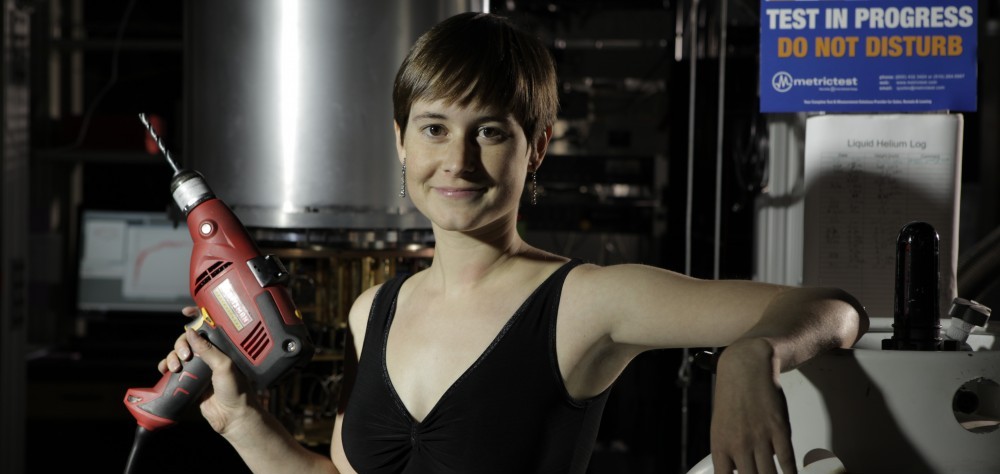
You wouldn’t think that scientists get to travel very much, but so far I have visited every continent on Earth but one: Alaska (hmm…) Yet, even before I was a world-renowned Professor at the top university in the universe (or, as I tell my parents “postdoc at Caltech”), I had penpals (when I was half my age – my age is a power of two – the concept of penpal was still alive and strong) from places like Argentina, Cyprus, Germany and Romania (gotta love international math and sports competitions). The friends I made were often local kids that would hang out with the visiting athletes (or mathletes, depending on the nature of the competition), so the reaction I got whenever I mentioned that “Μου αρέσει το volleyball και ο στίβος, αλλά τρελαίνομαι για τα μαθηματικά!” (I love volleyball and track & field, but I am crazy about math!) was pretty uniform: “Eh?”
Continue reading

Apollo

Neil Armstrong (1930-2012)

I was an eight-year-old second grader on April 12, 1961, when my father showed me a screaming headline with two-inch-high lettering in the afternoon newspaper: RUSSIAN 1ST SPACEMAN. Sensing a historic moment, I saved the front page and pasted it into a scrapbook. That was the first of many headlines I saved through the years of the “space race.”
Continue reading

How to build a teleportation machine: Intro to entanglement

Oh my, I ate the whole thing again. Are physicists eligible for Ben and Jerry’s sponsorships?

I’m not sure what covers more ground when I go for a long run — my physical body or my metaphorical mind? Chew on that one, zen scholar! Anyways, I basically wrote the following post during my most recent run, and I also worked up an agressive appetite for Ben and Jerry’s ice cream. I’m going to reward myself after writing this post by devouring a pint of “half-baked” brown-kie ice cream (you can’t find this stuff in your local store.)

The goal of this series of blog posts is to explain quantum teleportation and how Caltech built a machine to do this. The tricky aspect is that there are two foundational elements of quantum information that need to be explained first — they’re both phenomenally interesting in their own right, but substantially subtler than a teleportation device, so the goal with this series is to explain qubits and entanglement at a level which will allow you to appreciate what our teleportation machine does (and after explaining quantum teleportation, hopefully some of you will be motivated to dive deeper into the subtleties of quantum information.) This post will explain entanglement.
Continue reading

How to build a teleportation machine: Intro to qubits

A match made in heaven.

If a tree falls in a forest, and nobody is there to hear it, does it make a sound? The answer was obvious to my 12-year-old self — of course it made a sound. More specifically, something ranging from a thud to a thump. There doesn’t need to be an animal present for the tree to jiggle air molecules. Classical physics for the win! Around the same time I was exposed to this thought experiment, I read Michael Crichton’s Timeline. The premise is simple, but not necessarily feasible: archeologists use ‘quantum technology’ (many-worlds interpretation and quantum teleportation) to travel to the Dordogne region of France in the mid 1300s. Blood, guts, action, drama, and plot twists ensue. I haven’t returned to this book since I was thirteen, so I’m guaranteed to have the plot wrong, but for better or worse, I credit this book with planting the seeds of a misconception about what ‘quantum teleportation’ actually entails. This is the first of a multi-part post which will introduce readers to the one-and-only way we know of how teleportation works.
Continue reading

Universal thread

How many miles per gallon?

Thoughts while watching the Olympics …

My car gets about 30 miles per gallon of gasoline. Miles per gallon has the dimensions of inverse length squared, and the reciprocal of 30 miles per gallon is roughly the area of a circle whose diameter is 0.3 mm, or about 1/100 of an inch.

That means that when I drive my car, the fuel I consume has the same volume as a thin thread stretched along the road over the distance I travel, with a thickness just a few times the width of a human hair.*

That skinny little thread of gasoline is enough to keep my car going! Thinking about it reinforces one’s appreciation for the internal combustion engine.
Continue reading

Two-trick pony

Steve Flammia wrote a flattering post on The Quantum Pontiff about a game we used to play, in which Steve would ask a question and I would have just a minute or two to prepare a 20 minute mini-lecture answering the question. Steve reports that “these were not easy questions.” But actually most of them were.

Steve gives an example: “Why do neutrinos have a small but nonzero mass?”
Continue reading

Supremacy Now?

Martin Zwierlein

In May 1994, Artur Ekert visited Caltech to give a seminar about quantum cryptography. Near the end of the talk, Ekert revealed an exciting new development — just weeks earlier, Peter Shor had announced the discovery of an efficient quantum algorithm for finding the prime factors of large composite integers, a problem for which no efficient classical algorithm is known.

Perhaps I’ve embellished the memory over time, but I recall being awestruck by this news. I spent the next month at the Isaac Newton Institute attending a workshop about quantum black holes, and though it was a very good workshop and I had some great discussions, I spent most of my time there secretly trying to understand Shor’s paper, which Ekert had emailed to me. This took some effort, because I knew little about algorithms or computational complexity at that time (even less than I know now), but by the end of the workshop I felt I understood the ideas behind Shor’s algorithm pretty well. I did not yet realize that I was in the midst of a career transition from particle physics to quantum information science.
Continue reading

Closure

Frank Wilczek

There are two kinds of particle physicists: those who wanted the Higgs boson to be discovered, and those who wanted the Higgs boson not to be discovered.

At a conference last fall, I sat at the same dinner table with Frank Wilczek. Inevitably, the conversation came around to the prospects for discovering the Higgs boson in 2012. “It would be much more exciting if the Higgs isn’t found,” I insisted. Frank did not claim to disagree, but was adamant: “I want closure.”*

In the late fall of 1974, I had applied to graduate school, but did not yet know where I would be accepted. Roberta (then my fiance, now my wife) and I were in Boston for the day, so we decided to stop by Harvard to look around. We noticed Steve Weinberg was in his office, and though I had never met Weinberg and had no appointment, we barged in. I introduced Roberta and announced I was interested in coming to Harvard the following year.
Continue reading

More to come

John Wheeler. Photo by the New York Times/Redux.

As a sophomore at Princeton I took a class called Honors Physics from a man named Johnny Wheeler. He wore a suit and tie to class, loved explosions, and created vivid art in real time with colored chalk. Implausibly old, he had worked on nuclear fission with Niels Bohr. He was 61.

The lectures were long on inspiration and short on information about how to do the homework. I was in awe of Wheeler. Some students thought he sucked.

One day I arrived late to find Wheeler conducting a poll. We were voting on the future of science: is there “more to come” or “less to come”? I don’t remember the count, but “more to come” won handily. Wheeler was pleased.

Later, at a student-faculty lunch, Wheeler seemed troubled. He had been asked to explain the essence of quantum mechanics in five words or less, and was stumped. Frank Calaprice, a nuclear physicist within earshot, interjected helpfully, “What we expect to measure?” I was silent.

The question was absurd. It was fascinating. I still think about it. I can’t answer it.

This year I taught a course on quantum statistical physics to Caltech sophomores. I wore khakis and always used the white chalk. Though I’m 59, few students seemed awed. Some thought I sucked. Maybe I did sometimes.

Johnny Wheeler never blogged. If he had, some readers would have been awed. Some would have thought he sucked.

But Johnny would not have reminisced about a class he took 40 years ago. He knew there was more to come.

Welcome to Quantum Frontiers! We hope that the posts to come will be long on inspiration, even if short on information about how to do your homework. Enjoy!
