The Science that made Stephen Hawking famous

In anticipation of The Theory of Everything which comes out today, and in the spirit of continuing with Quantum Frontiers’ current movie theme, I wanted to provide an overview of Stephen Hawking’s pathbreaking research. Or at least to the best of my ability—not every blogger on this site has won bets against Hawking! In particular, I want to describe Hawking’s work during the late ‘60s and through the ’70s. His work during the ’60s is the backdrop for this movie and his work during the ’70s revolutionized our understanding of black holes.

stephen-hawking-release

(Portrait of Stephen Hawking outside the Department of Applied Mathematics and Theoretical Physics, Cambridge. Credit: Jason Bye)

As additional context, this movie is coming out at a fascinating time, at a time when Hawking’s contributions appear more prescient and important than ever before. I’m alluding to the firewall paradox, which is the modern reincarnation of the information paradox (which will be discussed below), and which this blog has discussed multiple times. Progress through paradox is an important motto in physics and Hawking has been at the center of arguably the most challenging paradox of the past half century. I should also mention that despite irresponsible journalism in response to Hawking’s “there are no black holes” comment back in January, that there is extremely solid evidence that black holes do in fact exist. Hawking was referring to a technical distinction concerning the horizon/boundary of black holes.

Now let’s jump back and imagine that we are all young graduate students at Cambridge in the early ‘60s. Our protagonist, a young Hawking, had recently been diagnosed with ALS, he had recently met Jane Wilde and he was looking for a thesis topic. This was an exciting time for Einstein’s Theory of General Relativity (GR). The gravitational redshift had recently been confirmed by Pound and Rebka at Harvard, which put the theory on extremely solid footing. This was the third of three “classical tests of GR.” So now that everyone was truly convinced that GR is correct, it became important to get serious about investigating its most bizarre predictions. Hawking and Penrose picked up on this theme most notably.The mathematics of GR allows for singularities which lead to things like the big bang and black holes. This mathematical possibility was known since the works of Friedmann, Lemaitre and Oppenheimer+Snyder starting all the way back in the 1920s, but these calculations involved unphysical assumptions—usually involving unrealistic symmetries. Hawking and Penrose each asked (and answered) the questions: how robust and generic are these mathematical singularities? Will they persist even if we get rid of assumptions like perfect spherical symmetry of matter? What is their interpretation in physics?

I know that I have now used the word “singularity” multiple times without defining it. However, this is for good reason—it’s very hard to assign a precise definition to the term! Some examples of singularities include regions of “infinite curvature” or with “conical deficits.”

Singularity theorems applied to cosmology: Hawking’s first major results, starting with his thesis in 1965, was proving that singularities on the cosmological scale—such as the big bang—were indeed generic phenomena and not just mathematical artifacts. This work was published immediately after, and it built upon, a seminal paper by Penrose. Also, I apologize for copping-out again, but it’s outside the scope of this post to say more about the big bang, but as a rough heuristic, imagine that if you run time backwards then you obtain regions of infinite density. Hawking and Penrose spent the next five or so years stripping away as many assumptions as they could until they were left with rather general singularity theorems. Essentially, they used MATH to say something exceptionally profound about THE BEGINNING OF THE UNIVERSE! Namely that if you start with any solution to Einstein’s equations which is consistent with our observed universe, and run the solution backwards, then you will obtain singularities (regions of infinite density at the Big Bang in this case)! However, I should mention that despite being a revolutionary leap in our understanding of cosmology, this isn’t the end of the story, and that Hawking has also pioneered an attempt to understand what happens when you add quantum effects to the mix. This is still a very active area of research.

Singularity theorems applied to black holes: the first convincing evidence for the existence of astrophysical black holes didn’t come until 1972 with the discovery of Cygnus X-1, and even this discovery was wrought with controversy. So imagine yourself as Hawking back in the late ’60s. He and Penrose had this powerful machinery which they had successfully applied to better understand THE BEGINNING OF THE UNIVERSE but there was still a question about whether or not black holes actually existed in nature (not just in mathematical fantasy land.) In the very late ‘60s and early ’70s, Hawking, Penrose, Carter and others convincingly argued that black holes should exist. Again, they used math to say something about how the most bizarre corners of the universe should behave–and then black holes were discovered observationally a few years later. Math for the win!

No hair theorem: after convincing himself that black holes exist Hawking continued his theoretical studies about their strange properties. In the early ’70s, Hawking, Carter, Israel and Robinson proved a very deep and surprising conjecture of John Wheeler–that black holes have no hair! This name isn’t the most descriptive but it’s certainly provocative. More specifically they showed that only a short time after forming, a black hole is completely described by only a few pieces of data: knowledge of its position, mass, charge, angular momentum and linear momentum (X, M, Q, J and L). It only takes a few dozen numbers to describe an exceptionally complicated object. Contrast this to, for example, 1000 dust particles where you would need tens of thousands of datum (the position and momentum of each particle, their charge, their mass, etc.) This is crazy, the number of degrees of freedom seems to decrease as objects form into black holes?

Black hole thermodynamics: around the same time, Carter, Hawking and Bardeen proved a result similar to the second law of thermodynamics (it’s debatable how realistic their assumptions are.) Recall that this is the law where “the entropy in a closed system only increases.” Hawking showed that, if only GR is taken into account, then the area of a black holes’ horizon only increases. This includes that if two black holes with areas A_1 and A_2 merge then the new area A* will be bigger than the sum of the original areas A_1+A_2.

Combining this with the no hair theorem led to a fascinating exploration of a connection between thermodynamics and black holes. Recall that thermodynamics was mainly worked out in the 1800s and it is very much a “classical theory”–one that didn’t involve either quantum mechanics or general relativity. The study of thermodynamics resulted in the thrilling realization that it could be summarized by four laws. Hawking and friends took the black hole connection seriously and conjectured that there would also be four laws of black hole mechanics.

In my opinion, the most interesting results came from trying to understand the entropy of black hole. The entropy is usually the logarithm of the number of possible states consistent with observed ‘large scale quantities’. Take the ocean for example, the entropy is humungous. There are an unbelievable number of small changes that could be made (imagine the number of ways of swapping the location of a water molecule and a grain of sand) which would be consistent with its large scale properties like it’s temperature. However, because of the no hair theorem, it appears that the entropy of a black hole is very small? What happens when some matter with a large amount of entropy falls into a black hole? Does this lead to a violation of the second law of thermodynamics? No! It leads to a generalization! Bekenstein, Hawking and others showed that there are two contributions to the entropy in the universe: the standard 1800s version of entropy associated to matter configurations, but also contributions proportional to the area of black hole horizons. When you add all of these up, a new “generalized second law of thermodynamics” emerges. Continuing to take this thermodynamic argument seriously (dE=TdS specifically), it appeared that black holes have a temperature!

As a quick aside, a deep and interesting question is what degrees of freedom contribute to this black hole entropy? In the late ’90s Strominger and Vafa made exceptional progress towards answering this question when he showed that in certain settings, the number of microstates coming from string theory exactly reproduces the correct black hole entropy.

Black holes evaporate (Hawking Radiation): again, continuing to take this thermodynamic connection seriously, if black holes have a temperature then they should radiate away energy. But what is the mechanism behind this? This is when Hawking fearlessly embarked on one of the most heroic calculations of the 20th century in which he slogged through extremely technical calculations involving “quantum mechanics in a curved space” and showed that after superimposing quantum effects on top of general relativity, there is a mechanism for particles to escape from a black hole.

This is obviously a hard thing to describe, but for a hack-job analogy, imagine you have a hot plate in a cool room. Somehow the plate “radiates” away its energy until it has the same temperature as the room. How does it do this? By definition, the reason why a plate is hot, is because its molecules are jiggling around rapidly. At the boundary of the plate, sometimes a slow moving air molecule (lower temperature) gets whacked by a molecule in the plate and leaves with a higher momentum than it started with, and in return the corresponding molecule in the plate loses energy. After this happens an enormous number of times, the temperatures equilibrate. In the context of black holes, these boundary interactions would never happen without quantum mechanics. General relativity predicts that anything inside the event horizon is causally disconnected from anything on the outside and that’s that. However, if you take quantum effects into account, then for some very technical reasons, energy can be exchanged at the horizon (interface between the “inside” and “outside” of the black hole.)

Black hole information paradox: but wait, there’s more! These calculations weren’t done using a completely accurate theory of nature (we use the phrase “quantum gravity” as a placeholder for whatever this theory will one day be.) They were done using some nightmarish amalgamation of GR and quantum mechanics. Seminal thought experiments by Hawking led to different predictions depending upon which theory one trusted more: GR or quantum mechanics. Most famously, the information paradox considered what would happen if an “encyclopedia” were thrown into the black hole. GR predicts that after the black hole has fully evaporated, such that only empty space is left behind, that the “information” contained within this encyclopedia would be destroyed. (To readers who know quantum mechanics, replace “encylopedia” with “pure state”.) This prediction unacceptably violates the assumptions of quantum mechanics, which predict that the information contained within the encyclopedia will never be destroyed. (Maybe imagine you enclosed the black hole with perfect sensing technology and measured every photon that came out of the black hole. In principle, according to quantum mechanics, you should be able to reconstruct what was initially thrown into the black hole.)

Making all of this more rigorous: Hawking spent most of the rest of the ’70s making all of this more rigorous and stripping away assumptions. One particularly otherworldly and powerful tool involved redoing many of these black hole calculations using the euclidean path integral formalism.

I’m certain that I missed some key contributions and collaborators in this short history, and I sincerely apologize for that. However, I hope that after reading this you have a deepened appreciation for how productive Hawking was during this period. He was one of humanity’s earliest pioneers into the uncharted territory that we call quantum gravity. And he has inspired at least a few generations worth of theoretical physicists, obviously, including myself.

In addition to reading many of Hawking’s original papers, an extremely fun source for this post is a book which was published after his 60th birthday conference.

When I met with Steven Spielberg to talk about Interstellar

Today I had the awesome and eagerly anticipated privilege of attending a screening of the new film Interstellar, directed by Christopher Nolan. One can’t help but be impressed by Nolan’s fertile visual imagination. But you should know that Caltech’s own Kip Thorne also had a vital role in this project. Indeed, were there no Kip Thorne, Interstellar would never have happened.

On June 2, 2006, I participated in an unusual one-day meeting at Caltech, organized by Kip and the movie producer Lynda Obst (Sleepless in Seattle, Contact, The Invention of Lying, …). Lynda and Kip, who have been close since being introduced by their mutual friend Carl Sagan decades ago, had conceived a movie project together, and had collaborated on a “treatment” outlining the story idea. The treatment adhered to a core principle that was very important to Kip — that the movie be scientifically accurate. Though the story indulged in some wild speculations, at Kip’s insistence it skirted away from any flagrant violation of the firmly established laws of Nature. This principle of scientifically constrained speculation intrigued Steven Spielberg, who was interested in directing.

The purpose of the meeting was to brainstorm about the story and the science behind it with Spielberg, Obst, and Thorne. A remarkable group assembled, including physicists (Andrei Linde, Lisa Randall, Savas Dimopoulos, Mark Wise, as well as Kip), astrobiologists (Frank Drake, David Grinspoon), planetary scientists (Alan Boss, John Spencer, Dave Stevenson), and psychologists (Jay Buckey, James Carter, David Musson). As we all chatted and got acquainted, I couldn’t help but feel that we were taking part in the opening scene of a movie about making a movie. Spielberg came late and left early, but spent about three hours with us; he even brought along his Dad (an engineer).

Time_cover_interstellarThough the official release of Interstellar is still a few days away, you may already know from numerous media reports (including the cover story in this week’s Time Magazine) the essential elements of the story, which involves traveling through a wormhole seeking a new planet for humankind, a replacement for the hopelessly ravaged earth. The narrative evolved substantially as the project progressed, but traveling through a wormhole to visit a distant planet was already central to the original story.

Inevitably, some elements of the Obst/Thorne treatment did not survive in the final film. For one, Stephen Hawking was a prominent character in the original story; he joined the mission because of his unparalleled expertise at wormhole transversal, and Stephen’s ALS symptoms eased during prolonged weightlessness, only to recur upon return to earth gravity. Also, gravitational waves played a big part in the treatment; in particular the opening scene depicted LIGO scientists discovering the wormhole by detecting the gravitational waves emanating from it.

There was plenty to discuss to fill our one-day workshop, including: the rocket technology needed for the trip, the strong but stretchy materials that would allow the ship to pass through the wormhole without being torn apart by tidal gravity, how to select a crew psychologically fit for such a dangerous mission, what exotic life forms might be found on other worlds, how to communicate with an advanced civilization which resides in a higher dimensional bulk rather than the three-dimensional brane to which we’re confined, how to build a wormhole that stays open rather than pinching off and crushing those who attempt to pass through, and whether a wormhole could enable travel backward in time.

Spielberg was quite engaged in our discussions. Upon his arrival I immediately shot off a text to my daughter Carina: “Steven Spielberg is wearing a Brown University cap!” (Carina was a Brown student at the time, as Spielberg’s daughter had been.) Steven assured us of his keen interest in the project, noting wryly that “Aliens have been very good to me,” and he mentioned some of his favorite space movies, which included some I had also enjoyed as a kid, like Forbidden Planet and (the original) The Day the Earth Stood Still. In one notable moment, Spielberg asked the group “Who believes that intelligent life exists elsewhere in the universe?” We all raised our hands. “And who believes that the earth has been visited by extraterrestrial civilizations?” No one raised a hand. Steven seemed struck by our unanimity, on both questions.

I remember tentatively suggesting that the extraterrestrials had mastered M-theory, thus attaining computational power far beyond the comprehension of earthlings, and that they themselves were really advanced robots, constructed by an earlier generation of computers. Like many of the fun story ideas floated that day, this one had no apparent impact on the final version of the film.

Spielberg later brought in Jonah Nolan to write the screenplay. When Spielberg had to abandon the project because his DreamWorks production company broke up with Paramount Pictures (which owned the story), Jonah’s brother Chris Nolan eventually took over the project. Jonah and Chris Nolan transformed the story, but continued to consult extensively with Kip, who became an Executive Producer and says he is pleased with the final result.

Of the many recent articles about Interstellar, one of the most interesting is this one in Wired by Adam Rogers, which describes how Kip worked closely with the visual effects team at Double Negative to ensure that wormholes and rapidly rotating black holes are accurately depicted in the film (though liberties were taken to avoid confusing the audience). The images produced by sophisticated ray tracing computations were so surprising that at first Kip thought there must be a bug in the software, though eventually he accepted that the calculations are correct, and he is still working hard to more fully understand the results.

ScienceofInterstellarMech.inddI can’t give away the ending of the movie, but I can safely say this: When it’s over you’re going to have a lot of questions. Fortunately for all of us, Kip’s book The Science of Interstellar will be available the same day the movie goes into wide release (November 7), so we’ll all know where to seek enlightenment.

In fact on that very same day we’ll be treated to the release of The Theory of Everything, a biopic about Stephen and Jane Hawking. So November 7 is going to be an unforgettable Black Hole Day. Enjoy!

Generally speaking

My high-school calculus teacher had a mustache like a walrus’s and shoulders like a rower’s. At 8:05 AM, he would demand my class’s questions about our homework. Students would yawn, and someone’s hand would drift into the air.

“I have a general question,” the hand’s owner would begin.

“Only private questions from you,” my teacher would snap. “You’ll be a general someday, but you’re not a colonel, or even a captain, yet.”

Then his eyes would twinkle; his voice would soften; and, after the student asked the question, his answer would epitomize why I’ve chosen a life in which I use calculus more often than laundry detergent.

http://www.sell-buy-machines.com/2013/02/why-prefer-second-hand-equipment-over-new.html

Many times though I witnessed the “general” trap, I fell into it once. Little wonder: I relish generalization as other people relish hiking or painting or Michelin-worthy relish. When inferring general principles from examples, I abstract away details as though they’re tomato stains. My veneration of generalization led me to quantum information (QI) theory. One abstract theory can model many physical systems: electrons, superconductors, ion traps, etc.

Little wonder that generalizing a QI model swallowed my summer.

QI has shed light on statistical mechanics and thermodynamics, which describe energy, information, and efficiency. Models called resource theories describe small systems’ energies, information, and efficiencies. Resource theories help us calculate a quantum system’s value—what you can and can’t create from a quantum system—if you can manipulate systems in only certain ways.

Suppose you can perform only operations that preserve energy. According to the Second Law of Thermodynamics, systems evolve toward equilibrium. Equilibrium amounts roughly to stasis: Averages of properties like energy remain constant.

Out-of-equilibrium systems have value because you can suck energy from them to power laundry machines. How much energy can you draw, on average, from a system in a constant-temperature environment? Technically: How much “work” can you draw? We denote this average work by < W >. According to thermodynamics, < W > equals the change ∆F in the system’s Helmholtz free energy. The Helmholtz free energy is a thermodynamic property similar to the energy stored in a coiled spring.

http://www.telegraph.co.uk/property/propertyadvice/jeffhowell/8013593/Home-improvements-Slime-does-come-out-in-the-wash.html

One reason to study thermodynamics?

Suppose you want to calculate more than the average extractable work. How much work will you probably extract during some particular trial? Though statistical physics offers no answer, resource theories do. One answer derived from resource theories resembles ∆F mathematically but involves one-shot information theory, which I’ve discussed elsewhere.

If you average this one-shot extractable work, you recover < W > = ∆F. “Helmholtz” resource theories recapitulate statistical-physics results while offering new insights about single trials.

Helmholtz resource theories sit atop a silver-tasseled pillow in my heart. Why not, I thought, spread the joy to the rest of statistical physics? Why not generalize thermodynamic resource theories?

The average work <W > extractable equals ∆F if heat can leak into your system. If heat and particles can leak, <W > equals the change in your system’s grand potential. The grand potential, like the Helmholtz free energy, is a free energy that resembles the energy in a coiled spring. The grand potential characterizes Bose-Einstein condensates, low-energy quantum systems that may have applications to metrology and quantum computation. If your system responds to a magnetic field, or has mass and occupies a gravitational field, or has other properties, <W > equals the change in another free energy.

A collaborator and I designed resource theories that describe heat-and-particle exchanges. In our paper “Beyond heat baths: Generalized resource theories for small-scale thermodynamics,” we propose that different thermodynamic resource theories correspond to different interactions, environments, and free energies. I detailed the proposal in “Beyond heat baths II: Framework for generalized thermodynamic resource theories.”

“II” generalizes enough to satisfy my craving for patterns and universals. “II” generalizes enough to merit a hand-slap of a pun from my calculus teacher. We can test abstract theories only by applying them to specific systems. If thermodynamic resource theories describe situations as diverse as heat-and-particle exchanges, magnetic fields, and polymers, some specific system should shed light on resource theories’ accuracy.

If you find such a system, let me know. Much as generalization pleases aesthetically, the detergent is in the details.

Apply to join IQIM!

Editor’s Note: Dr. Chandni Usha is an IQIM postdoctoral scholar working with Prof. Eisenstein. We asked her to describe her experience as an IQIM fellow.

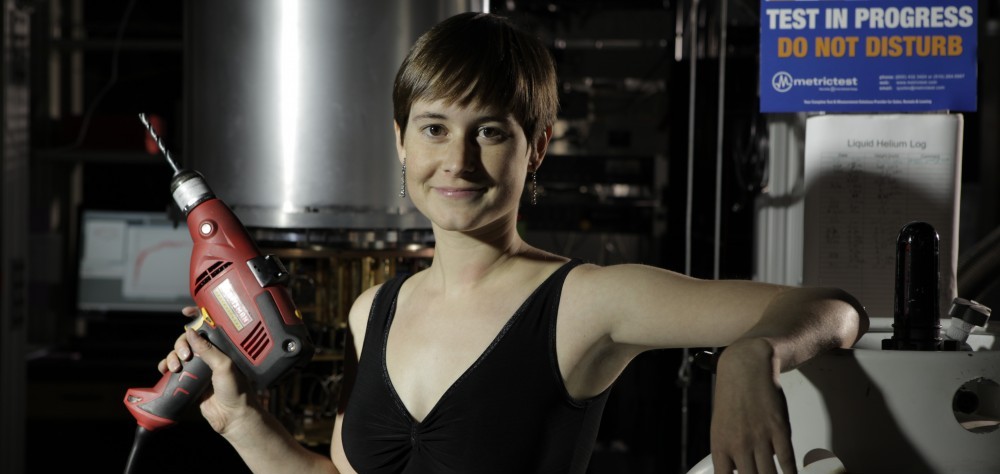
Just another day at work!

Just another day at work!

When I look back at how I ended up here, I find myself in a couple of metastable states. Every state pushed me to newer avenues of knowledge. Interestingly, growing up I never really knew what it was like to be a scientist. I had not watched any of those sci-fi movies or related TV series as a kid. No outreach program ever reached me in my years of schooling! My first career choice was to be a lawyer. But a casual comment by a friend that lawyers are ‘liars’ was strong enough to change my mind. Strangely enough, now the quest is for the truth, in a lab down at the sub-basement of one of the world’s best research institutes.

I did my masters in Physics at this beautiful place called the Indian Institute of Science in Bangalore. I realized that I like doing things with my hands. Fixing broken instruments seemed fun. Every new data point on a plot amused me. It was more than obvious that experimental physics is where my heart was and hence I went on to do a Ph.D. in condensed matter physics. When I decided to apply for postdoctoral positions, an old friend of mine, Debaleena Nandi, told me to look up the IQIM website. That was in November 2012, and I applied for the IQIM postdoctoral fellowship. My stars were probably aligned to be here. Coincidentally, Jim Eisenstein, my adviser, was in India on a sabbatical and I happened to hear him give a talk. It left such a strong impression in my mind that I was willing to give up on a trip to Europe for an interview the next day had he offered me a position. We spoke about possible problems, but no offer was in sight and hence I did travel to Europe with my mind already at Caltech. IQIM saved me from my dilemma when they offered me the fellowship a few days later.

Now, why choose IQIM! Reason number one was Jim. And reason number two was this blog which brought in this feeling that there exists a community here; where experimentalists and theorists could share their ideas and grow together in a symbiotic manner. My first project was with an earlier postdoc, Erik Henriksen, who is now a faculty at Washington University in St. Louis. It was based on a proposal by fellow IQIM professor Jason Alicea which involved decorating a film of graphene with a certain heavy metal adatom. Jason’s prediction was that if you choose the right adatom, it could endow some of its unique properties such as strong spin-orbit coupling to the underlying graphene sheet. One can thus engineer graphene to what is called a topological insulator where only the edges of the graphene sheet conduct. Erik had taken on this task and I tagged along. Working in a very small campus with a close-knit community helps bounce your ideas around others and that’s how this experiment came into being. I found it particularly interesting that Jason and his colleagues often ask us, the experimentalists, whether some of the ideas they have are actually feasible to be performed in a lab!

The IQIM fellowship allows you to work on a variety of fields that come under the common theme of quantum information and matter. In addition to providing an independent funding and research grant, the fellowship offers the flexibility to work with any mentor and even multiple mentors, especially in the theory group. In experimental groups however, that flexibility is limited but not impossible. The fellowship gives you a lot of freedom and encourages collaborations. IQIM theory folks have a very strong and friendly group with a lot of collaborations, to the extent that it is often hard to distinguish the faculty from the postdocs and students.

Apart from a yearly retreat to a beautiful resort in Lake Arrowhead, the social life at IQIM is further enhanced through the Friday seminars where you get to hear about the work from postdocs and graduate students from IQIM, as well as other universities. IQIM’s outreach activities have been outstanding. A quick look at this blog will take you from the PhD Comics animations, to teaching kids quantum mechanics through Miinecraft, to hosting middle school students at the InnoWorks academy and a host of other activities. This note will not be complete without mentioning about our repeated efforts to attract women candidates. My husband lives in India, and I live right across the globe, all for the love of science. I am not alone in this respect as we have two more women postdocs at IQIM who have similar stories to tell. So, if you are a woman and wish to pursue a quality research program, this is the place to be, for together we can bring change.

Now that I have convinced you that IQIM is something not to be missed, kindly spread the word. And if you are looking for an awesome opportunity to work at Caltech, get your CV and research statement and apply for the fellowships before Dec 5, 2014!

Science at Burning Man: Say What?

Burning Man… what a controversial topic these days. The annual festival received quite a bit of media attention this year, with a particular emphasis on how the ‘tech elite’ do burning man. Now that we are no longer in the early September Black Rock City news deluge I wanted to forever out myself as a raging hippie and describe why I keep going back to the festival: for the science of course!

This is a view of my camp, the Phage, as viewed from the main street in Black Rock City.

This is a view of my camp, the Phage, as viewed from the main street in Black Rock City. I have no idea why the CH-47 is doing a flyover… everything else is completely standard for Burning Man. Notice the 3 million Volt Tesla coil which my roommates built.

I suspect that at this point, this motivation may seem counter-intuitive or even implausible, but let me elaborate. First, we should start with a question: what is Burning Man? Answer: this question is impossible to answer. The difficulty of answering this question is why I’m writing this post. Most people oversimplify and describe the event as a ‘bunch of hippies doing drugs in the desert’ or as ‘a music festival with a dash of art’ or as ‘my favorite time of the year’ and on and on. There are nuggets of truth in all of these answers but none of them convey the diversity of the event. With upwards of 65,000 people gathered for a week, my friends and I like to describe it as a “choose your own adventure” sort of experience. I choose science.

My goal for this post is to give you a sense of the sciency activities which take place in my camp. Coupling this with the fact that science is a tiny subset of the Burning Man ethos, you should come away convinced that there’s much more to the festival than just ‘a bunch of hippies doing drugs in the desert and listening to music.’

I camp with The Phage, as in bacteriophage, the incredibly abundant virus which afflicts bacteria. There are about 200 people in our camp, most of whom are scientists, with a median age of over 30. Only about 100 people camp with the Phage in any given year. The camp also houses some hackers, entrepreneurs and artists but scientific passion is unequivocally our unifying trait. Some of the things we assembled this year include:

3 million Volt musical Tesla coil at night and during assembly

Dr. F and Dr. B’s 3 million Volt musical Tesla coil. Humans were inserted for scale.

Musical Tesla coil: two of my roommates built a 3 million Volt musical Tesla coil. Think about this… it’s insane. The project started while they were writing their Caltech PhD theses (EE and Applied Physics) and in my opinion, the Tesla coil’s scale is a testament to the power of procrastination! Thankfully, they both finished their PhDs. After doing so, they spent the months between their defenses and Burning Man building the coil in earnest. Not only was the coil massive–with the entire structure standing well over 20 feet tall–but it was connected through MIDI to a keyboard. Sound is just pressure waves moving through air, and lightning moves lots of air, so this was one of the loudest platforms on the playa. I manned the coil one evening and one professional musician told me it was “by far the coolest instrument he has ever played.” Take a brief break from reading this and watch this video!

Dr. Brainlove

Dr. Brainlove getting ready for a midnight stroll and then getting a brainlift.

Dr. Brainlove: we built a colossal climbable “art car” in the shape of a brain which was covered in LEDs and controlled from a wireless EEG device. Our previous art car (Dr. Strangelove) died at the 2013 festival, so last winter our community rallied and ‘brainstormed’ the theme for this vehicle. After settling on a neuroscience theme, one of my campmates in Berkeley scanned her brain and sent a CAD file to Arcology Now in Austin, TX who created an anatomically correct steel frame. We procured a yellow school bus which had been converted to bio diesel. We raised over $30k (there were donations beyond indiegogo.) About 20 of my campmates volunteered their weekends to work at the Nimby in Oakland: hacking apart the bus, building additional structures, covering the bus with LEDs, installing a sound system, etc. One of the finishing touches was that one of my campmates who is a neurosurgeon at UCSD procured some wireless EEG devices and then he and some friends wrote software to control Dr. Brainlove’s LEDs–thus displaying someone’s live brain activity on a 30′ long by 20′ tall climbable musical art car for the entire playa to see! We already have plans to increase the LED density and therefore put on a more impressive interactive neural light show next year.

Sugarcubes: in 2013, some campmates built an epic LED sculpture dubbed “the sugarcubes”. Just watch this video and you’ll be blown away. The cubes weren’t close to operational when they arrived so there was 48 hours of hacking madness by Dan Kaminsky, Alexander Green and many brilliant others before our “Tuesday night” party. The ethos is similar to the Caltech undergrad’s party culture–the fun is in the building–don’t tell my friends but I slept through the actual party.

Ask a scientist on the left. Science class on the right. Science everywhere!

Ask a scientist on the left (I’m in there somewhere and so is one of my current roommates– another Caltech PhD ’13.) Science class on the right. Science everywhere!

Ask a scientist: there’s no question that this is my favorite on playa activity. This photo doesn’t do the act justice. Imagine a rotating cast of 7-8 phagelings braving dust storms and donning lab coats all FOR SCIENCE! The diversity of questions is incredible and I always learn a tremendous amount (evidenced by losing my voice three years running.) For example, this year, a senior executive at Autodesk approached and asked me a trick question related to the Sun’s magnetic field. Fear not–I was prepared! This has happened before.. and he was wearing a “space” t-shirt so my guard was up. A nuclear physicist from UCLA asked me to explain Bell test experiments (and he didn’t even know my background.) Someone asked how swamp coolers work? To be honest, I didn’t have a clear answer off the top of my head so I called over one of my friends (who was one of the earliest pioneers of optogenetics) and he nailed it immediately. Not having a clear answer to this question was particularly embarrassing because I’ve spent most of the past year thinking about something akin to quantum thermodynamics… if you can call black hole physics and holographic entanglement that.

Make/hack sessions: I didn’t participate in any of these this year but some of my campmates teach soldering/microscopy/LED programming/etc classes straight out of our camp. See photo above.

EEG and LED hacking.

Science talks: we had 4-5 science talks in a carpeted 40ft geodesic dome every evening. This is pretty self explanatory and by this point in my post, the Phage may have enough credibility that you’d believe the caliber is exceptional.

Impromptu conversations: this is another indescribable aspect. I’ll risk undermining the beauty of these conversations by using a cheap word: the ‘networking’ at Burning Man is unrivaled. I don’t mean in the for-dollar-profit sense, I mean in the intellectual and social sense. For example, one of my campmates’ brother is a string theory postdoc at Stanford. He came by our camp one evening, we were introduced, and then we met up again in the default world when I visited Stanford the following week. Burning Man is the type of place where you’ll start talking about MPEG/EFF/optogenetics/companyX/etc and then someone will say: “you know that the inventor/spokesperson/pioneer/founder/etc is at the next table over right?”

Yup, Burning Man is just a bunch of hippies doing drugs in the desert. You shouldn’t come. You definitely wouldn’t enjoy it. No fun is had and no ideas are shared. Or in other words, Burning Man: where exceptionally capable people prepare themselves for the zombie apocalypse.

Check out my friend Peretz Partensky’s Flickr feed if you want to see more photos (and credit goes to him for the photos in this post.)

Making sci-fi teleportation sound less crazy

laser_refraction

Laser beam bending due to a change in the speed of light in water.

If you ever wanted to see a sci-fi plot that expertly applied advanced physical concepts so that with a bit of imagination teleporting a human was not as unbelievable as most of the teleportation scenarios we see in the movies, keep reading.

Years ago, when I was still in Russia, I was working on a back-story for a sci-fi game I was playing with friends. In the game, players were given stones (from Mars!) that could change the fundamental constants of nature: electron charge e, speed of light c and Planck constant h. I had already worked out the effects these stones would produce on the space around them (I suggest it as an exercise to the nerdy reader – once you are done thinking about it, see my answer below), so my next task was to envision a big scientific project centered around those stones, with a solid foundation on real physics and a portal to Mars as a final goal. As it turned out, some unforeseen consequences included blowing up the whole lab and scattering the stones in the nearby forest. That’s the back-story.

It all worked beautifully on paper. I imagined that materials could be programmed to obey different values of fundamental constants. These Martian stones were supposed to be the first encounter humanity had with matter where such effects could be observed and studied. The effects extended to a region around the stone, with weird things happening on the boundary of that region. For one thing, energy was not conserved in the vicinity of these stones.

Now having control over e, c and h, the scientists would leverage this new-found power to try to move the fine structure constant e^2/(\hbar c) to what is known as the Landau pole. Such a feat would result in infinitely strong interactions between particles, so that the energetic content of space-time would jump through the roof and a black hole would form. If one was lucky, even a traversable wormhole would form, which is what the scientists were hoping for, because back on Mars these things could have formed naturally, and the lab wormhole would connect to the Martian network.

If you’ve read all this and are asking yourself “What just happened?”, see all the physical concepts explained below: Continue reading

The dance of the electrons

On the day I returned to the lab, Marcus Teague, a post-doc leader in the Yeh Group, was orienting two summer undergraduate interns. As he asked the students questions regarding superconductors and scanning tunneling microscopes (STM) I was happy with the amount of information I readily recalled from previous years. It was a good sign that I was ready to build on the content and skills I had already mastered. This may be expected of a graduate student at Caltech, but I am not a graduate student at Caltech. I am a High School physics teacher.

One of the first tasks assigned to me this summer, as I returned for my third year as an IQIM research intern, was to build and solder a connecting cord for the cryocooler in which we stored superconductors. That’s right – I have been working on cutting edge research involving high temperature superconductivity. But back to the soldering. This cord would communicate information, such as temperature and voltage, from the sensor. It had been years since my undergraduate soldering days at UCLA, but it turned out I was not so rusty. I was able to solder the tiny connecting pieces and show the undergraduate research students how to solder.

This summer I made additional tips for STM. Again, we chemically etched the tips using a Calcium Chloride solution in order to reach an ideal thickness of 1 atom across. We also employed the physical stretch and clip approach to make tips. Each person in the lab has their own philosophy on the best method to make tips. It’s amusing and interesting to compare the different techniques for attempting to make sharp, symmetric tips. Whether chemical or physical, the process to make sharp tips is tedious and time consuming, but imperative for a scan with good resolution.

I also worked with Kyle Chen again for certain projects, one of which involved making a low pass filter which would cut out signals above 2 GHz. We wrapped copper wire around a skewer in order to make a tiny solenoid. Care was taken to ensure the number of loops in one direction was matched in the other to avoid creating a net magnetic field. My first attempt was pathetic, but with each trial and error, I was able to construct decent solenoids. The completed solenoids were soldered to a SMA connector (like the one used for coaxial cable) which became one end of the RF filter. In order to connect the copper tube and SMA electrically, a silver epoxy is used. The solenoids were slid carefully into a small copper tube and then filled with the epoxy, a mixture of copper powder and Stycast A and B at a ratio of 100:28. Silver apoxy needs high temperature baking, above 100 degrees Celsius, in order to set, so the system was then baked in order to solidify our new low pass filter to be placed alongside the sample for STM testing.

This summer we also continued testing the YBCO superconducting samples I helped to make two summers ago with Professor Feng. After etching, the procedure to load the sample into the long, cylindrical, central tube required detailed planning. As with last year, the hood was flushed with Argon gas and then vacuum pumped in order to reduce contaminants. Using gloves in the hood, the sample is daintily set into place. Lifting the giant cylinder with the sample took four of us: two for lifting, one for holding it from the base within the hood and one person adjusting the gas levels.

Next we took the cylinder with the sample downstairs to the subbasement to be vacuum pumped and baked in order to expel all gaseous particles. Finally the central tube was loaded into the STM central chamber and the cooling process began, first with liquid nitrogen and then with liquid helium. Finally, it was time to scan the superconducting samples.

Last summer’s scans of the superconductor were in the 500 mV range. However, this summer’s scans are within 150 mV which will lead to much better resolution of the image and possibly valuable enough data to publish.

Each Friday Nai-Chung Yeh has a group meeting with everyone working in the lab. She thoughtfully discusses each persons’ progress, contributions, and questions from the past week. Her genuine curiosity and passion to discuss the best methods for experimentation are inspirational. She is expressive with her hands as she explains a concept, such as how she thinks the polymer doping is affecting the graphene samples. Each week she inevitably goes to the whiteboard and draws a picture of the hypothesized phenomenon observed in the data for that week. She gives insights from her vast wealth of background knowledge and suggests applicable equations, troubleshooting techniques, and information found in the current literature. It is fascinating to watch her warmly lead this group to a deeper understanding of the research topics at hand. I am moved by her work ethic and ability to balance oversight of the graphene projects, topological insulators, superconductors, and possible new solar cell technology. She supervises each sub-projects’ progress while writing papers, traveling the world over to present, as well as secure funding for research.

It is difficult to believe yet another year has passed. Again it is time to return to my classroom to meet my new 150 students, to get them fired up for learning about the exciting world of Physics. I am eager to share my learning experiences from the last three summers at Caltech.

The experimentalist next door

At 9:10 AM, the lab next door was blasting “Born to Be Wild.”

I was at Oxford, moonlighting as a visiting researcher during fall 2013. My hosts included quantum theorists in Townsend Laboratory, a craggy great-uncle of a building. Poke your head out of the theory office, and Experiment would flood your vision. Our neighbors included laser wielders, ion trappers, atom freezers, and yellow signs that warned, “DANGER OF DEATH.”

P1040564

Down the corridor in Townsend Laboratory.

Hardly the neighborhood Mr. Rogers had in mind.

The lab that shared a wall with our office blasted music. To clear my head of calculations and of Steppenwolf, I would roam the halls. Some of the halls, that is. Other halls had hazmat warnings instead of welcome mats. I ran into “RADIATION,” “FIRE HAZARD,” “STRONG MAGNETIC FIELDS,” “HIGH VOLTAGE,” and “KEEP THIS TOILET NEAT AND TIDY.” Repelled from half a dozen doors, I would retreat to the office. Kelly Clarkson would be cooing through the wall.

“We can hear them,” a theorist observed about the experimentalists, “but they can’t hear us.”

P1040552

Dangers lurked even in the bathroom.

Experiment should test, disprove, and motivate theories; and theory should galvanize and (according to some thinkers) explain experiments. But some theorists stray from experiment like North America from Pangaea.

The theoretical physics I’ve enjoyed is abstract. I rarely address platforms, particular physical systems in which theory might incarnate. Quantum-information platforms include electrons in magnetic fields, photons (particles of light), ion trapsquantum dots, and nuclei such as the ones that image internal organs in MRI machines.

Instead of addressing electrons and photons, I address mathematics and abstract physical concepts. Each of these concepts can incarnate in different forms in different platforms. Examples of such concepts include preparation procedures, evolutions, measurements, and memories. One preparation procedure defined by one piece of math can result from a constant magnetic field in one platform and from a laser in another. Abstractness has power, enabling one idea to describe diverse systems.

I’ve enjoyed wandering the hills and sampling the vistas of Theory Land. Yet the experimentalist next door cranked up the radio of reality in my mind. “We can hear them,” a theorist said. In Townsend Laboratory, I began listening. My Oxford collaborators and I interwove two theoretical frameworks that describe heat transferred and work performed on small scales. One framework, one-shot statistical mechanics, has guest-starred on this blog.

The other framework consists of fluctuation relations, which describe deviations from average behaviors by small physical systems. A quantum particle on one side of a wall has a tiny probability of tunneling through without boring any hole. Since the probability is tiny, the average particle doesn’t tunnel (during any reasonably short amount of time). When analyzing macroscopic systems—say, the roughly 1024 atoms that form your left thumbnail—we assume that every particle behaves like the average particle. We can’t when analyzing minuscule systems such as one short strand of DNA. Deviations from average behaviors appear in experimental data about small systems as they do not appear in data about large systems. Fluctuation relations help us understand those deviations.

My colleagues and I addressed “information,” “systems,” and “interactions.” We deployed abstract ideas, referencing platforms only when motivating our work. Then a collaborator challenged me to listen through the wall.

Experimentalists have tested fluctuation relations. Why not check whether their data supports our theory? At my friend’s urging, I contacted experimentalists who’d shown that DNA obeys a fluctuation relation. The experimentalists had unzipped and re-zipped single DNA molecules using optical tweezers, which resemble ordinary tweezers but involve lasers. Whenever the experimentalists pulled the DNA, they measured the force they applied. They concluded that their platform obeyed an abstract fluctuation theorem. The experimentalists generously shared their data, which supported our results.

http://www.europhysicsnews.org/articles/epn/abs/2010/02/epn20102p27/epn20102p27.html

Experimentalists unzipped and rezipped DNA to test fluctuation relations. This depiction of the set-up comes from this article.

My colleagues and I didn’t propose experiments. We didn’t explain why platforms had behaved in unexpected ways. We checked calculations with recycled data. But we ventured outside Theory Land. We learned that one-shot theory models systems modeled also by fluctuation relations, which govern experiments. This link from one-shot theory to experiment, like the forbidden corridors in Townsend Laboratory, invite exploration.

In Townsend, I didn’t suffer the electric shocks or the explosions advertised on the doors (though the hot water in the bathroom nearly burned me). I turned out not to need those shocks. Blasting rock music at 9:10 AM can wake even a theorist up to reality.

Where are you, Dr. Frank Baxter?

This year marks the 50th anniversary of my first publication. In 1964, when we were eleven-year-old fifth graders, my best friend Mace Rosenstein and I launched The Pres-stein Gazette, a not-for-profit monthly. Though the first issue sold well, the second issue never appeared.

Front page of the inaugural issue of the Pres-stein Gazette

Front page of the inaugural issue of the Pres-stein Gazette. Faded but still legible, it was produced using a mimeograph machine, a low-cost printing press which was popular in the pre-Xerox era.

One of my contributions to the inaugural  issue was a feature article on solar energy, which concluded that fossil fuel “isn’t of such terrific abundance and it cannot support the world for very long. We must come up with some other source of energy. Solar energy is that source …  when developed solar energy will be a cheap powerful “fuel” serving the entire world generously forever.”

This statement holds up reasonably well 50 years later. You might wonder how an eleven-year-old in 1964 would know something like that. I can explain …

In the 1950s and early 1960s, AT&T and the Bell Telephone System produced nine films about science, which were broadcast on prime-time network television and attracted a substantial audience. After broadcast, the films were distributed to schools as 16 mm prints and frequently shown to students for many years afterward. I don’t remember seeing any of the films on TV, but I eventually saw all nine in school. It was always a treat to watch one of the “Bell Telephone Movies” instead of hearing another boring lecture.

For educational films, the production values were uncommonly high. Remarkably, the first four were all written and directed by the legendary Frank Capra (a Caltech alum), in consultation with a scientific advisory board provided by Bell Labs.  Those four (Our Mr. Sun, Hemo the Magnificent, The Strange Case of the Cosmic Rays, and Unchained Goddess, originally broadcast in 1956-58) are the ones I remember most vividly. DVDs of these films exist, but I have not watched any of them since I was a kid.

The star of the first eight films was Dr. Frank Baxter, who played Dr. Research, the science expert. Baxter was actually an English professor at USC who had previous television experience as the popular host of a show about Shakespeare, but he made a convincing and pleasingly avuncular scientist. (The ninth film, Restless Sea, was produced by Disney, and Walt Disney himself served as host.) The other lead role was Mr. Writer, a skeptical and likeable Everyman who learned from Dr. Research’s clear explanations and sometimes translated them into vernacular.

The first film, Our Mr. Sun, debuted in 1956 (broadcast in color, a rarity at that time) and was seen by 24 million prime-time viewers. Mr. Writer was Eddie Albert, a well-known screen actor who later achieved greater fame as the lead on the 1960s TV situation comedy Green Acres. Lionel Barrymore appeared in a supporting role.

Dr. Frank Baxter and Eddie Albert in Our Mr. Sun.

Dr. Frank Baxter and Eddie Albert in Our Mr. Sun. (Source: Wikipedia)

Our Mr. Sun must have been the primary (unacknowledged) source for my article in the Pres-stein Gazette.  Though I learned from Wikipedia that Capra insisted (to the chagrin of some of his scientific advisers) on injecting some religious themes into the film, I don’t remember that aspect at all. The scientific content was remarkably sophisticated for a film that could be readily enjoyed by elementary school students, and I remember (or think I do) clever animations teaching me about the carbon cycle in stellar nuclear furnaces and photosynthesis as the ultimate source of all food sustaining life on earth. But I was especially struck by Dr. Baxter’s dire warning that, as the earth’s population grows, our planet will face shortages of food and fuel. On a more upbeat note he suggested that advanced technologies for harnessing the power of the sun would be the key to our survival, which inspired the optimistic conclusion of my article.

A lavishly produced prime-time show about science was a real novelty in 1956, many years before NOVA or the Discovery Channel. I wonder how many readers remember seeing the Dr. Frank Baxter movies when you were kids, either on TV or in school. Or was there another show that inspired you like Our Mr. Sun inspired me? I hope some of you will describe your experiences in the comments.

And I also wonder what resource could have a comparable impact on an eleven-year-old in today’s very different media environment. The obvious comparison is with Neil deGrasse Tyson’s revival of Cosmos, which aired on Fox in 2014. The premiere episode of Cosmos drew 8.5 million viewers on the night it was broadcast, but that is a poor measure of impact nowadays. Each episode has been rebroadcast many times, not just in the US and Canada but internationally as well, and the whole series is now available in DVD and Blu-ray. Will lots of kids in the coming years own it and watch it? Is Cosmos likely to be shown in classrooms as well?

Science is accessible to the curious through many other avenues today, particularly on YouTube. One can watch TED talks, or Minute Physics, or Veritasium, or Khan Academy, or Lenny Susskind’s lectures, not to mention our own IQIM videos on PHD Comics. And there are many other options. Maybe too many?

But do kids watch this stuff? If not, what online sources inspire them? Do they get as excited as I did when I watched Dr. Frank Baxter at age 11?

I don’t know. What do you think?

The Graphene Effect

Spyridon Michalakis, Eryn Walsh, Benjamin Fackrell, Jackie O'Sullivan

Lunch with Spiros, Eryn, and Jackie at the Athenaeum (left to right).

Sitting and eating lunch in the room where Einstein and many others of turbo charged, ultra-powered acumen sat and ate lunch excites me. So, I was thrilled when lunch was arranged for the teachers participating in IQIM’s Summer Research Internship at the famed Athenaeum on Caltech’s campus. Spyridon Michalakis (Spiros), Jackie O’Sullivan, Eryn Walsh and I were having lunch when I asked Spiros about one of the renowned “Millennium” problems in Mathematical Physics I heard he had solved. He told me about his 18 month epic journey (surely an extremely condensed version) to solve a problem pertaining to the Quantum Hall effect. Understandably, within this journey lied many trials and tribulations ranging from feelings of self loathing and pessimistic resignation to dealing with tragic disappointment that comes from the realization that a victory celebration was much ado about nothing because the solution wasn’t correct. An unveiling of your true humanity and the lengths one can push themselves to find a solution. Three points struck me from this conversation. First, there’s a necessity for a love of the pain that tends to accompany a dogged determinism for a solution. Secondly, the idea that a person’s humanity is exposed, at least to some degree, when accepting a challenge of this caliber and then refusing to accept failure with an almost supernatural steadfastness towards a solution. Lastly, the Quantum Hall effect. The first two on the list are ideas I often ponder as a teacher and student, and probably lends itself to more of a philosophical discussion, which I do find very interesting, however, will not be the focus of this posting.

The Yeh research group, which I gratefully have been allowed to join the last three summers, researches (among other things) different applications of graphene encompassing the growth of graphene, high efficiency graphene solar cells, graphene component fabrication and strain engineering of graphene where, coincidentally for the latter, the quantum Hall effect takes center stage. The quantum Hall effect now had my attention and I felt it necessary to learn something, anything, about this recently recurring topic. The quantum Hall effect is something I had put very little thought into and if you are like I was, you’ve heard about it, but surely couldn’t explain even the basics to someone. I now know something on the subject and, hopefully, after reading this post you too will know something about the very basics of both the classical and the quantum Hall effect, and maybe experience a spark of interest regarding graphene’s fascinating ability to display the quantum Hall effect in a magnetic field-free environment.

Let’s start at the beginning with the Hall effect. Edwin Herbert Hall discovered the appropriately named effect in 1879. The Hall element in the diagram is a flat piece of conducting metal with a longitudinal current running through. When a magnetic field is introduced normal to the Hall element the charge carriers moving through the Hall element experience a Lorentz force. If we think of the current as being conventionHallEffectal (direction flow of positively charged ions), then the electrons (negative charge carriers) are traveling in the opposite direction of the green arrow shown in the diagram. Referring to the diagram and using the right hand rule you can conclude a buildup of electrons at the long bottom edge of the Hall element running parallel to the longitudinal current, and an opposing positively charged edge at the long top edge of the Hall element. This separation of charge will produce a transverse potential difference and is labeled on the diagram as Hall voltage (VH). Once the electric force (acting towards the positively charged edge perpendicular to both current and magnetic field) from the charge build up balances with the Lorentz force (opposing the electric force), the result is a negative charge carrier with a straight line trajectory in the opposite direction of the green arrow. Essentially, Hall conductance is the longitudinal current divided by the Hall voltage.

Now, let’s take a look at the quantum Hall effect. On February 5th, 1980 Klaus von Klitzing was investigating the Hall effect, in particular, the Hall conductance of a two-dimensional electron gas plane (2DEG) at very low temperatures around 4 Kelvin (- 4520 Fahrenheit). von Klitzing found when a magnetic field is applied normal to the 2DEG, and Hall conductance is graphed as a function of magnetic field strength, a staircase looking graph emerges. The discovery that earned von Klitzing’s Nobel Prize in 1985 was as unexpected as it is intriguing. For each step in the staircase the value of the function was an integer multiple of e2/h, where e is the elementary charge and h is Planck’s constant. Since conductance is the reciprocal of resistance we can view this data as h/ie2. When i (integer that describes each plateau) equals one, h/ie2 is approximately 26,000 ohms and serves as a superior standard of electrical resistance used worldwide to maintain and compare the unit of resistance.

Before discussing where graphene and the quantum Hall effect cross paths, let’s examine some extraordinary characteristics of graphene. Graphene is truly an amazing material for many reasons. We’ll look at size and scale things up a bit for fun. Graphene is one carbon atom thick, that’s 0.345 nanometers (0.000000000345 meters). Envision a one square centimeter sized graphene sheet, which is now regularly grown. Imagine, somehow, we could thicken the monolayer graphene sheet equal to that of a piece of printer paper (0.1 mm) while appropriately scaling up the area coverage. The graphene sheet that originally covered only one square centimeter would now cover an area of about 2900 meters by 2900 meters or roughly 1.8 miles by 1.8 miles. A paper thin sheet covering about 4 square miles. The Royal Swedish Academy of Sciences at nobelprize.org has an interesting way of scaling the tiny up to every day experience. They want you to picture a one square meter hammock made of graphene suspending a 4 kg cat, which represents the maximum weight such a sheet of graphene could support. The hammock would be nearly invisible, would weigh as much as one of the cat’s whiskers, and incredibly, would possess the strength to keep the cat suspended. If it were possible to make the exact hammock out of steel, its maximum load would be less than 1/100 the weight of the cat. Graphene is more than 100 times stronger than the strongest steel!

Graphene sheets possess many fascinating characteristics certainly not limited to mere size and strength. Experiments are being conducted at Caltech to study the electrical properties of graphene when draped over a field of gold nanoparticles; a discipline appropriately termed “strain engineering.” The peaks and valleys that form create strain in the graphene sheet, changing its electrical properties. The greater the curvature of the graphene over the peaks, the greater the strain. The electrons in graphene in regions experiencing strain behave as if they are in a magnetic field despite the fact that they are not. The electrons in regions experiencing the greatest strain behave as they would in extremely strong magnetic fields exceeding 300 tesla. For some perspective, the largest magnetic field ever created has been near 100 tesla and it only lasted for a few milliseconds. Additionally, graphene sheets under strain experience conductance plateaus very similar to those observed in the quantum Hall effect. This allows for great control of electrical properties by simply deforming the graphene sheet, effectively changing the amount of strain. The pseudo-magnetic field generated at room temperature by mere deformation of graphene is an extremely promising and exotic property that is bound to make graphene a key component in a plethora of future technologies.

Graphene and its incredibly fascinating properties make it very difficult to think of an area of technology where it won’t have a huge impact once incorporated. Caltech is at the forefront in research and development for graphene component fabrication, as well as the many aspects involved in the growth of high quality graphene. This summer I was involved in the latter and contributed a bit in setting up an experimenKodak_Camera 1326t that will attempt to grow graphene in a unique way. My contribution included the set-up of the stepper motor (pictured to the right) and its controls, so that it would very slowly travel down the tube in an attempt to grow a long strip of graphene. If Caltech scientist David Boyd and graduate student Chen-Chih Hsu are able to grow the long strips of graphene, this will mark yet another landmark achievement for them and Caltech in graphene research, bringing all of us closer to technologies such as flexible electronics, synthetic nerve cells, 500-mile range Tesla cars and batteries that allow us to stream Netflix on smartphones for weeks on end.