The first time I moved to England, I brought the book The Age of Wonder. In it, biographer Richard Holmes sketches scientists who marveled at nature during the Romantic Era. I met Joseph Banks, William and Caroline Herschel, and Humphry Davy while reveling in condensed-matter theory as a research assistant at Lancaster University.
This August, I moved to the University of Cambridge for the rest of the summer and much of the fall. My baggage included an e-copy of Holmes’s most recent book. The Boundless Deep profiles Alfred Tennyson, who served as poet laureate of the United Kingdom for approximately 42 of Victoria’s nearly 64 years as queen. Even if Tennyson’s name doesn’t ring a bell, some of his verses might—partially because those verses chime with a bell’s sonorousness. Tennyson wrote, “’Tis better to have loved and lost / Than never to have loved at all,” in an elegy for a friend. That friend’s death—the heartlessness and violence of mortality—led Tennyson to write of “Nature, red in tooth and claw.” He also glorified heroism, depicting the ancient Greek Odysseus as yearning “[t]o strive, to seek, to find, and not to yield.”1
Tennyson grew up in Lincolnshire, on the eastern coast of England. He adored the sea, whose wildness and grandeur infused his spirit. As an undergraduate at the University of Cambridge, Tennyson formed friendships that helped sustain him for decades. Former schoolmates hosted him in their homes, encouraged him, criticized him with affection, and urged him to publish his poetry. For years, Tennyson published little: he drifted from house to house, chain-smoked, recited poetry to friends for hours in the evenings, and waffled about his love for fellow Lincolnshire native Emily Sellwood. The two married once Tennyson published his elegy and the public responded with rapture. The poet laureateship followed that year.
Holmes tracks not only Tennyson’s path through literature, but also the poet’s appetite for science and technology. Discoveries and inventions fascinated Tennyson. At Cambridge, he studied under William Whewell, whose contributions to mathematics, physics, astronomy, geology and more defy cataloguing. The back of Holmes’s book lists “some popular science books read by Young Tennyson.” They include Darwin’s On the Origin of Species by Means of Natural Selection; a guide to microscopes; and a treatise by mathematician, co-founder of computer science, and steampunk inspiration Charles Babbage.
Science suffused Tennyson’s poetry, Holmes argues. The biographer illustrates with The Princess, an 1847 poem that advocates for higher education for women. The poem opens with a science festival: “a fire-balloon / Rose gem-like up before the dusky groves.” In steampunk fashion, “round the lake / A little clock-work steamer paddling plied / And shook the lilies.” You can read the rest of the description in what appears to be a first edition. The scene opens in the stanza that begins nearly halfway down the following right-hand page.
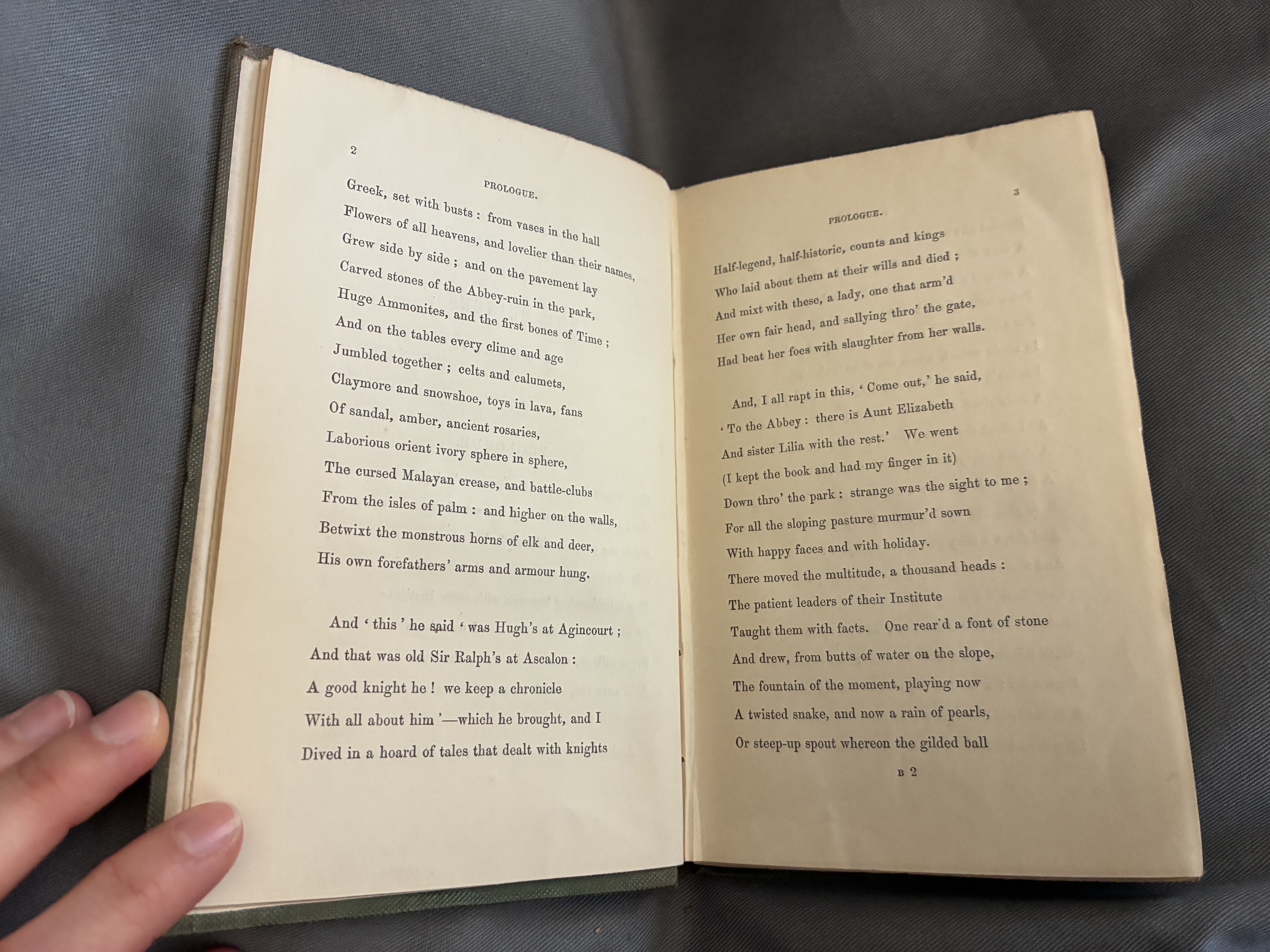
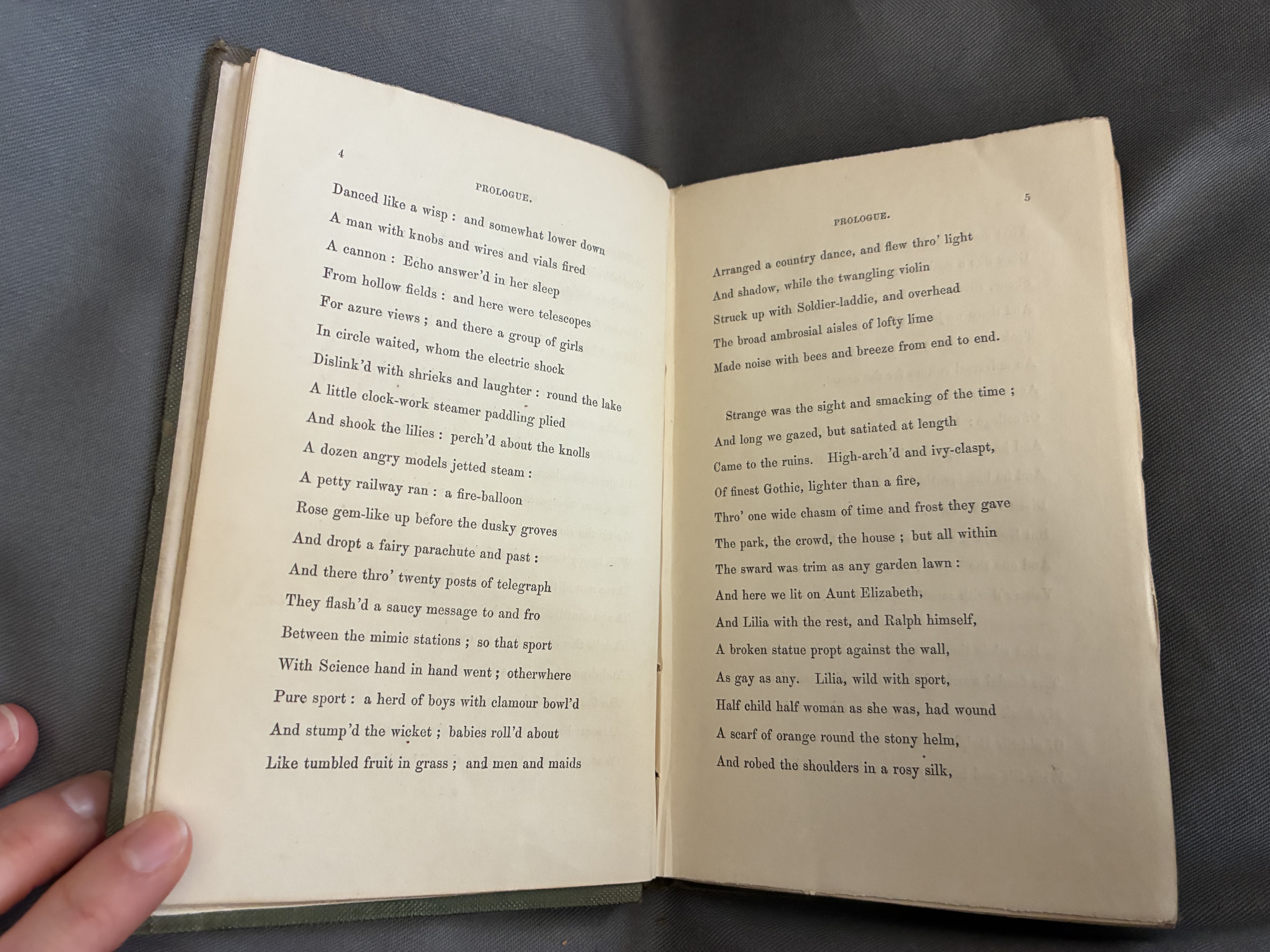
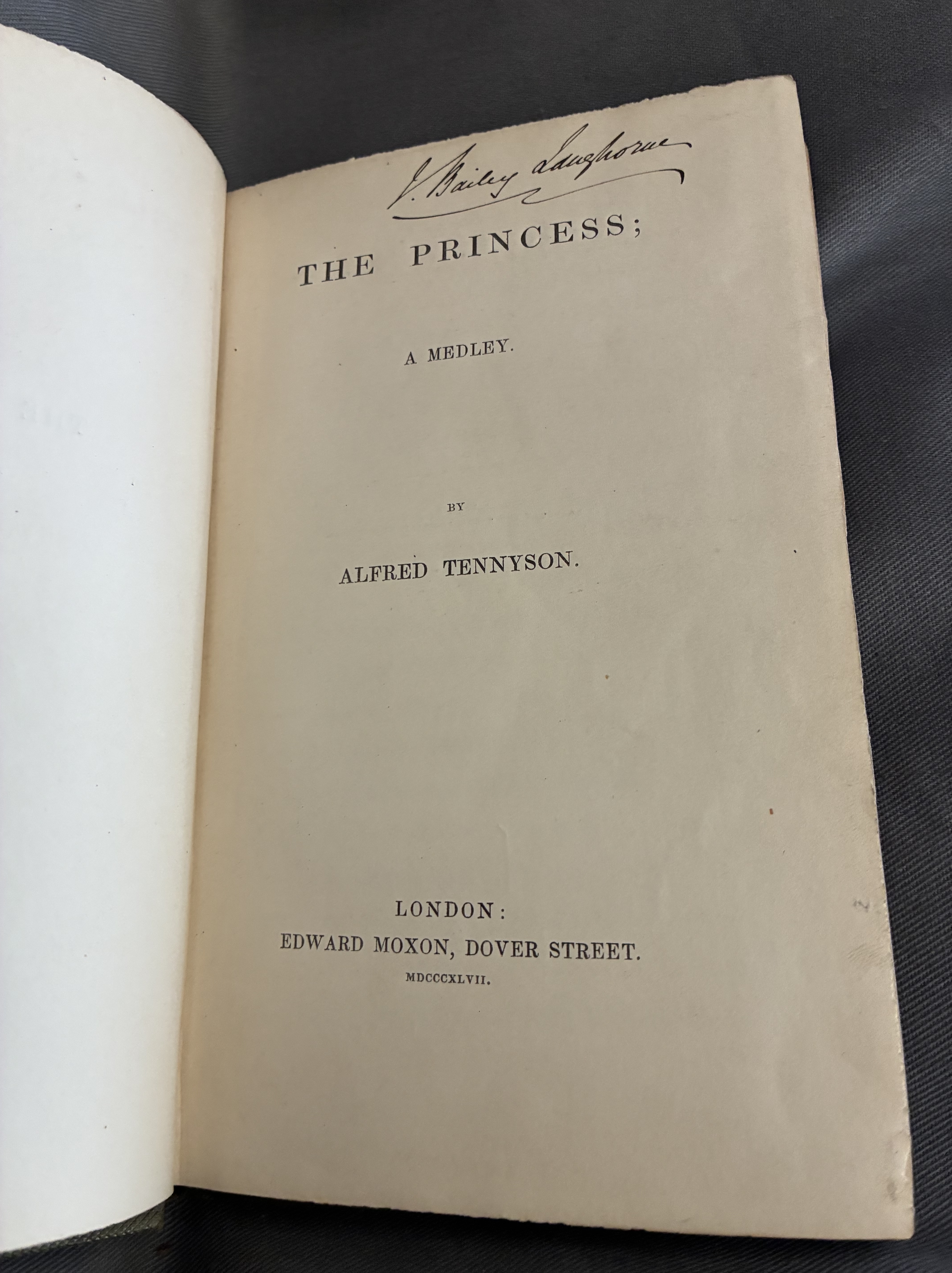
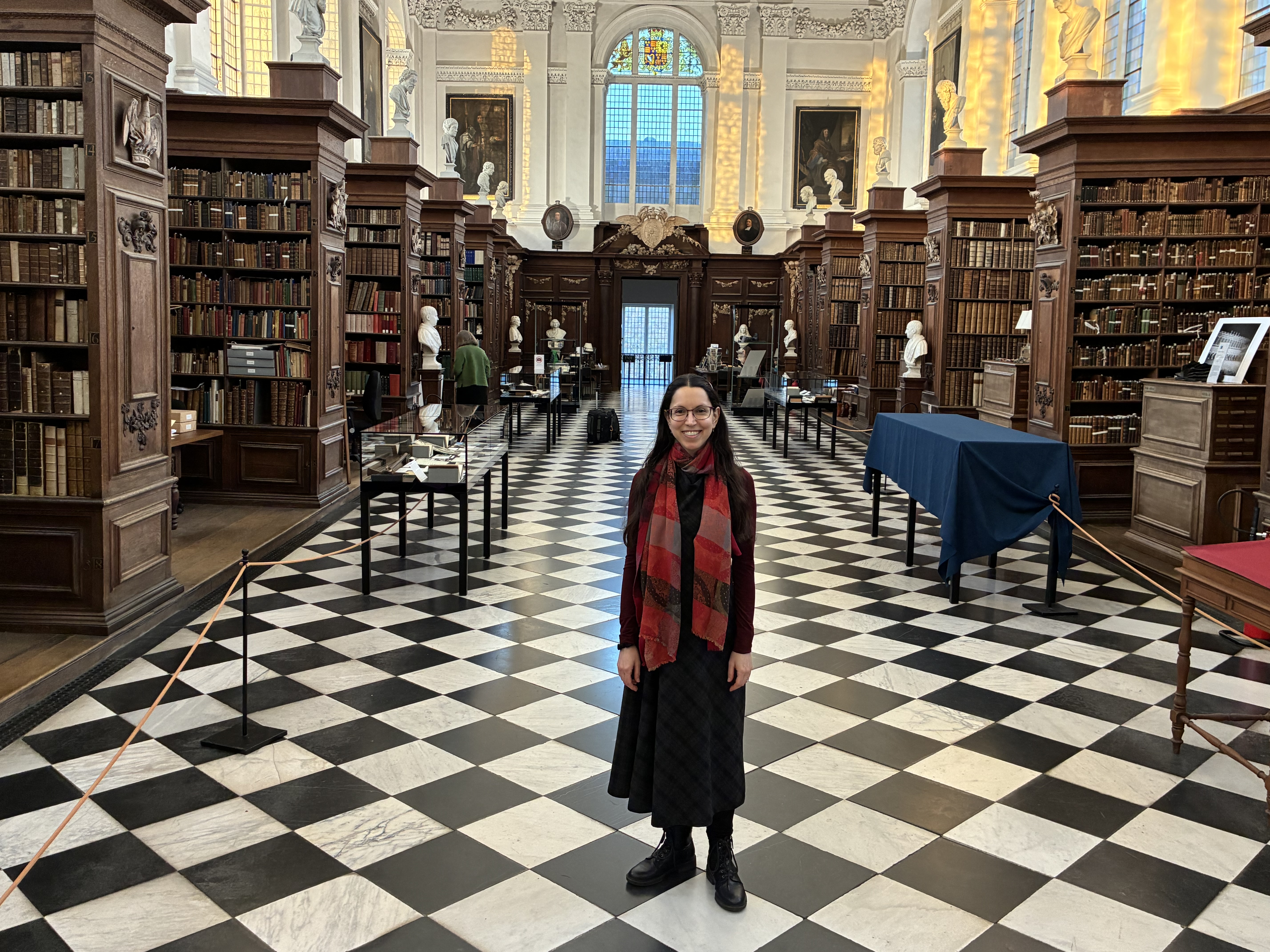
Sub-librarian Steven Archer plucked the book for me from the Wren Library at Trinity College, Cambridge this November. Trinity postdoctoral fellow Andrea Pizzi had guessed that I’d appreciate the library and invited me to visit. He guessed correctly.
The Boundless Deep has appealed to me not only because it highlights the Victorian era—what has become my era—or because it meshes science with poetry. I also view the book as offering guidance about a technology gnawing at society today: artificial intelligence. You don’t need for me to recap the shock delivered by AI to many people’s sense of humanity, the horror sweeping the globe. But did you know how similarly the Victorians felt?
During the 1800s, geologists Charles Lyell, Roderick Murchison, and others found evidence of extinctions. They unearthed fossils from species extinguished eons beforehand. The scale of those destructions boggled the Victorians’ minds. A species consists of so many creatures—so many wriggling, striving living beings. How could an entire species disappear from the face of the Earth? How could so many species have disappeared? Would humanity share their fate? If so, why bother living, striving, wriggling?
As Holmes writes, “Geology soon became an area of spiritual terror, with claustrophobic glimpses of a cruel, meaningless, godless physical world closing in on the heels of humanity. It was full of monsters, dust and extinctions, making nonsense of any idea of progress or individual immortality.” Nature, red in tooth and claw, indeed.
I’ve been reading The Boundless Deep alongside headlines about cyber hacks, job losses, bias studies, and mathematician breakdowns attributable to AI. To the extent that AI poses problems for society, I don’t have silver bullets. But I take comfort in humanity’s having experienced similar tremors in the past. Granted, AI and extinctions differ in some ways, despite resembling each other. And perhaps we shouldn’t respond as the Victorians did. Most people today take extinctions for granted, and schoolchildren effuse about the fossils that alarmed Tennyson’s contemporaries. Perhaps future generations will view AI as the Victorians viewed those fossils. Either way, we’re not alone: the Victorians felt as many people do today.
And we know how Tennyson responded: with poetry.
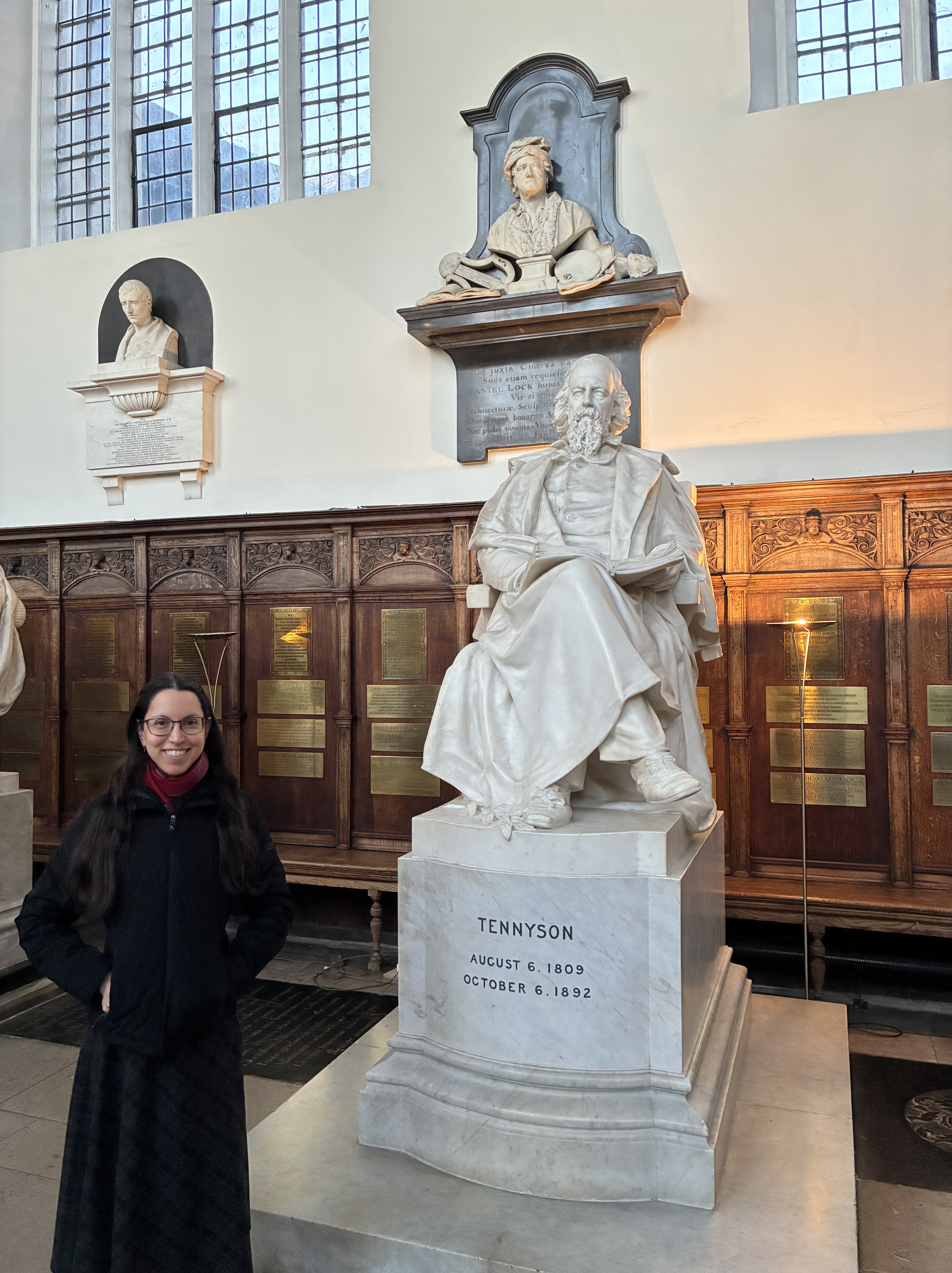
With thanks to Andrea Pizzi; Steven Archer; the Isaac Newton Institute for Mathematical Sciences; and King’s College, Cambridge.
1Tennyson used the Latin name Ulysses for Odysseus.

