Can AI Predict the Quantum Universe?

AI promises to revolutionize the way we do science, which raises a central technological question of our time: Can classical AI understand all natural phenomena, or are some fundamentally beyond its reach? Many proponents of artificial intelligence argue that any pattern that can be generated or found in nature can be efficiently discovered and modeled by a classical learning algorithm, implying that AI is a universal and sufficient tool for science.

The word “classical” is important here to contrast with quantum computation. Nature is quantum mechanical, and the insights of Shor’s algorithm [1] along with quantum error correction [2,3,4] teach us that there are quantum systems, at least ones that have been heavily engineered, that can have trajectories that are fundamentally unpredictable1 by any classical algorithm, including AI. This opens the possibility that there are complex quantum phenomena occurring naturally in our universe where classical AI is insufficient, and we need a quantum computer in order to model them.

This essay uses the perspective of computational complexity to unpack this nuanced question. We begin with quantum sampling, arguing that despite clear quantum supremacy, it does not represent a real hurdle for AI to predict quantum phenomena. We then shift to the major unsolved problems in quantum physics and quantum chemistry, examining how quantum computers could empower AI in these domains. Finally, we’ll consider the possibility of truly complex quantum signals in nature, where quantum computers might prove essential for prediction itself.


Quantum Sampling

In 2019 Google demonstrated quantum supremacy on a digital quantum device [5], and in 2024 their latest chip performed a task in minutes where our best classical computers would take 10^25 years [6]. The task they performed is to prepare a highly entangled many-body quantum state and to sample from the corresponding distribution over classical configurations. Quantum supremacy on such sampling problems is on firm ground, with results in complexity theory backing up the experimental claims [7].2 Moreover, the classical hardness of quantum sampling appears to be generic in quantum physics. A wide range of quantum systems will generate highly entangled many-body states where sampling becomes classically hard.

However, quantum sampling alone does not refute the universality of classical AI. The output of quantum sampling often appears completely featureless, which cannot be verified by any classical or quantum algorithm, or by any process in our universe for that matter. For example, running the exact same sampling task a second time will produce a list of configurations that will appear unrelated to the original. In order for a phenomenon to be subject to scientific prediction, there must be an experiment that can confirm or deny the prediction. So if quantum sampling has no features that can be experimentally verified, there is nothing to predict, and no pattern for the AI to discover and model.

Quantum Chemistry and Condensed Matter Physics

There are many unsolved problems in quantum chemistry and condensed matter physics that are inaccessible using our best classical simulation algorithms and supercomputers. For example, these occur in the strongly correlated regime of electronic structure in quantum chemistry, and around low-temperature phase transitions of condensed matter systems. We do not understand the electronic structure of FeMoco, the molecule responsible for nitrogen fixation in the nitrogenase enzyme, nor do we understand the phase diagram of the 2D Fermi-Hubbard lattice and whether or not it exhibits superconductivity.

It is possible there are no fundamental barriers for a sufficiently advanced AI to solve these problems. Researchers in the field have achieved major breakthroughs using neural networks to predict complex biological structures like protein folding. One could imagine similar specialized AI models that predict the electronic structure of molecules, or that predict quantum phases of matter. Perhaps the main reason it is currently out of reach is a lack of sufficient training data. Here lies a compelling opportunity for quantum computing: The only feasible way to generate an abundance of accurate training data may be to use a quantum computer, since physical experiments are too difficult, too unreliable, and too slow.

How should we view these problems in physics and chemistry from the perspective of computational complexity? Physicists and chemists often consider systems with a fixed number of parameters, or even single instances. Although computing physical quantities may be extremely challenging, single instances cannot form computationally hard problems, since ultimately only a constant amount of resources is required to solve it. Systems with a fixed number of parameters often behave similarly, since physical quantities tend to depend smoothly on the parameters which allows for extrapolation and learning [8]. Here we can recognize a familiar motif from machine learning: Ab initio prediction is challenging, but prediction becomes efficient after learning from data. Quantum computers are useful for generating training data, but then AI is able to learn from this data and perform efficient inference.

Truly Complex Quantum Signals

While AI might be able to learn much of the patterns of physics and chemistry from quantum-generated data, there remains a deeper possibility: The quantum universe may produce patterns that AI cannot compress and understand. If there are quantum systems that display signals that are truly classically complex, then predicting the pattern will require a quantum computer at inference time, not only in training.

We’ll now envision how such a signal could arise. Imagine a family of quantum systems of arbitrary size N, and at each size N there is a number of independent parameters that is polynomial in N, for example the coefficients of a Hamiltonian or the rotation angles of a quantum circuit. Suppose the system has some physical feature whose signal we would like to compute as a function of the parameters, and this signal has the following properties:

  • (Signal) There is a quantum algorithm that efficiently computes the signal. For example, the signal cannot be exponentially small in N.
  • (Verifiable) The signal is verifiable, at least by an ideal quantum computer. For example, the task could be to compute an expectation value.
  • (Typically complex) When the parameters are chosen randomly, the signal is computationally hard to classically compute in the average case.

If these properties hold, then it’s possible that no machine learning model using a polynomial amount of classical compute can perform the task, even with the help of training data.

The requirement of verifiability by a quantum process ensures that the signal being computed is a robust phenomenon where there is some “fact of the matter”, and a prediction can be confirmed or denied by nature. For example, this holds for any task where the output is the expectation value of some observable. The average-case hardness ensures that hard instances really exist and can be easily generated, rather than only existing in some abstract worst-case that cannot be instantiated.

There is a connection between the verifiability of a computation and its utility to us. Suppose we use a computer to help us design a high-temperature superconductor. If our designed material indeed works as a high-temperature superconductor when fabricated, this forms a verification of the predictions made by our computer. Utility implies verifiability, and likewise, unverifiable computations cannot be useful. However, since nature is quantum, a computation need not be classically verifiable in order to be useful, but only quantumly verifiable. In our high-temperature superconductor example, nature has verified our computer by performing a quantum process.

Making progress

John Preskill’s “entanglement frontier” seeks to understand the collective behavior of many interacting quantum particles [10]. In order to shed light on the fundamental limits of classical AI and the utility of quantum computers in this regime, we must understand if the exponential Hilbert space of quantum theory remains mostly hidden, or if it reveals itself in observable phenomena. The search for classically complex signals forms an exciting research program for making progress. Google recently performed the first demonstration of a classically complex signal on a quantum device: The out-of-time-order correlators3 of random quantum circuits [9]. We can seek to find more such examples, first in abstract models, and then in the real world, to understand how abundant they are in nature.

  1. Under widely accepted cryptographic assumptions. ↩︎
  2. Classical computers cannot perform quantum sampling unless the polynomial hierarchy collapses. ↩︎
  3. More precisely, the higher moments of the out-of-time-order correlator. ↩︎

References

[1] Shor, Peter W. “Algorithms for quantum computation: discrete logarithms and factoring.” Proceedings 35th annual symposium on foundations of computer science. Ieee, 1994.

[2] Shor, Peter W. “Scheme for reducing decoherence in quantum computer memory.” Physical review A 52.4 (1995): R2493.

[3] Shor, Peter W. “Fault-tolerant quantum computation.” Proceedings of 37th conference on foundations of computer science. IEEE, 1996.

[4] Kitaev, A. Yu. “Fault-tolerant quantum computation by anyons.” Annals of physics 303.1 (2003): 2-30.

[5] Arute, Frank, et al. “Quantum supremacy using a programmable superconducting processor.” Nature 574.7779 (2019): 505-510.

[6] Morvan, Alexis, et al. “Phase transitions in random circuit sampling.” Nature 634.8033 (2024): 328-333.

[7] Aaronson, Scott, and Alex Arkhipov. “The computational complexity of linear optics.” Proceedings of the forty-third annual ACM symposium on Theory of computing. 2011.

[8] Huang, Hsin-Yuan, et al. “Provably efficient machine learning for quantum many-body problems.” Science 377.6613 (2022): eabk3333.

[9] Abanin, Dmitry A., et al. “Constructive interference at the edge of quantum ergodic dynamics.” arXiv preprint arXiv:2506.10191 (2025).

[10] Preskill, John. “Quantum computing and the entanglement frontier.” arXiv preprint arXiv:1203.5813 (2012).

Congratulations, class of 2025! Words from a new graduate

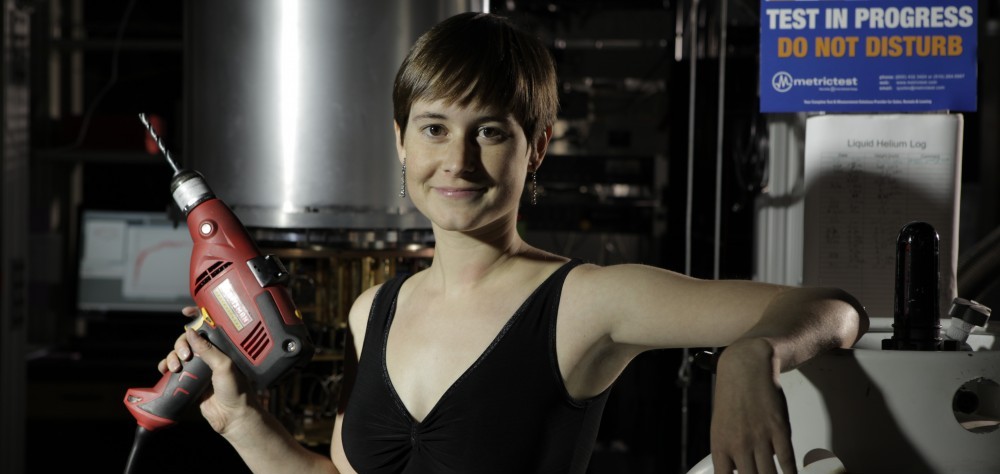
Editor’s note (Nicole Yunger Halpern): Jade LeSchack, the Quantum Steampunk Laboratory’s first undergraduate, received her bachelor’s degree from the University of Maryland this spring. Kermit the Frog presented the valedictory address, but Jade gave the following speech at the commencement ceremony for the university’s College of Mathematical and Natural Sciences. Jade heads to the University of Southern California for a PhD in physics this fall.

Good afternoon, everyone. My name is Jade, and it is my honor and pleasure to speak before you. 

Today, I’m graduating with my Bachelor of Science, but when I entered UMD, I had no idea what it meant to be a professional scientist or where my passion for quantum science would take me. I want you to picture where you were four years ago. Maybe you were following a long-held passion into college, or maybe you were excited to explore a new technical field. Since then, you’ve spent hours titrating solutions, debugging code, peering through microscopes, working out proofs, and all the other things our disciplines require of us. Now, we’re entering a world of uncertainty, infinite possibility, and lifelong connections. Let me elaborate on each of these.

First, there is uncertainty. Unlike simplified projectile motion, you can never predict the exact trajectory of your life or career. Plans will change, and unexpected opportunities will arise. Sometimes, the best path forward isn’t the one you first imagined. Our experiences at Maryland have prepared us to respond to the challenges and curveballs that life will throw at us. And, we’re going to get through the rough patches.

Second, let’s embrace the infinite possibilities ahead of us. While the concept of the multiverse is best left to the movies, it’s exciting to think about all the paths before us. We’ve each found our own special interests over the past four years here, but there’s always more to explore. Don’t put yourself in a box. You can be an artist and a scientist, an entrepreneur and a humanitarian, an athlete and a scholar. Continue to redefine yourself and be open to your infinite potential.

Third, as we move forward, we are equipped not only with knowledge but with connections. We’ve made lasting relationships with incredible people here. As we go from place to place, the people who we’re close to will change. But we’re lucky that, these days, people are only an email or phone call away. We’ll always have our UMD communities rooting for us.

Now, the people we met here are certainly not the only important ones. We’ve each had supporters along the various stages of our journeys. These are the people who championed us, made sacrifices for us, and gave us a shoulder to cry on. I’d like to take a moment to thank all my mentors, teachers, and friends for believing in me. To my mom, dad, and sister sitting up there, I couldn’t have done this without you. Thank you for your endless love and support. 

To close, I’d like to consider this age-old question that has always fascinated me: Is mathematics discovered or invented? People have made a strong case for each side. If we think about science in general, and our future contributions to our fields, we might ask ourselves: Are we discoverers or inventors? My answer is both! Everyone here with a cap on their head is going to contribute to both. We’re going to unearth new truths about nature and innovate scientific technologies that better society. This uncertain, multitudinous, and interconnected world is waiting for us, the next generation of scientific thinkers! So let’s be bold and stay fearless. 

Congratulations to the class of 2024 and the class of 2025! We did it!

Author’s note: I was deeply grateful for the opportunity to serve as the student speaker at my commencement ceremony. I hope that the science-y references tickle the layman and SME alike. You can view a recording of the speech here. I can’t wait for my next adventures in quantum physics!

Developing an AI for Quantum Chess: Part 1

In January 2016, Caltech’s Institute for Quantum Information and Matter unveiled a YouTube video featuring an extraordinary chess showdown between actor Paul Rudd (a.k.a. Ant-Man) and the legendary Dr. Stephen Hawking. But this was no ordinary match—Rudd had challenged Hawking to a game of Quantum Chess. At the time, Fast Company remarked, “Here we are, less than 10 days away from the biggest advertising football day of the year, and one of the best ads of the week is a 12-minute video of quantum chess from Caltech.” But a Super Bowl ad for what, exactly?

For the past nine years, Quantum Realm Games, with continued generous support from IQIM and other strategic partnerships, has been tirelessly refining the rudimentary Quantum Chess prototype showcased in that now-viral video, transforming it into a fully realized game—one you can play at home or even on a quantum computer. And now, at long last, we’ve reached a major milestone: the launch of Quantum Chess 1.0. You might be wondering—what took us so long?

The answer is simple: developing an AI capable of playing Quantum Chess.

Before we dive into the origin story of the first-ever AI designed to master a truly quantum game, it’s important to understand what enables modern chess AI in the first place.

Chess AI is a vast and complex field, far too deep to explore in full here. For those eager to delve into the details, the Chess Programming Wiki serves as an excellent resource. Instead, this post will focus on what sets Quantum Chess AI apart from its classical counterpart—and the unique challenges we encountered along the way.

So, let’s get started!

Depth Matters

credit: https://www.freecodecamp.org/news/simple-chess-ai-step-by-step-1d55a9266977/

With Chess AI, the name of the game is “depth”, at least for versions based on the Minimax strategy conceived by John von Neumann in 1928 (we’ll say a bit about Neural Network based AI later). The basic idea is that the AI will simulate the possible moves each player can make, down to some depth (number of moves) into the future, then decide which one is best based on a set of evaluation criteria (minimizing the maximum loss incurred by the opponent). The faster it can search, the deeper it can go. And the deeper it can go, the better its evaluation of each potential next move is.

Searching into the future can be modelled as a branching tree, where each branch represents a possible move from a given position (board configuration). The average branching factor for chess is about 35. That means that for a given board configuration, there are about 35 different moves to choose from. So if the AI looks 2 ply (moves) ahead, it sees 35×35 moves on average, and this blows up quickly. By 4 ply, the AI already has 1.5 million moves to evaluate. 

Modern chess engines, like Stockfish and Leela, gain their strength by looking far into the future. Depth 10 is considered low in these cases; you really need 20+ if you want the engine to return an accurate evaluation of each move under consideration. To handle that many evaluations, these engines use strong heuristics to prune branches (the width of the tree), so that they don’t need to calculate the exponentially many leaves of the tree. For example, if one of the branches involves losing your Queen, the algorithm may decide to prune that branch and all the moves that come after. But as experienced players can see already, since a Queen sacrifice can sometimes lead to massive gains down the road, such a “naive” heuristic may need to be refined further before it is implemented. Even so, the tension between depth-first versus breadth-first search is ever present.

So I heard you like branches…

https://www.sciencenews.org/article/leonardo-da-vinci-rule-tree-branch-wrong-limb-area-thickness

The addition of split and merge moves in Quantum Chess absolutely explodes the branching factor. Early simulations have shown that it may be in the range of 100-120, but more work is needed to get an accurate count. For all we know, branching could be much bigger. We can get a sense by looking at a single piece, the Queen.

On an otherwise empty chess board, a single Queen on d4 has 27 possible moves (we leave it to the reader to find them all). In Quantum Chess, we add the split move: every piece, besides pawns, can move to any two empty squares it can reach legally. This adds every possible paired combination of standard moves to the list. 

But wait, there’s more! 

Order matters in Quantum Chess. The Queen can split to d3 and c4, but it can also split to c4 and d3. These subtly different moves can yield different underlying phase structures (given their implementation via a square-root iSWAP gate between the source square and the first target, followed by an iSWAP gate between the source and the second target), potentially changing how interference works on, say, a future merge move. So you get 27*26 = 702 possible moves! And that doesn’t include possible merge moves, which might add another 15-20 branches to each node of our tree. 

Do the math and we see that there are roughly 30 times as many moves in Quantum Chess for that queen. Even if we assume the branching factor is only 100, by ply 4 we have 100 million moves to search. We obviously need strong heuristics to do some very aggressive pruning. 

But where do we get strong heuristics for a new game? We don’t have centuries of play to study and determine which sequences of moves are good and which aren’t. This brings us to our first attempt at a Quantum Chess AI. Enter StoQfish.

StoQfish

Quantum Chess is based on chess (in fact, you can play regular Chess all the way through if you and your opponent decide to make no quantum moves), which means that chess skill matters. Could we make a strong chess engine work as a quantum chess AI? Stockfish is open source, and incredibly strong, so we started there.

Given the nature of quantum states, the first thing you think about when you try to adapt a classical strategy into a quantum one, is to split the quantum superposition underlying the state of the game into a series of classical states and then sample them according to their (squared) amplitude in the superposition. And that is exactly what we did. We used the Quantum Chess Engine to generate several chess boards by sampling the current state of the game, which can be thought of as a quantum superposition of classical chess configurations, according to the underlying probability distribution. We then passed these boards to Stockfish. Stockfish would, in theory, return its own weighted distribution of the best classical moves. We had some ideas on how to derive split moves from this distribution, but let’s not get ahead of ourselves.

This approach had limited success and significant failures. Stockfish is highly optimized for classical chess, which means that there are some positions that it cannot process. For example, consider the scenario where a King is in superposition of being captured and not captured; upon capture of one of these Kings, samples taken after such a move will produce boards without a King! Similarly, what if a King in superposition is in check, but you’re not worried because the other half of the King is well protected, so you don’t move to protect it? The concept of check is a problem all around, because Quantum Chess doesn’t recognize it. Things like moving “through check” are completely fine.

You can imagine then why whenever Stockfish encounters a board without a King it crashes. In classical Chess, there is always a King on the board. In Quantum Chess, the King is somewhere in the chess multiverse, but not necessarily in every board returned by the sampling procedure. 

You might wonder if we couldn’t just throw away boards that weren’t valid. That’s one strategy, but we’re sampling probabilities so if we throw out some of the data, then we introduce bias into the calculation, which leads to poor outcomes overall.

We tried to introduce a King onto boards where he was missing, but that became its own computational problem: how do you reintroduce the King in a way that doesn’t change the assessment of the position?

We even tried to hack Stockfish to abandon its obsession with the King, but that caused a cascade of other failures, and tracing through the Stockfish codebase became a problem that wasn’t likely to yield a good result.

This approach wasn’t working, but we weren’t done with Stockfish just yet. Instead of asking Stockfish for the next best move given a position, we tried asking Stockfish to evaluate a position. The idea was that we could use the board evaluations in our own Minimax algorithm. However, we ran into similar problems, including the illegal position problem.

So we decided to try writing our own minimax search, with our own evaluation heuristics. The basics are simple enough. A board’s value is related to the value of the pieces on the board and their location. And we could borrow from Stockfish’s heuristics as we saw fit. 

This gave us Hal 9000. We were sure we’d finally mastered quantum AI. Right? Find out what happened, in the next post.

Watch out for geese! My summer in Waterloo

It’s the beginning of another summer, and I’m looking forward to outdoor barbecues, swimming in lakes and pools, and sharing my home-made ice cream with friends and family. One thing that I won’t encounter this summer, but I did last year, is a Canadian goose. In summer 2023, I ventured north from the University of Maryland – College Park to Waterloo, Canada, for a position at the University of Waterloo. The university houses the Institute for Quantum Computing (IQC), and the Perimeter Institute (PI) for Theoretical Physics is nearby. I spent my summer at these two institutions because I was accepted into the IQC’s Undergraduate School on Experimental Quantum Information Processing (USEQIP) and received an Undergraduate Research Award. I’ll detail my experiences in the program and the fun social activities I participated in along the way.

For my first two weeks in Waterloo, I participated in USEQIP. This program is an intense boot camp in quantum hardware. I learned about many quantum-computing platforms, including trapped ions, superconducting circuits, and nuclear magnetic resonance systems. There were interactive lab sessions where I built a low-temperature thermometer, assembled a quantum key distribution setup, and designed an experiment of the Quantum Zeno Effect using nuclear magnetic resonance systems. We also toured the IQC’s numerous research labs and their nano-fabrication clean room. I learned a lot from these two weeks, and I settled into life in goose-filled Waterloo, trying to avoid goose poop on my daily walks around campus.

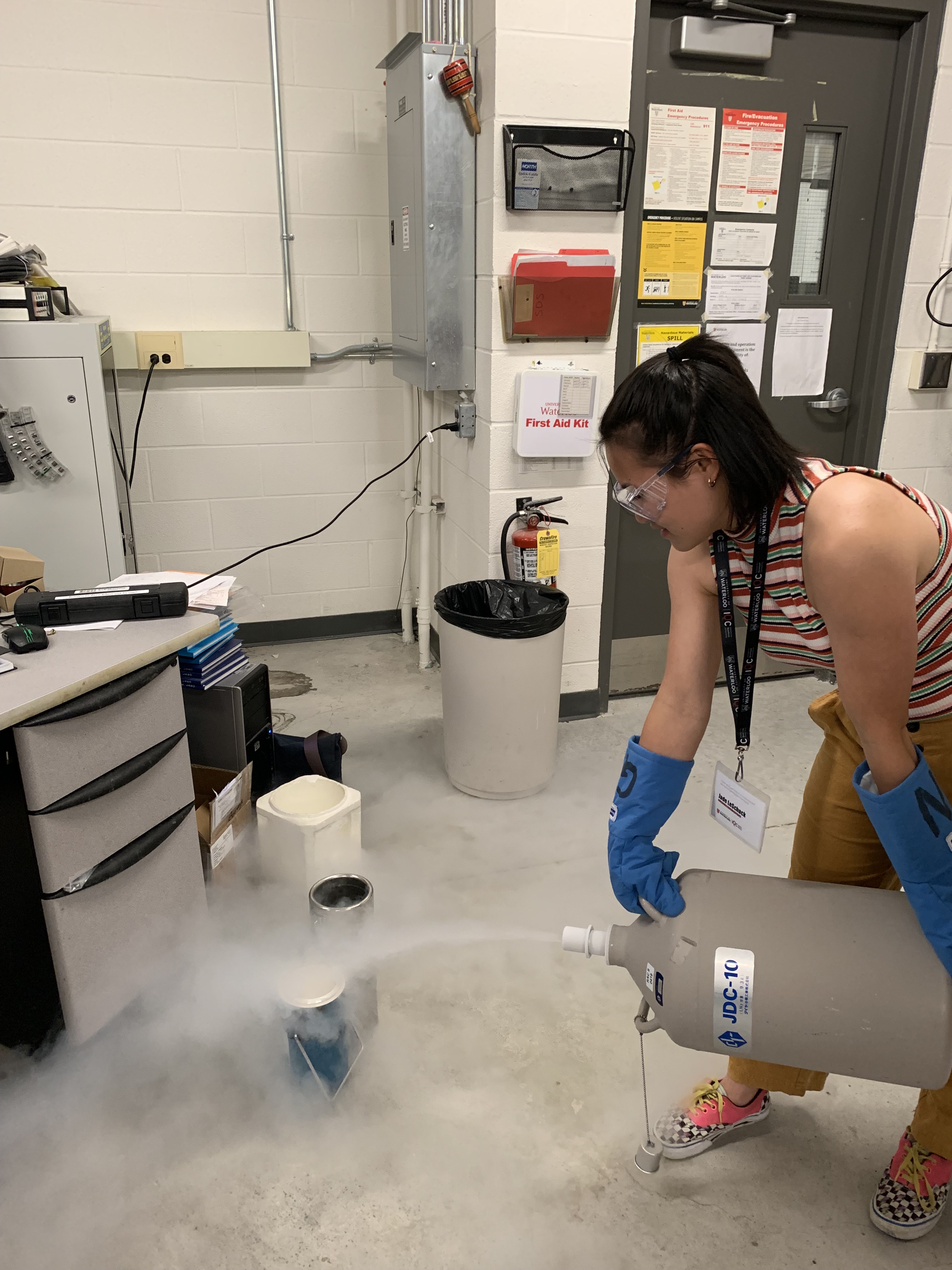
I pour liquid nitrogen into a low-temperature container.

Once USEQIP ended, I began the work for my Undergraduate Research Award, joining Dr. Raymond Laflamme’s group. My job was to read Dr. Laflamme’s soon-to-be-published textbook about quantum hardware, which he co-wrote with graduate student Shayan Majidy and Dr. Chris Wilson. I read through the sections for clarity and equation errors. I also worked through the textbook’s exercises to ensure they were appropriate for the book. Additionally, I contributed figures to the book.

The most challenging part of this work was completing the exercises. I would become frustrated with the complex problems, sometimes toiling over a single problem for over three hours. My frustrations were aggravated when I asked Shayan for help, and my bitter labor was to him a simple trick I had not seen. I had to remind myself that I had been asked to test drive this textbook because I am the target audience for it. I offered an authentic undergraduate perspective on the material that would be valuable to the book’s development. Despite the challenges, I successfully completed my book review, and Shayan sent the textbook for publication at the beginning of August.

After, I moved on to another project. I worked on the quantum thermodynamics research that I conduct with Dr. Nicole Yunger Halpern. My work with Dr. Yunger Halpern concerns systems with noncommuting charges. I run numerical calculations on these systems to understand how they thermalize internally. I enjoyed working at both the IQC and the Perimeter Institute with their wonderful office views and free coffee.

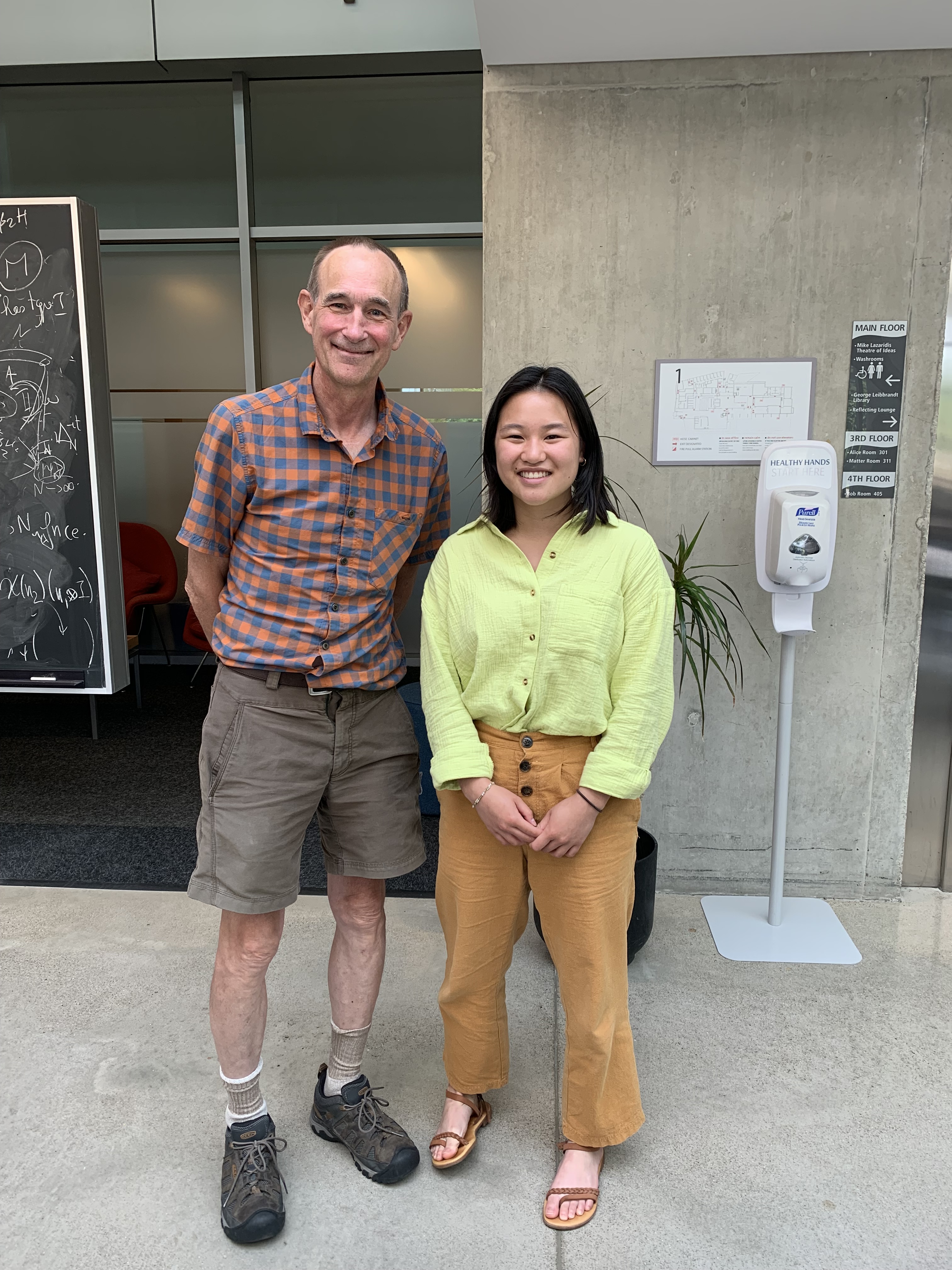
Dr. Laflamme and I at the Perimeter Institute on my last day in Waterloo.

Midway through the summer, Dr. Laflamme’s former and current students celebrated his 60th birthday with a birthday conference. As one of his newest students, I had a wonderful time meeting many of his past students who’ve had exciting careers following their graduation from the group. During the birthday conference, we had six hours of talks daily, but these were not traditional research talks. The talks were on any topic the speaker wanted to share with the audience. I learned about how a senior data scientist at TD Bank uses machine learning, a museum exhibit organized by the University of Waterloo called Quantum: The Exhibition, and photonic quantum science at the Raman Research Institute. For the socializing portion, we played street hockey and enjoyed delicious sushi, sandwiches, and pastries. By coincidence, Dr. Laflamme’s birthday and mine are one day apart!

Outside of my work, I spent almost every weekend exploring Ontario. I beheld the majesty of Niagara Falls for the first time; I visited Canada’s wine country, Niagara on the Lake; I met with friends and family in Toronto; I stargazed with the hope of seeing the aurora borealis (unfortunately, the Northern Lights did not appear). I also joined a women’s ultimate frisbee team, PPF (sorry, we can’t tell you what it stands for), during my stay in Canada. I had a blast getting to play while sharpening my skills for the collegiate ultimate frisbee season. Finally, my summer would not have been great without the friendships that I formed with my fellow USEQIP undergraduates. We shared more than just meals; we shared our hopes and dreams, and I am so lucky to have met such inspiring people.

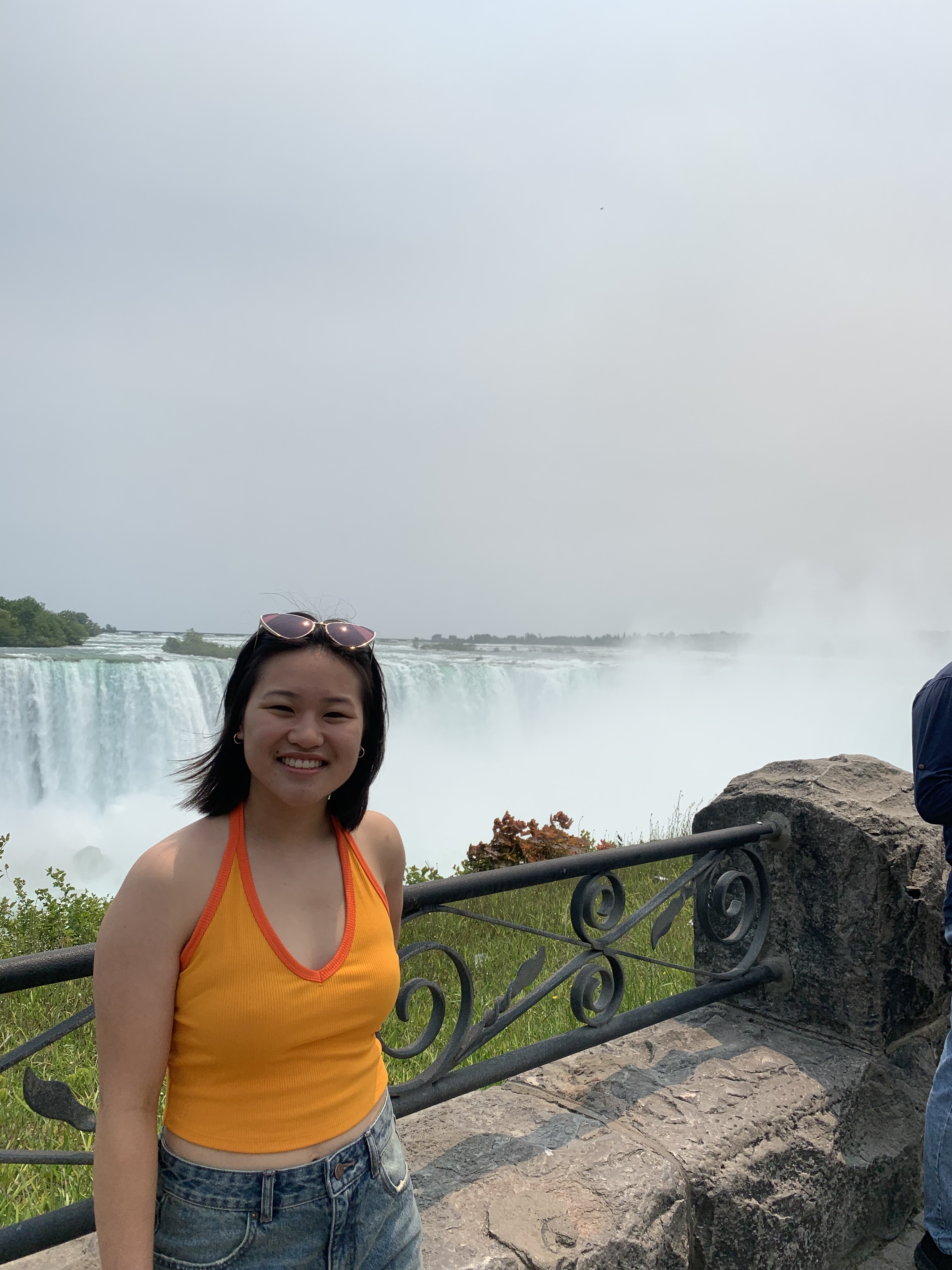
I spent my first weekend in Canada at Niagara Falls.

Though my summer in Waterloo has come to an end now, I’ll never forget the incredible experiences I had. 

Film noir and quantum thermo

The Noncommuting-Charges World Tour (Part 4 of 4)

This is the final part of a four-part series covering the recent Perspective on noncommuting charges. I’ve been posting one part every ~5 weeks leading up to my PhD thesis defence. You can find Part 1 here, Part 2 here, and Part 3 here.

In four months, I’ll embark on the adventure of a lifetime—fatherhood.

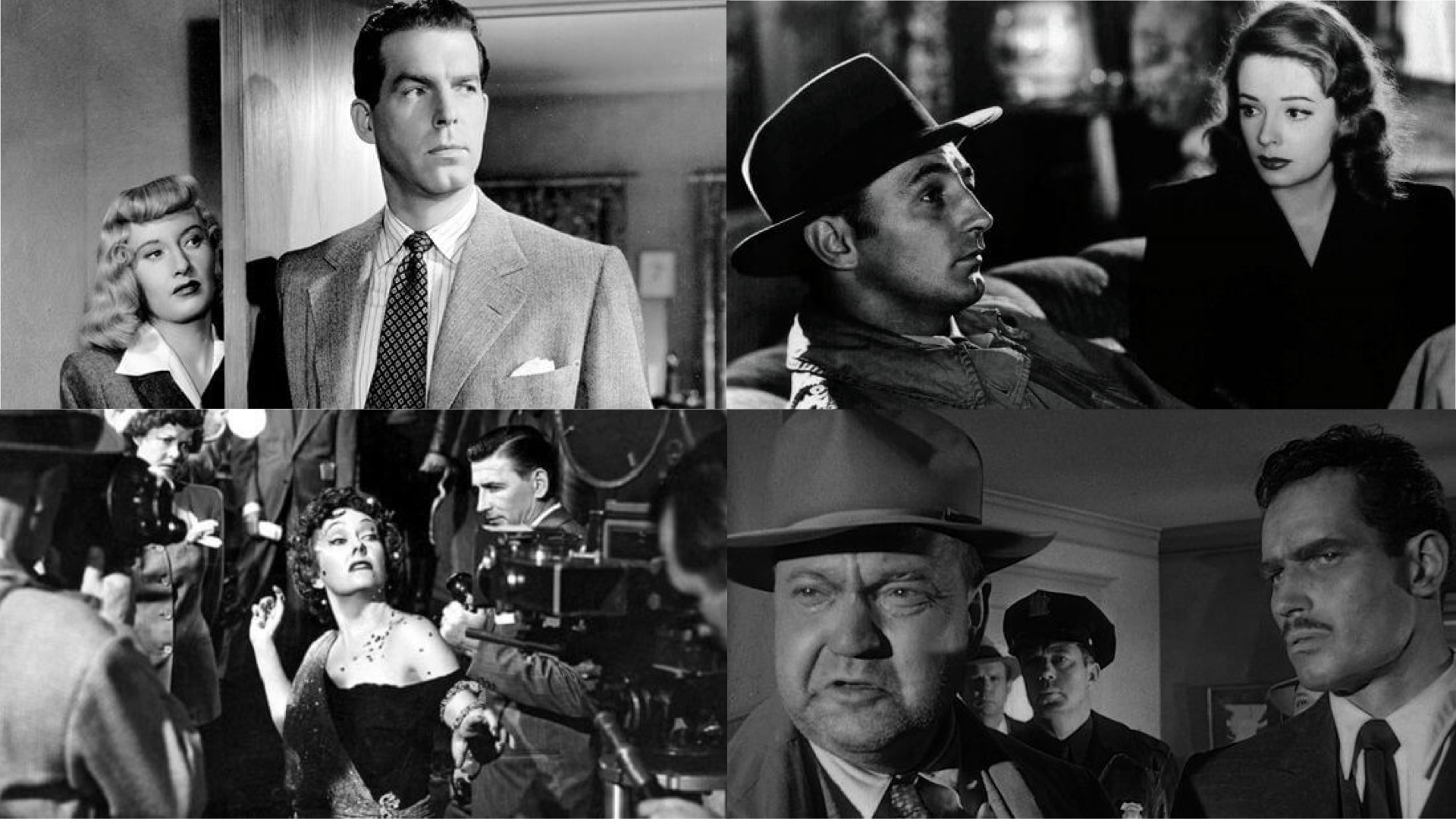
To prepare, I’ve been honing a quintessential father skill—storytelling. If my son inherits even a fraction of my tastes, he’ll soon develop a passion for film noir detective stories. And really, who can resist the allure of a hardboiled detective, a femme fatale, moody chiaroscuro lighting, and plot twists that leave you reeling? For the uninitiated, here’s a quick breakdown of the genre.

To sharpen my storytelling skills, I’ve decided to channel my inner noir writer and craft this final blog post—the opportunities for future work, as outlined in the Perspective—in that style.

I wouldn’t say film noir needs to be watched in black and white like how I wouldn’t say jazz needs to be listened to on vinyl. But it adds a charm that’s hard to replicate.

Theft at the Quantum Frontier

Under the dim light of a flickering bulb, private investigator Max Kelvin leaned back in his creaky chair, nursing a cigarette. The steady patter of rain against the window was interrupted by the creak of the office door. In walked trouble. Trouble with a capital T.

She was tall, moving with a confident stride that barely masked the worry lines etched into her face. Her dark hair was pulled back in a tight bun, and her eyes were as sharp as the edges of the papers she clutched in her gloved hand.

“Mr. Kelvin?” she asked, her voice a low, smoky whisper.

“That’s what the sign says,” Max replied, taking a long drag of his cigarette, the ember glowing a fiery red. “What can I do for you, Miss…?”

“Doctor,” she corrected, her tone firm, “Shayna Majidy. I need your help. Someone’s about to scoop my research.”

Max’s eyebrows arched. “Scooped? You mean someone stole your work?”

“Yes,” Shayna said, frustration seeping into her voice. “I’ve been working on noncommuting charge physics, a topic recently highlighted in a Perspective article. But someone has stolen my paper. We need to find who did it before they send it to the local rag, The Ark Hive.”

Max leaned forward, snuffing out his cigarette and grabbing his coat in one smooth motion. “Alright, Dr. Majidy, let’s see where your work might have wandered off to.”


They started their investigation with Joey “The Ant” Guzman, an experimental physicist whose lab was a tangled maze of gleaming equipment. Superconducting qubits, quantum dots, ultracold atoms, quantum optics, and optomechanics cluttered the room, each device buzzing with the hum of cutting-edge science. Joey earned his nickname due to his meticulous and industrious nature, much like an ant in its colony.

Guzman was a prime suspect, Shayna had whispered as they approached. His experiments could validate the predictions of noncommuting charges. “The first test of noncommuting-charge thermodynamics was performed with trapped ions,” she explained, her voice low and tense. “But there’s a lot more to explore—decreased entropy production rates, increased entanglement, to name a couple. There are many platforms to test these results, and Guzman knows them all. It’s a major opportunity for future work.”

Guzman looked up from his work as they entered, his expression guarded. “Can I help you?” he asked, wiping his hands on a rag.

Max stepped forward, his eyes scanning the room. “A rag? I guess you really are a quantum mechanic.” He paused for laughter, but only silence answered. “We’re investigating some missing research,” he said, his voice calm but edged with intensity. “You wouldn’t happen to know anything about noncommuting charges, would you?”

Guzman’s eyes narrowed, a flicker of suspicion crossing his face. “Almost everyone is interested in that right now,” he replied cautiously.

Shayna stepped forward, her eyes boring into Guzman’s. “So what’s stopping you from doing experimental tests? Do you have enough qubits? Long enough decoherence times?”

Guzman shifted uncomfortably but kept his silence. Max took another drag of his cigarette, the smoke curling around his thoughts. “Alright, Guzman,” he said finally. “If you think of anything that might help, you know where to find us.”

As they left the lab, Max turned to Shayna. “He’s hiding something,” he said quietly. “But whether it’s your work or how noisy and intermediate scale his hardware is, we need more to go on.”

Shayna nodded, her face set in grim determination. The rain had stopped, but the storm was just beginning.


I bless the night my mom picked up “Who Framed Roger Rabbit” at Blockbuster. That, along with the criminally underrated “Dog City,” likely ignited my love for the genre.

Their next stop was the dimly lit office of Alex “Last Piece” Lasek, a puzzle enthusiast with a sudden obsession with noncommuting charge physics. The room was a chaotic labyrinth, papers strewn haphazardly, each covered with intricate diagrams and cryptic scrawlings. The stale aroma of old coffee and ink permeated the air.

Lasek was hunched over his desk, scribbling furiously, his eyes darting across the page. He barely acknowledged their presence as they entered. “Noncommuting charges,” he muttered, his voice a gravelly whisper, “they present a fascinating puzzle. They hinder thermalization in some ways and enhance it in others.”

“Last Piece Lasek, I presume?” Max’s voice sliced through the dense silence.

Lasek blinked, finally lifting his gaze. “Yeah, that’s me,” he said, pushing his glasses up the bridge of his nose. “Who wants to know?”

“Max Kelvin, private eye,” Max replied, flicking his card onto the cluttered desk. “And this is Dr. Majidy. We’re investigating some missing research.”

Shayna stepped forward, her eyes sweeping the room like a hawk. “I’ve read your papers, Lasek,” she said, her tone a blend of admiration and suspicion. “You live for puzzles, and this one’s as tangled as they come. How do you plan to crack it?”

Lasek shrugged, leaning back in his creaky chair. “It’s a tough nut,” he admitted, a sly smile playing at his lips. “But I’m no thief, Dr. Majidy. I’m more interested in solving the puzzle than in academic glory.”

As they exited Lasek’s shadowy lair, Max turned to Shayna. “He’s a riddle wrapped in an enigma, but he doesn’t strike me as a thief.”

Shayna nodded, her expression grim. “Then we keep digging. Time’s slipping away, and we’ve got to find the missing pieces before it’s too late.”


Their third stop was the office of Billy “Brass Knuckles,” a classical physicist infamous for his no-nonsense attitude and a knack for punching holes in established theories.

Max’s skepticism was palpable as they entered the office. “He’s a classical physicist; why would he give a damn about noncommuting charges?” he asked Shayna, raising an eyebrow.

Billy, overhearing Max’s question, let out a gravelly chuckle. “It’s not as crazy as it sounds,” he said, his eyes glinting with amusement. “Sure, the noncommutation of observables is at the core of quantum quirks like uncertainty, measurement disturbances, and the Einstein-Podolsky-Rosen paradox.”

Max nodded slowly, “Go on.”

“However,” Billy continued, leaning forward, “classical mechanics also deals with quantities that don’t commute, like rotations around different axes. So, how unique is noncommuting-charge thermodynamics to the quantum realm? What parts of this new physics can we find in classical systems?”

Shayna crossed her arms, a devious smile playing on her lips. “Wouldn’t you like to know?”

“Wouldn’t we all?” Billy retorted, his grin mirroring hers. “But I’m about to retire. I’m not the one sneaking around your work.”

Max studied Billy for a moment longer, then nodded. “Alright, Brass Knuckles. Thanks for your time.”

As they stepped out of the shadowy office and into the damp night air, Shayna turned to Max. “Another dead end?”

Max nodded and lit a cigarette, the smoke curling into the misty air. “Seems so. But the clock’s ticking, and we can’t afford to stop now.”


If you want contemporary takes on the genre, Sin City (2005), Memento (2000), and L.A. Confidential (1997) each deliver in their own distinct ways.

Their fourth suspect, Tony “Munchies” Munsoni, was a specialist in chaos theory and thermodynamics, with an insatiable appetite for both science and snacks.

“Another non-quantum physicist?” Max muttered to Shayna, raising an eyebrow.

Shayna nodded, a glint of excitement in her eyes. “The most thrilling discoveries often happen at the crossroads of different fields.”

Dr. Munson looked up from his desk as they entered, setting aside his bag of chips with a wry smile. “I’ve read the Perspective article,” he said, getting straight to the point. “I agree—every chaotic or thermodynamic phenomenon deserves another look under the lens of noncommuting charges.”

Max leaned against the doorframe, studying Munsoni closely.

“We’ve seen how they shake up the Eigenstate Thermalization Hypothesis, monitored quantum circuits, fluctuation relations, and Page curves,” Munson continued, his eyes alight with intellectual fervour. “There’s so much more to uncover. Think about their impact on diffusion coefficients, transport relations, thermalization times, out-of-time-ordered correlators, operator spreading, and quantum-complexity growth.”

Shayna leaned in, clearly intrigued. “Which avenue do you think holds the most promise?”

Munsoni’s enthusiasm dimmed slightly, his expression turning regretful. “I’d love to dive into this, but I’m swamped with other projects right now. Give me a few months, and then you can start grilling me.”

Max glanced at Shayna, then back at Munsoni. “Alright, Munchies. If you hear anything or stumble upon any unusual findings, keep us in the loop.”

As they stepped back into the dimly lit hallway, Max turned to Shayna. “I saw his calendar; he’s telling the truth. His schedule is too packed to be stealing your work.”

Shayna’s shoulders slumped slightly. “Maybe. But we’re not done yet. The clock’s ticking, and we’ve got to keep moving.”


Finally, they turned to a pair of researchers dabbling in the peripheries of quantum thermodynamics. One was Twitch Uppity, an expert on non-Abelian gauge theories. The other, Jada LeShock, specialized in hydrodynamics and heavy-ion collisions.

Max leaned against the doorframe, his voice casual but probing. “What exactly are non-Abelian gauge theories?” he asked (setting up the exposition for the Quantum Frontiers reader’s benefit).

Uppity looked up, his eyes showing the weary patience of someone who had explained this concept countless times. “Imagine different particles interacting, like magnets and electric charges,” he began, his voice steady. “We describe the rules for these interactions using mathematical objects called ‘fields.’ These rules are called field theories. Electromagnetism is one example. Gauge theories are a class of field theories where the laws of physics are invariant under certain local transformations. This means that a gauge theory includes more degrees of freedom than the physical system it represents. We can choose a ‘gauge’ to eliminate the extra degrees of freedom, making the math simpler.”

Max nodded slowly, his eyes fixed on Uppity. “Go on.”

“These transformations form what is called a gauge group,” Uppity continued, taking a sip of his coffee. “Electromagnetism is described by the gauge group U(1). Other interactions are described by more complex gauge groups. For instance, quantum chromodynamics, or QCD, uses an SU(3) symmetry and describes the strong force between particles in an atom. QCD is a non-Abelian gauge theory because its gauge group is noncommutative. This leads to many intriguing effects.”

“I see the noncommuting part,” Max stated, trying to keep up. “But, what’s the connection to noncommuting charges in quantum thermodynamics?”

“That’s the golden question,” Shayna interjected, excitement in her voice. “In QCD, particle physics uses non-Abelian groups, so it may exhibit phenomena related to noncommuting charges in thermodynamics.”

“May is the keyword,” Uppity replied. “In QCD, the symmetry is local, unlike the global symmetries described in the Perspective. An open question is how much noncommuting-charge quantum thermodynamics applies to non-Abelian gauge theories.”

Max turned his gaze to Jada. “How about you? What are hydrodynamics and heavy-ion collisions?” he asked, setting up more exposition.

Jada dropped her pencil and raised her head. “Hydrodynamics is the study of fluid motion and the forces acting on them,” she began. “We focus on large-scale properties, assuming that even if the fluid isn’t in equilibrium as a whole, small regions within it are. Hydrodynamics can explain systems in condensed matter and stages of heavy-ion collisions—collisions between large atomic nuclei at high speeds.”

“Where does the non-Abelian part come in?” Max asked, his curiosity piqued.

“Hydrodynamics researchers have identified specific effects caused by non-Abelian symmetries,” Jada answered. “These include non-Abelian contributions to conductivity, effects on entropy currents, and shortening neutralization times in heavy-ion collisions.”

“Are you looking for more effects due to non-Abelian symmetries?” Shayna asked, her interest clear. “A long-standing question is how heavy-ion collisions thermalize. Maybe the non-Abelian ETH would help explain this?”

Jada nodded, a faint smile playing on her lips. “That’s the hope. But as with all cutting-edge research, the answers are elusive.”

Max glanced at Shayna, his eyes thoughtful. “Let’s wrap this up. We’ve got some thinking to do.”


After hearing from each researcher, Max and Shayna found themselves back at the office. The dim light of the flickering bulb cast long shadows on the walls. Max poured himself a drink. He offered one to Shayna, who declined, her eyes darting around the room, betraying her nerves.

“So,” Max said, leaning back in his chair, the creak of the wood echoing in the silence. “Everyone seems to be minding their own business. Well…” Max paused, taking a slow sip of his drink, “almost everyone.”

Shayna’s eyes widened, a flicker of panic crossing her face. “I’m not sure who you’re referring to,” she said, her voice wavering slightly. “Did you figure out who stole my work?” She took a seat, her discomfort apparent.

Max stood up and began circling Shayna’s chair like a predator stalking its prey. His eyes were sharp, scrutinizing her every move. “I couldn’t help but notice all the questions you were asking and your eyes peeking onto their desks.”

Shayna sighed, her confident façade cracking under the pressure. “You’re good, Max. Too good… No one stole my work.” Shayna looked down, her voice barely above a whisper. “I read that Perspective article. It mentioned all these promising research avenues. I wanted to see what others were working on so I could get a jump on them.”

Max shook his head, a wry smile playing on his lips. “You tried to scoop the scoopers, huh?”

Shayna nodded, looking somewhat sheepish. “I guess I got a bit carried away.”

Max chuckled, pouring himself another drink. “Science is a tough game, Dr. Majidy. Just make sure next time you play fair.”

As Shayna left the office, Max watched the rain continue to fall outside. His thoughts lingered on the strange case, a world where the race for discovery was cutthroat and unforgiving. But even in the darkest corners of competition, integrity was a prize worth keeping…

That concludes my four-part series on our recent Perspective article. I hope you had as much fun reading them as I did writing them.

To thermalize, or not to thermalize, that is the question.

The Noncommuting-Charges World Tour (Part 3 of 4)

This is the third part of a four-part series covering the recent Perspective on noncommuting charges. I’ll post one part every ~5 weeks leading up to my PhD thesis defence. You can find Part 1 here and Part 2 here.

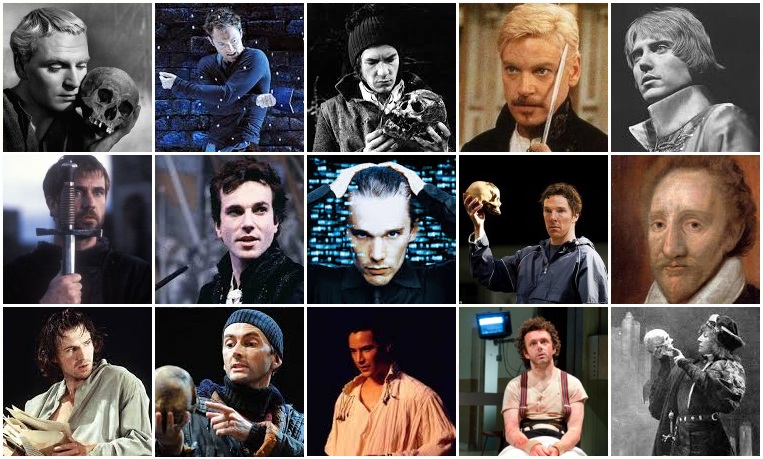
If Hamlet had been a system of noncommuting charges, his famous soliloquy may have gone like this…

To thermalize, or not to thermalize, that is the question:
Whether ’tis more natural for the system to suffer
The large entanglement of thermalizing dynamics,
Or to take arms against the ETH
And by opposing inhibit it. To die—to thermalize,
No more; and by thermalization to say we end
The dynamical symmetries and quantum scars
That complicate dynamics: ’tis a consummation
Devoutly to be wish’d. To die, to thermalize;
To thermalize, perchance to compute—ay, there’s the rub:
For in that thermalization our quantum information decoheres,
When our coherence has shuffled off this quantum coil,
Must give us pause—there’s the respect
That makes calamity of resisting thermalization.

Hamlet (the quantum steampunk edition)


In the original play, Hamlet grapples with the dilemma of whether to live or die. Noncommuting charges have a dilemma regarding whether they facilitate or impede thermalization. Among the five research opportunities highlighted in the Perspective article, resolving this debate is my favourite opportunity due to its potential implications for quantum technologies. A primary obstacle in developing scalable quantum computers is mitigating decoherence; here, thermalization plays a crucial role. If systems with noncommuting charges are shown to resist thermalization, they may contribute to quantum technologies that are more resistant to decoherence. Systems with noncommuting charges, such as spin systems and squeezed states of light, naturally occur in quantum computing models like quantum dots and optical approaches. This possibility is further supported by recent advances demonstrating that non-Abelian symmetric operations are universal for quantum computing (see references 1 and 2).

In this penultimate blog post of the series, I will review some results that argue both in favour of and against noncommuting charges hindering thermalization. This discussion includes content from Sections III, IV, and V of the Perspective article, along with a dash of some related works at the end—one I recently posted and another I recently found. The results I will review do not directly contradict one another because they arise from different setups. My final blog post will delve into the remaining parts of the Perspective article.

Playing Hamlet is like jury duty for actors–sooner or later, you’re getting the call (source).

Arguments for hindering thermalization

The first argument supporting the idea that noncommuting charges hinder thermalization is that they can reduce the production of thermodynamic entropy. In their study, Manzano, Parrondo, and Landi explore a collisional model involving two systems, each composed of numerous subsystems. In each “collision,” one subsystem from each system is randomly selected to “collide.” These subsystems undergo a unitary evolution during the collision and are subsequently returned to their original systems. The researchers derive a formula for the entropy production per collision within a certain regime (the linear-response regime). Notably, one term of this formula is negative if and only if the charges do not commute. Since thermodynamic entropy production is a hallmark of thermalization, this finding implies that systems with noncommuting charges may thermalize more slowly. Two other extensions support this result.

The second argument stems from an essential result in quantum computing. This result is that every algorithm you want to run on your quantum computer can be broken down into gates you run on one or two qubits (the building blocks of quantum computers). Marvian’s research reveals that this principle fails when dealing with charge-conserving unitaries. For instance, consider the charge as energy. Marvian’s results suggest that energy-preserving interactions between neighbouring qubits don’t suffice to construct all energy-preserving interactions across all qubits. The restrictions become more severe when dealing with noncommuting charges. Local interactions that preserve noncommuting charges impose stricter constraints on the system’s overall dynamics compared to commuting charges. These constraints could potentially reduce chaos, something that tends to lead to thermalization.

Adding to the evidence, we revisit the eigenstate thermalization hypothesis (ETH), which I discussed in my first post. The ETH essentially asserts that if an observable and Hamiltonian adhere to the ETH, the observable will thermalize. This means its expectation value stabilizes over time, aligning with the expectation value of the thermal state, albeit with some important corrections. Noncommuting charges cause all kinds of problems for the ETH, as detailed in these two posts by Nicole Yunger Halpern. Rather than reiterating Nicole’s succinct explanations, I’ll present the main takeaway: noncommuting charges undermine the ETH. This has led to the development of a non-Abelian version of the ETH by Murthy and collaborators. This new framework still predicts thermalization in many, but not all, cases. Under a reasonable physical assumption, the previously mentioned corrections to the ETH may be more substantial.

If this story ended here, I would have needed to reference a different Shakespearean work. Fortunately, the internal conflict inherent in noncommuting aligns well with Hamlet. Noncommuting charges appear to impede thermalization in various aspects, yet paradoxically, they also seem to promote it in others.

Arguments for promoting thermalization

Among the many factors accompanying the thermalization of quantum systems, entanglement is one of the most studied. Last year, I wrote a blog post explaining how my collaborators and I constructed analogous models that differ in whether their charges commute. One of the paper’s results was that the model with noncommuting charges had higher average entanglement entropy. As a result of that blog post, I was invited to CBC’s “Quirks & Quarks” Podcast to explain, on national radio, whether quantum entanglement can explain the extreme similarities we see in identical twins who are raised apart. Spoilers for the interview: it can’t, but wouldn’t it be grand if it could?

Following up on that work, my collaborators and I introduced noncommuting charges into monitored quantum circuits (MQCs)—quantum circuits with mid-circuit measurements. MQCs offer a practical framework for exploring how, for example, entanglement is affected by the interplay between unitary dynamics and measurements. MQCs with no charges or with commuting charges have a weakly entangled phase (“area-law” phase) when the measurements are done often enough, and a highly entangled phase (“volume-law” phase) otherwise. However, in MQCs with noncommuting charges, this weakly entangled phase never exists. In its place, there is a critical phase marked by long-range entanglement. This finding supports our earlier observation that noncommuting charges tend to increase entanglement.

I recently looked at a different angle to this thermalization puzzle. It’s well known that most quantum many-body systems thermalize; some don’t. In those that don’t, what effect do noncommuting charges have? One paper that answers this question is covered in the Perspective. Here, Potter and Vasseur study many-body localization (MBL). Imagine a chain of spins that are strongly interacting. We can add a disorder term, such as an external field whose magnitude varies across sites on this chain. If the disorder is sufficiently strong, the system “localizes.” This implies that if we measured the expectation value of some property of each qubit at some time, it would maintain that same value for a while. MBL is one type of behaviour that resists thermalization. Potter and Vasseur found that noncommuting charges destabilize MBL, thereby promoting thermalizing behaviour.

In addition to the papers discussed in our Perspective article, I want to highlight two other studies that study how systems can avoid thermalization. One mechanism is through the presence of “dynamical symmetries” (there are “spectrum-generating algebras” with a locality constraint). These are operators that act similarly to ladder operators for the Hamiltonian. For any observable that overlaps with these dynamical symmetries, the observable’s expectation value will continue to evolve over time and will not thermalize in accordance with the Eigenstate Thermalization Hypothesis (ETH). In my recent work, I demonstrate that noncommuting charges remove the non-thermalizing dynamics that emerge from dynamical symmetries.

Additionally, I came across a study by O’Dea, Burnell, Chandran, and Khemani, which proposes a method for constructing Hamiltonians that exhibit quantum scars. Quantum scars are unique eigenstates of the Hamiltonian that do not thermalize despite being surrounded by a spectrum of other eigenstates that do thermalize. Their approach involves creating a Hamiltonian with noncommuting charges and subsequently breaking the non-Abelian symmetry. When the symmetry is broken, quantum scars appear; however, if the non-Abelian symmetry were to be restored, the quantum scars vanish. These last three results suggest that noncommuting charges impede various types of non-thermalizing dynamics.

Unlike Hamlet, the narrative of noncommuting charges is still unfolding. I wish I could conclude with a dramatic finale akin to the duel between Hamlet and Laertes, Claudius’s poisoning, and the proclamation of a new heir to the Danish throne. However, that chapter is yet to be written. “To thermalize or not to thermalize?” We will just have to wait and see.

My experimental adventures in quantum thermodynamics

Imagine a billiard ball bouncing around on a pool table. High-school level physics enables us to predict its motion until the end of time using simple equations for energy and momentum conservation, as long as you know the initial conditions – how fast the ball is moving at launch, and in which direction.

What if you add a second ball? This makes things more complicated, but predicting the future state of this system would still be possible based on the same principles. What about if you had a thousand balls, or a million? Technically, you could still apply the same equations, but the problem would not be tractable in any practical sense.

Billiard balls bouncing around on a pool table are a good analogy for a many-body system like a gas of molecules. Image credit

Thermodynamics lets us make precise predictions about averaged (over all the particles) properties of complicated, many-body systems, like millions of billiard balls or atoms bouncing around, without needing to know the gory details. We can make these predictions by introducing the notion of probabilities. Even though the system is deterministic – we can in principle calculate the exact motion of every ball – there are so many balls in this system, that the properties of the whole will be very close to the average properties of the balls. If you throw a six-sided die, the result is in principle deterministic and predictable, based on the way you throw it, but it’s in practice completely random to you – it could be 1 through 6, equally likely. But you know that if you cast a thousand dice, the average will be close to 3.5 – the average of all possibilities. Statistical physics enables us to calculate a probability distribution over the energies of the balls, which tells us everything about the average properties of the system. And because of entropy – the tendency for the system to go from ordered to disordered configurations, even if the probability distribution of the initial system is far from the one statistical physics predicts, after the system is allowed to bounce around and settle, this final distribution will be extremely close to a generic distribution that depends on average properties only. We call this the thermal distribution, and the process of the system mixing and settling to one of the most likely configurations – thermalization.

For a practical example – instead of billiard balls, consider a gas of air molecules bouncing around. The average energy of this gas is proportional to its temperature, which we can calculate from the probability distribution of energies. Being able to predict the temperature of a gas is useful for practical things like weather forecasting, cooling your home efficiently, or building an engine. The important properties of the initial state we needed to know – energy and number of particles – are conserved during the evolution, and we call them “thermodynamic charges”. They don’t actually need to be electric charges, although it is a good example of something that’s conserved.

Let’s cross from the classical world – balls bouncing around – to the quantum one, which deals with elementary particles that can be entangled, or in a superposition. What changes when we introduce this complexity? Do systems even thermalize in the quantum world? Because of the above differences, we cannot in principle be sure that the mixing and settling of the system will happen just like in the classical cases of balls or gas molecules colliding.

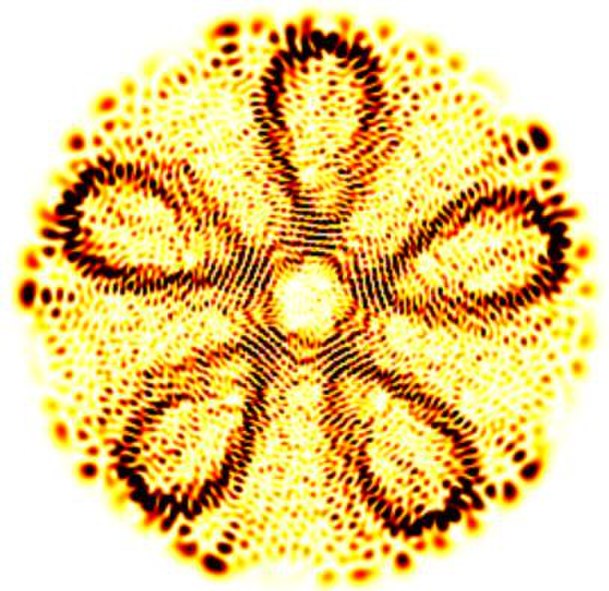
A visualization of a complex pattern called a quantum scar that can develop in quantum systems. Image credit

It turns out that we can predict the thermal state of a quantum system using very similar principles and equations that let us do this in the classical case. Well, with one exception – what if we cannot simultaneously measure our critical quantities – the charges?

One of the quirks of quantum mechanics is that observing the state of the system can change it. Before the observation, the system might be in a quantum superposition of many states. After the observation, a definite classical value will be recorded on our instrument – we say that the system has collapsed to this state, and thus changed its state. There are certain observables that are mutually incompatible – we cannot know their values simultaneously, because observing one definite value collapses the system to a state in which the other observable is in a superposition. We call these observables noncommuting, because the order of observation matters – unlike in multiplication of numbers, which is a commuting operation you’re familiar with. 2 * 3 = 6, and also 3 * 2 = 6 – the order of multiplication doesn’t matter.

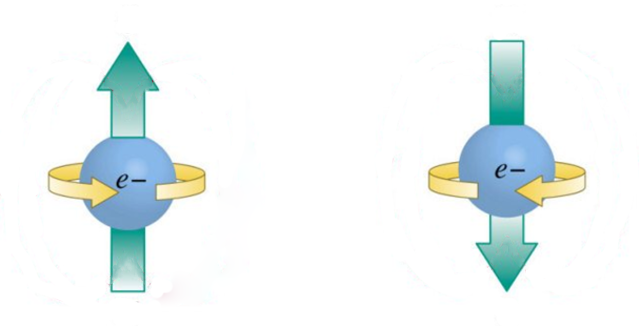
Electron spin is a common example that entails noncommutation. In a simplified picture, we can think of spin as an axis of rotation of our electron in 3D space. Note that the electron doesn’t actually rotate in space, but it is a useful analogy – the property is “spin” for a reason. We can measure the spin along the x-,y-, or z-axis of a 3D coordinate system and obtain a definite positive or negative value, but this observation will result in a complete loss of information about spin in the other two perpendicular directions.

An illustration of electron spin. We can imagine it as an axis in 3D space that points in a particular direction. Image from Wikimedia Commons.

If we investigate a system that conserves the three spin components independently, we will be in a situation where the three conserved charges do not commute. We call them “non-Abelian” charges, because they enjoy a non-Abelian, that is, noncommuting, algebra. Will such a system thermalize, and if so, to what kind of final state?

This is precisely what we set out to investigate. Noncommutation of charges breaks usual derivations of the thermal state, but researchers have managed to show that with non-Abelian charges, a subtly different non-Abelian thermal state (NATS) should emerge. Myself and Nicole Yunger Halpern at the Joint Center for Quantum Information and Computer Science (QuICS) at the University of Maryland have collaborated with Amir Kalev from the Information Sciences Institute (ISI) at the University of Southern California, and experimentalists from the University of Innsbruck (Florian Kranzl, Manoj Joshi, Rainer Blatt and Christian Roos) to observe thermalization in a non-Abelian system – and we’ve recently published this work in PRX Quantum .

The experimentalists used a device that can trap ions with electric fields, as well as manipulate and read out their states using lasers. Only select energy levels of these ions are used, which effectively makes them behave like electrons. The laser field can couple the ions in a way that approximates the Heisenberg Hamiltonian – an interaction that conserves the three total spin components individually. We thus construct the quantum system we want to study – multiple particles coupled with interactions that conserve noncommuting charges.

We conceptually divide the ions into a system of interest and an environment. The system of interest, which consists of two particles, is what we want to measure and compare to theoretical predictions. Meanwhile, the other ions act as the effective environment for our pair of ions – the environment ions interact with the pair in a way that simulates a large bath exchanging heat and spin.

Photo of our University of Maryland group. From left to right: Twesh Upadhyaya, Billy Braasch, Shayan Majidy, Nicole Yunger Halpern, Aleks Lasek, Jose Antonio Guzman, Anthony Munson.

If we start this total system in some initial state, and let it evolve under our engineered interaction for a long enough time, we can then measure the final state of the system of interest. To make the NATS distinguishable from the usual thermal state, I designed an initial state that is easy to prepare, and has the ions pointing in directions that result in high charge averages and relatively low temperature. High charge averages make the noncommuting nature of the charges more pronounced, and low temperature makes the state easy to distinguish from the thermal background. However, we also show that our experiment works for a variety of more-arbitrary states.

We let the system evolve from this initial state for as long as possible given experimental limitations, which was 15 ms. The experimentalists then used quantum state tomography to reconstruct the state of the system of interest. Quantum state tomography makes multiple measurements over many experimental runs to approximate the average quantum state of the system measured. We then check how close the measured state is to the NATS. We have found that it’s about as close as one can expect in this experiment!

And we know this because we have also implemented a different coupling scheme, one that doesn’t have non-Abelian charges. The expected thermal state in the latter case was reached within a distance that’s a little smaller than our non-Abelian case. This tells us that the NATS is almost reached in our experiment, and so it is a good, and the best known, thermal state for the non-Abelian system – we have compared it to competitor thermal states.

Working with the experimentalists directly has been a new experience for me. While I was focused on the theory and analyzing the tomography results they obtained, they needed to figure out practical ways to realize what we asked of them. I feel like each group has learned a lot about the tasks of the other. I have become well acquainted with the trapped ion experiment and its capabilities and limitation. Overall, it has been great collaborating with the Austrian group.

Our result is exciting, as it’s the first experimental observation within the field of non-Abelian thermodynamics! This result was observed in a realistic, non-fine-tuned system that experiences non-negligible errors due to noise. So the system does thermalize after all. We have also demonstrated that the trapped ion experiment of our Austrian friends can be used to simulate interesting many-body quantum systems. With different settings and programming, other types of couplings can be simulated in different types of experiments.

The experiment also opened avenues for future work. The distance to the NATS was greater than the analogous distance to the Abelian system. This suggests that thermalization is inhibited by the noncommutation of charges, but more evidence is needed to justify this claim. In fact, our other recent paper in Physical Review B suggests the opposite!

As noncommutation is one of the core features that distinguishes classical and quantum physics, it is of great interest to unravel the fine differences non-Abelian charges can cause. But we also hope that this research can have practical uses. If thermalization is disrupted by noncommutation of charges, engineered systems featuring them could possibly be used to build quantum memory that is more robust, or maybe even reduce noise in quantum computers. We continue to explore noncommutation, looking for interesting effects that we can pin on it. I am currently working on verifying the workings of a hypothesis that explains when and why quantum systems thermalize internally.

Noncommuting charges are much like Batman

The Noncommuting-Charges World Tour Part 2 of 4

This is the second part of a four-part series covering the recent Perspective on noncommuting charges. I’ll post one part every ~5 weeks leading up to my PhD thesis defence. You can find part 1 here.

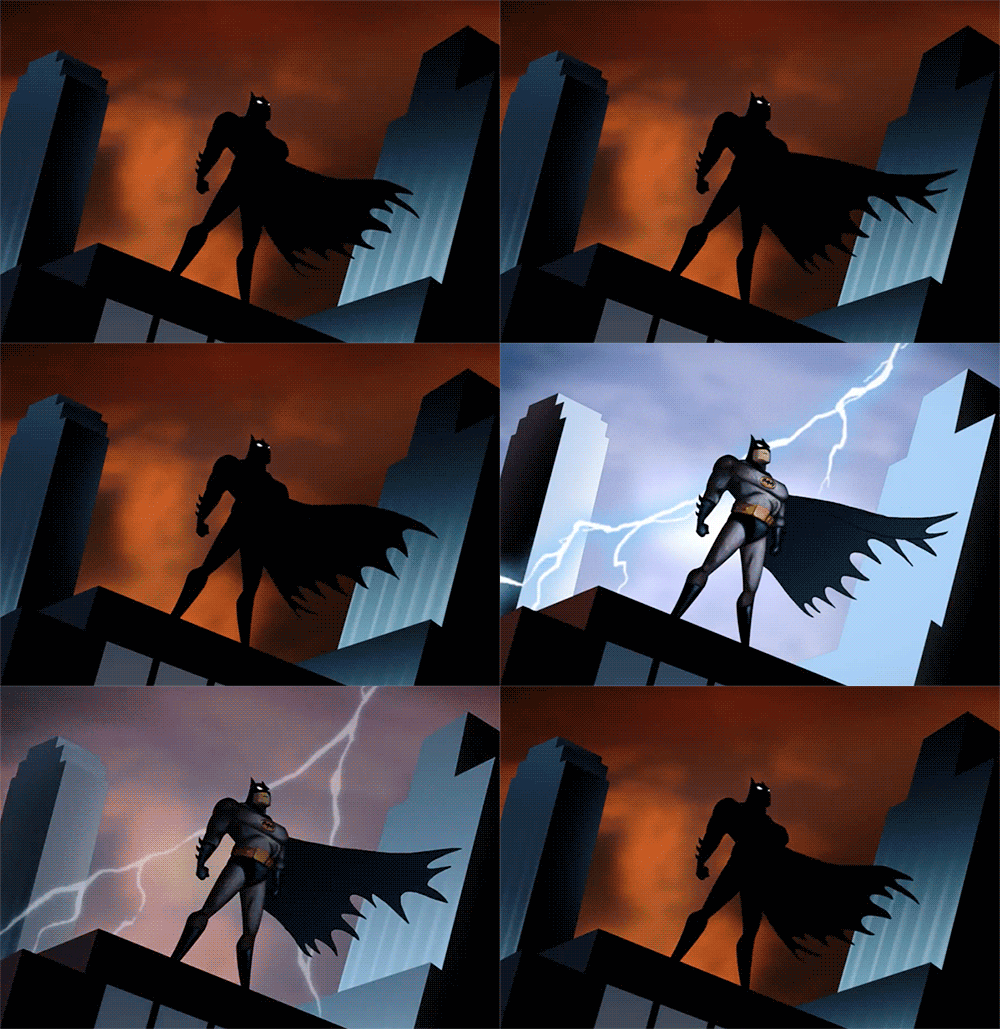
Understanding a character’s origins enriches their narrative and motivates their actions. Take Batman as an example: without knowing his backstory, he appears merely as a billionaire who might achieve more by donating his wealth rather than masquerading as a bat to combat crime. However, with the context of his tragic past, Batman transforms into a symbol designed to instill fear in the hearts of criminals. Another example involves noncommuting charges. Without understanding their origins, the question “What happens when charges don’t commute?” might appear contrived or simply devised to occupy quantum information theorists and thermodynamicists. However, understanding the context of their emergence, we find that numerous established results unravel, for various reasons, in the face of noncommuting charges. In this light, noncommuting charges are much like Batman; their backstory adds to their intrigue and clarifies their motivation. Admittedly, noncommuting charges come with fewer costumes, outside the occasional steampunk top hat my advisor Nicole Yunger Halpern might sport.

Growing up, television was my constant companion. Of all the shows I’d get lost in, ‘Batman: The Animated Series’ stands the test of time. I highly recommend giving it a watch.

In the early works I’m about to discuss, a common thread emerges: the initial breakdown of some well-understood derivations and the effort to establish a new derivation that accommodates noncommuting charges. These findings will illuminate, yet not fully capture, the multitude of results predicated on the assumption that charges commute. Removing this assumption is akin to pulling a piece from a Jenga tower, triggering a cascade of other results. Critics might argue, “If you’re merely rederiving known results, this field seems uninteresting.” However, the reality is far more compelling. As researchers diligently worked to reconstruct this theoretical framework, they have continually uncovered ways in which noncommuting charges might pave the way for new physics. That said, the exploration of these novel phenomena will be the subject of my next post, where we delve into the emerging physics. So, I invite you to stay tuned. Back to the history…

E.T. Jaynes’s 1957 formalization of the maximum entropy principle has a blink-and-you’ll-miss-it reference to noncommuting charges. Consider a quantum system, similar to the box discussed in Part 1, where our understanding of the system’s state is limited to the expectation values of certain observables. Our aim is to deduce a probability distribution for the system’s potential pure states that accurately reflects our knowledge without making unjustified assumptions. According to the maximum entropy principle, this objective is met by maximizing the entropy of the distribution, which serve as a measure of uncertainty. This resulting state is known as the generalized Gibbs ensemble. Jaynes noted that this reasoning, based on information theory for the generalized Gibbs ensemble, remains valid even when our knowledge is restricted to the expectation values of noncommuting charges. However, later scholars have highlighted that physically substantiating the generalized Gibbs ensemble becomes significantly more challenging when the charges do not commute. Due to this and other reasons, when the system’s charges do not commute, the generalized Gibbs ensemble is specifically referred to as the non-Abelian thermal state (NATS).

For approximately 60 years, discussions about noncommuting charges remain dormant, outside a few mentions here and there. This changed when two studies highlighted how noncommuting charges break commonplace thermodynamics derivations. The first of these, conducted by Matteo Lostaglio as part of his 2014 thesis, challenged expectations about a system’s free energy—a measure of the system’s capacity for performing work. Interestingly, one can define a free energy for each charge within a system. Imagine a scenario where a system with commuting charges comes into contact with an environment that also has commuting charges. We then evolve the system such that the total charges in both the system and the environment are conserved. This evolution alters the system’s information content and its correlation with the environment. This change in information content depends on a sum of terms. Each term depends on the average change in one of the environment’s charges and the change in the system’s free energy for that same charge. However, this neat distinction of terms according to each charge breaks down when the system and environment exchange noncommuting charges. In such cases, the terms cannot be cleanly attributed to individual charges, and the conventional derivation falters.

The second work delved into resource theories, a topic discussed at length in Quantum Frontiers blog posts. In short, resource theories are frameworks used to quantify how effectively an agent can perform a task subject to some constraints. For example, consider all allowed evolutions (those conserving energy and other charges) one can perform on a closed system. From these evolutions, what system can you not extract any work from? The answer is systems in thermal equilibrium. The method used to determine the thermal state’s structure also fails when the system includes noncommuting charges. Building on this result, three groups (one, two, and three) presented physically motivated derivations of the form of the thermal state for systems with noncommuting charges using resource-theory-related arguments. Ultimately, the form of the NATS was recovered in each work.

Just as re-examining Batman’s origin story unveils a deeper, more compelling reason behind his crusade against crime, diving into the history and implications of noncommuting charges reveals their untapped potential for new physics. Behind every mask—or theory—there can lie an untold story. Earlier, I hinted at how reevaluating results with noncommuting charges opens the door to new physics. A specific example, initially veiled in Part 1, involves the violation of the Onsager coefficients’ derivation by noncommuting charges. By recalculating these coefficients for systems with noncommuting charges, we discover that their noncommutation can decrease entropy production. In Part 3, we’ll delve into other new physics that stems from charges’ noncommutation, exploring how noncommuting charges, akin to Batman, can really pack a punch.

A classical foreshadow of John Preskill’s Bell Prize

Editor’s Note: This post was co-authored by Hsin-Yuan Huang (Robert) and Richard Kueng.

John Preskill, Richard P. Feynman Professor of Theoretical Physics at Caltech, has been named the 2024 John Stewart Bell Prize recipient. The prize honors John’s contributions in “the developments at the interface of efficient learning and processing of quantum information in quantum computation, and following upon long standing intellectual leadership in near-term quantum computing.” The committee cited John’s seminal work defining the concept of the NISQ (noisy intermediate-scale quantum) era, our joint work “Predicting Many Properties of a Quantum System from Very Few Measurements” proposing the classical shadow formalism, along with subsequent research that builds on classical shadows to develop new machine learning algorithms for processing information in the quantum world.

We are truly honored that our joint work on classical shadows played a role in John winning this prize. But as the citation implies, this is also a much-deserved “lifetime achievement” award. For the past two and a half decades, first at IQI and now at IQIM, John has cultivated a wonderful, world-class research environment at Caltech that celebrates intellectual freedom, while fostering collaborations between diverse groups of physicists, computer scientists, chemists, and mathematicians. John has said that his job is to shield young researchers from bureaucratic issues, teaching duties and the like, so that we can focus on what we love doing best. This extraordinary generosity of spirit has been responsible for seeding the world with some of the bests minds in the field of quantum information science and technology.

A cartoon depiction of John Preskill (Middle), Hsin-Yuan Huang (Left), and Richard Kueng (Right). [Credit: Chi-Yun Cheng]

It is in this environment that the two of us (Robert and Richard) met and first developed the rudimentary form of classical shadows — inspired by Scott Aaronson’s idea of shadow tomography. While the initial form of classical shadows is mathematically appealing and was appreciated by the theorists (it was a short plenary talk at the premier quantum information theory conference), it was deemed too abstract to be of practical use. As a result, when we submitted the initial version of classical shadows for publication, the paper was rejected. John not only recognized the conceptual beauty of our initial idea, but also pointed us towards a direction that blossomed into the classical shadows we know today. Applications range from enabling scientists to more efficiently understand engineered quantum devices, speeding up various near-term quantum algorithms, to teaching machines to learn and predict the behavior of quantum systems.

Congratulations John! Thank you for bringing this community together to do extraordinarily fun research and for guiding us throughout the journey.

Discoveries at the Dibner

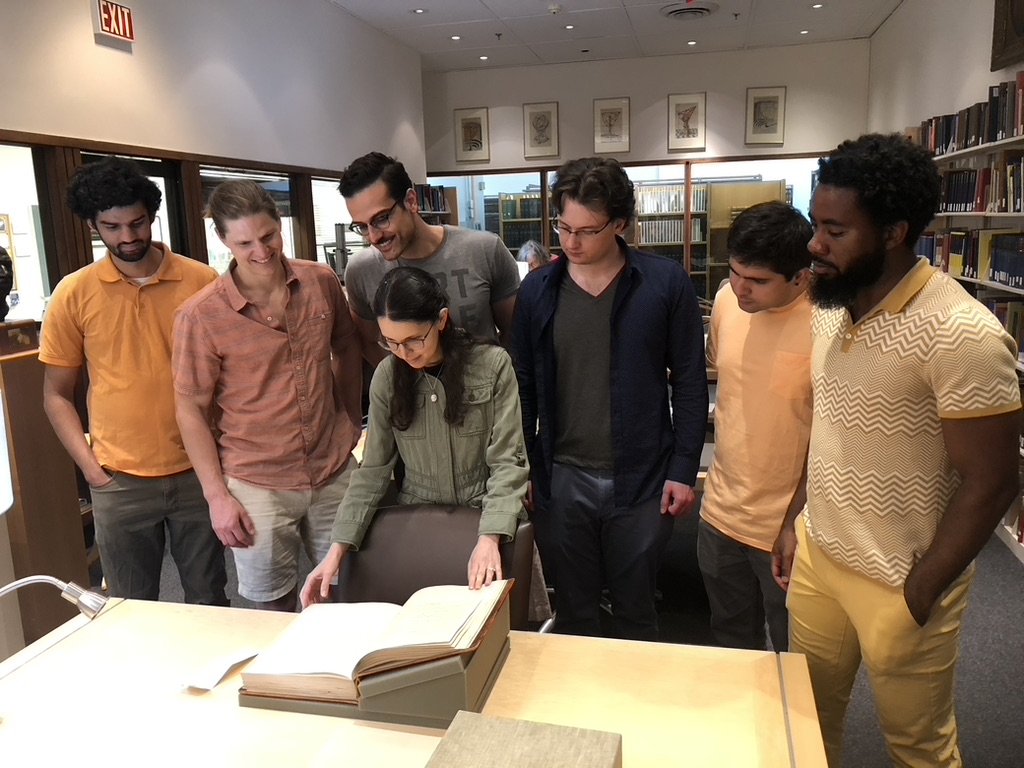
This past summer, our quantum thermodynamics research group had the wonderful opportunity to visit the Dibner Rare Book Library in D.C. Located in a small corner of the Smithsonian National Museum of American History, tucked away behind flashier exhibits, the Dibner is home to thousands of rare books and manuscripts, some dating back many centuries.

Our advisor, Nicole Yunger Halpern, has a special connection to the Dibner, having interned there as an undergrad. She’s remained in contact with the head librarian, Lilla Vekerdy. For our visit, the two of them curated a large spread of scientific work related to thermodynamics, physics, and mathematics. The tomes ranged from a 1500s print of Euclid’s Elements to originals of Einstein’s manuscripts with hand-written notes in the margin.

The print of Euclid’s Elements was one of the standout exhibits. It featured a number of foldout nets of 3D solids, which had been cut and glued into the book by hand. Several hundred copies of this print are believed to have been made, each of them containing painstakingly crafted paper models. At the time, this technique was an innovation, resulting from printers’ explorations of the then-young art of large-scale book publication.

Another interesting exhibit was rough notes on ideal gases written by Planck, one of the fathers of quantum mechanics. Ideal gases are the prototypical model in statistical mechanics, capturing to high accuracy the behaviour of real gases within certain temperatures and pressures. The notes contained comparisons between BoltzmannEhrenfest, and Planck’s own calculations for classical and quantum ideal gases. Though the prose was in German, some results were instantly recognizable, such as the plot of the specific heat of a classical ideal gas, showing the stepwise jump as degrees of freedom freeze out. 

Looking through these great physicists’ rough notes, scratched-out ideas, and personal correspondences was a unique experience, helping humanize them and place their work in historical context. Understanding the history of science doesn’t just need to be for historians, it can be useful for scientists themselves! Seeing how scientists persevered through unknowns, grappling with doubts and incomplete knowledge to generate new ideas, is inspiring. But when one only reads the final, polished result in a modern textbook, it can be difficult to appreciate this process of discovery. Another reason to study the historical development of scientific results is that core concepts have a way of arising time and again across science. Recognizing how these ideas have arisen in the past is insightful. Examining the creative processes of great scientists before us helps develop our own intuition and skillset.

Thanks to our advisor for this field trip – and make sure to check out the Dibner next time you’re in DC!