Blending science with fiction in Baltimore

I judge a bookstore by the number of Diana Wynne Jones novels it stocks. The late British author wrote some of the twentieth century’s most widely lauded science-fiction and fantasy (SFF). She clinched more honors than I should list, including two World Fantasy Awards. Neil Gaiman, author of American Gods, called her “the best children’s writer of the last forty years” in 2010—and her books suit children of all ages.1 But Wynne Jones passed away as I was finishing college, and her books have been disappearing from American bookshops. The typical shop stocks, at best, a book in the series she began with Howl’s Moving Castle, which Hayao Miyazaki adapted into an animated film.

I don’t recall the last time I glimpsed Deep Secret in a bookshop, but it ranks amongst my favorite Wynne Jones books—and favorite books, full-stop. So I relished living part of that book this spring.

Deep Secret centers on video-game programmer Rupert Venables. Outside of his day job, he works as a Magid, a magic user who helps secure peace and progress across the multiple worlds. Another Magid has passed away, and Rupert must find a replacement for him. How does Rupert track down and interview his candidates? By consolidating their fate lines so that the candidates converge on an SFF convention. Of course.

My fate line drew me to an SFF convention this May. Balticon takes place annually in Baltimore, Maryland. It features not only authors, agents, and publishers, but also science lecturers. I received an invitation to lecture about quantum steampunk—not video-game content,2 but technology-oriented like Rupert’s work. I’d never attended an SFF convention,3 so I reread Deep Secret as though studying for an exam.

Rupert, too, is attending his first SFF convention. A man as starched as his name sounds, Rupert packs suits, slacks, and a polo-neck sweater for the weekend—to the horror of a denim-wearing participant. I didn’t bring suits, in my defense. But I did dress business-casual, despite having anticipated that jeans, T-shirts, and capes would surround me.

I checked into a Renaissance Hotel for Memorial Day weekend, just as Rupert checks into the Hotel Babylon for Easter weekend. Like him, I had to walk an inordinately long distance from the elevators to my room. But Rupert owes his trek to whoever’s disrupted the magical node centered on his hotel. My hotel’s architects simply should have installed more elevator banks.

Balticon shared much of its anatomy with Rupert’s con, despite taking place in a different century and country (not to mention world). Participants congregated downstairs at breakfast (continental at Balticon, waitered at Rupert’s hotel). Lectures and panels filled most of each day. A masquerade took place one night. (I slept through Balticon’s; impromptu veterinary surgery occupies Rupert during his con’s.) Participants vied for artwork at an auction. Booksellers and craftspeople hawked their wares in a dealer’s room. (None of Balticon’s craftspeople knew their otherworldly subject matter as intimately as Rupert’s Magid colleague Zinka Fearon does, I trust. Zinka paints her off-world experiences when in need of cash.)

In our hotel room, I read out bits of Deep Secret to my husband, who confirmed the uncanniness with which they echoed our experiences. Both cons featured floor-length robes, Batman costumes, and the occasional slinky dress. Some men sported long-enough locks, and some enough facial hair, to do a Merovingian king proud. Rupert registers “a towering papier-mâché and plastic alien” one night; on Sunday morning, a colossal blow-up unicorn startled my husband and me. We were riding the elevator downstairs to breakfast, pausing at floor after floor. Hotel guests packed the elevator like Star Wars fans at a Lucasfilm debut. Then, the elevator halted again. The doors opened on a bespectacled man, 40-something years old by my estimate, dressed as a blue-and-white unicorn. The costume billowed out around him; the golden horn towered multiple feet above his head. He gazed at our sardine can, and we gazed at him, without speaking. The elevator doors shut, and we continued toward breakfast.

Photo credit: Balticon

Despite having read Deep Secret multiple times, I savored it again. I even laughed out loud. Wynne Jones paints the SFF community with the humor, exasperation, and affection one might expect of a middle-school teacher contemplating her students. I empathize, belonging to a community—the physics world—nearly as idiosyncratic as the SFF community.4 Wynne Jones’s warmth for her people suffuses Deep Secret; introvert Rupert surprises himself by enjoying a dinner with con-goers and wishing to spend more time with them. The con-goers at my talk exhibited as much warmth as any audience I’ve spoken to, laughing, applauding, and asking questions. I appreciated sojourning in their community for a weekend.5

This year, my community is fêting the physicists who founded quantum theory a century ago. Wynne Jones sparked imaginations two decades ago. Let’s not let her memory slip from our fingertips like a paperback over which we’re falling asleep. After all, we aren’t forgetting Louis de Broglie, Paul Dirac, and their colleagues. So check out a Wynne Jones novel the next time you visit a library, or order a novel of hers to your neighborhood bookstore. Deep Secret shouldn’t be an actual secret.

With thanks to Balticon’s organizers, especially Miriam Winder Kelly, for inviting me and for fussing over their speakers’ comfort like hens over chicks.

1Wynne Jones dedicated her novel Hexwood to Gaiman, who expressed his delight in a poem. I fancy the comparison of Gaiman, a master of phantasmagoria and darkness, to a kitten.

2Yet?

3I’d attended a steampunk convention, and spoken at a Boston SFF convention, virtually. But as far as such conventions go, attending virtually is to attending in person as my drawings are to a Hayao Miyazaki film.

4But sporting fewer wizard hats.

5And I wonder what the Diana Wynne Jones Conference–Festival is like.

John Preskill receives 2025 Quantum Leadership Award

The 2025 Quantum Leadership Awards were announced at the Quantum World Congress on 18 September 2025. Upon receiving the Academic Pioneer in Quantum Award, John Preskill made these remarks.

I’m enormously excited and honored to receive this Quantum Leadership Award, and especially thrilled to receive it during this, the International Year of Quantum. The 100th anniversary of the discovery of quantum mechanics is a cause for celebration because that theory provides our deepest and most accurate description of how the universe works, and because that deeper understanding has incalculable value to humanity. What we have learned about electrons, photons, atoms, and molecules in the past century has already transformed our lives in many ways, but what lies ahead, as we learn to build and precisely control more and more complex quantum systems, will be even more astonishing.

As a professor at a great university, I have been lucky in many ways. Lucky to have the freedom to pursue the scientific challenges that I find most compelling and promising. Lucky to be surrounded by remarkable, supportive colleagues. Lucky to have had many collaborators who enabled me to do things I could never have done on my own. And lucky to have the opportunity to teach and mentor young scientists who have a passion for advancing the frontiers of science. What I’m most proud of is the quantum community we’ve built at Caltech, and the many dozens of young people who imbibed the interdisciplinary spirit of Caltech and then moved onward to become leaders in quantum science at universities, labs, and companies all over the world.

Right now is a thrilling time for quantum science and technology, a time of rapid progress, but these are still the early days in a nascent second quantum revolution. In quantum computing, we face two fundamental questions: How can we scale up to quantum machines that can solve very hard computational problems? And once we do so, what will be the most important applications for science and for industry? We don’t have fully satisfying answers yet to either question and we won’t find the answers all at once – they will unfold gradually as our knowledge and technology advance. But 10 years from now we’ll have much better answers than we have today.

Companies are now pursuing ambitious plans to build the world’s most powerful quantum computers.  Let’s not forget how we got to this point. It was by allowing some of the world’s most brilliant people to follow their curiosity and dream about what the future could bring. To fulfill the potential of quantum technology, we need that spirit of bold adventure now more than ever before. This award honors one scientist, and I’m profoundly grateful for this recognition. But more importantly it serves as a reminder of the vital ongoing need to support the fundamental research that will build foundations for the science and technology of the future. Thank you very much!

Nicole’s guide to writing research statements

Sunflowers are blooming, stores are trumpeting back-to-school sales, and professors are scrambling to chart out the courses they planned to develop in July. If you’re applying for an academic job this fall, now is the time to get your application ducks in a row. Seeking a postdoctoral or faculty position? Your applications will center on research statements. Often, a research statement describes your accomplishments and sketches your research plans. What do evaluators look for in such documents? Here’s my advice, which targets postdoctoral fellowships and faculty positions, especially for theoretical physicists.

  • Keep your audience in mind. Will a quantum information theorist, a quantum scientist, a general physicist, a general scientist, or a general academic evaluate your statement? What do they care about? What technical language do and don’t they understand?
  • What thread unites all the projects you’ve undertaken? Don’t walk through your research history chronologically, stepping from project to project. Cast the key projects in the form of a story—a research program. What vision underlies the program?
  • Here’s what I want to see when I read a description of a completed project.
    • The motivation for the project: This point ensures that the reader will care enough to read the rest of the description.
    • Crucial background information
    • The physical setup
    • A statement of the problem
    • Why the problem is difficult or, if relevant, how long the problem has remained open
    • Which mathematical toolkit you used to solve the problem or which conceptual insight unlocked the solution
    • Which technical or conceptual contribution you provided
    • Whom you collaborated with: Wide collaboration can signal a researcher’s maturity. If you collaborated with researchers at other institutions, name the institutions and, if relevant, their home countries. If you led the project, tell me that, too. If you collaborated with a well-known researcher, mentioning their name might help the reader situate your work within the research landscape they know. But avoid name-dropping, which lacks such a pedagogical purpose and which can come across as crude.
    • Your result’s significance/upshot/applications/impact: Has a lab based an experiment on your theoretical proposal? Does your simulation method outperform its competitors by X% in runtime? Has your mathematical toolkit found applications in three subfields of quantum physics? Consider mentioning whether a competitive conference or journal has accepted your results: QIP, STOC, Physical Review Letters, Nature Physics, etc. But such references shouldn’t serve as a crutch in conveying your results’ significance. You’ll impress me most by dazzling me with your physics; name-dropping venues instead can convey arrogance.
  • Not all past projects deserve the same amount of space. Tell a cohesive story. For example, you might detail one project, then synopsize two follow-up projects in two sentences.
  • A research statement must be high-level, because you don’t have space to provide details. Use mostly prose; and communicate intuition, including with simple examples. But sprinkle in math, such as notation that encapsulates a phrase in one concise symbol.

  • Be concrete, and illustrate with examples. Many physicists—especially theorists—lean toward general, abstract statements. The more general a statement is, we reason, the more systems it describes, so the more powerful it is. But humans can’t visualize and intuit about abstractions easily. Imagine a reader who has four minutes to digest your research statement before proceeding to the next 50 applications. As that reader flys through your writing, vague statements won’t leave much of an impression. So draw, in words, a picture that readers can visualize. For instance, don’t describe only systems, subsystems, and control; invoke atoms, cavities, and lasers. After hooking your reader with an image, you can generalize from it.
  • A research statement not only describes past projects, but also sketches research plans. Since research covers terra incognita, though, plans might sound impossible. How can you predict the unknown—especially the next five years of the unknown (as required if you’re applying for a faculty position), especially if you’re a theorist? Show that you’ve developed a map and a compass. Sketch the large-scale steps that you anticipate taking. Which mathematical toolkits will you leverage? What major challenge do you anticipate, and how do you hope to overcome it? Let me know if you’ve undertaken preliminary studies. Do numerical experiments support a theorem you conjecture?
  • When I was applying for faculty positions, a mentor told me the following: many a faculty member can identify a result (or constellation of results) that secured them an offer, as well as a result that earned them tenure. Help faculty-hiring committees identify the offer result and the tenure result.
  • Introduce notation before using it. If you use notation and introduce it afterward, the reader will encounter the notation; stop to puzzle over it; tentatively continue; read the introduction of the notation; return to the earlier use of the notation, to understand it; and then continue forward, including by rereading the introduction of the notation. This back-and-forth breaks up the reading process, which should flow smoothly.
  • Avoid verbs that fail to relate that you accomplished anything: “studied,” “investigated,” “worked on,” etc. What did you prove, show, demonstrate, solve, calculate, compute, etc.?

  • Tailor a version of your research statement to every position. Is Fellowship Committee X seeking biophysicists, statistical physicists, mathematical physicists, or interdisciplinary scientists? Also, respect every application’s guidelines about length.
  • If you have room, end the statement with a recap and a statement of significance. Yes, you’ll be repeating ideas mentioned earlier. But your reader’s takeaway hinges on the last text they read. End on a strong note, presenting a coherent vision.

  • Read examples. Which friends and colleagues, when applying for positions, have achieved success that you’d like to emulate? Ask if those individuals would share their research statements. Don’t take offense if they refuse; research statements are personal.

  • Writing is rewriting, a saying goes. Draft your research statement early, solicit feedback from a couple of mentors, edit the draft, and solicit more feedback.

Little ray of sunshine

A common saying goes, you should never meet your heroes, because they’ll disappoint you. But you shouldn’t trust every common saying; some heroes impress you more, the better you know them. Ray Laflamme was such a hero.

I first heard of Ray in my undergraduate quantum-computation course. The instructor assigned two textbooks: the physics-centric “Schumacher and Westmoreland” and “Kaye, Laflamme, and Mosca,” suited to computer scientists. Back then—in 2011—experimentalists were toiling over single quantum logic gates, implemented on pairs and trios of qubits. Some of today’s most advanced quantum-computing platforms, such as ultracold atoms, resembled the scrawnier of the horses at a racetrack. My class studied a stepping stone to those contenders: linear quantum optics (quantum light). Laflamme, as I knew him then, had helped design the implementation. 

Imagine my awe upon meeting Ray the following year, as a master’s student at the Perimeter Institute for Theoretical Physics. He belonged to Perimeter’s faculty and served as a co-director of the nearby Institute for Quantum Computing (IQC). Ray was slim, had thinning hair of a color similar to mine, and wore rectangular glasses frames. He often wore a smile, too. I can hear his French-Canadian accent in my memory, but not without hearing him smile at the ends of most sentences.

Photo credit: IQC

My master’s program entailed a research project, which I wanted to center on quantum information theory, one of Ray’s specialties. He met with me and suggested a project, and I began reading relevant papers. I then decided to pursue research with another faculty member and a postdoc, eliminating my academic claim on Ray’s time. But he agreed to keep meeting with me. Heaven knows how he managed; institute directorships devour one’s schedule like ravens dining on a battlefield. Still, we talked approximately every other week.

My master’s program intimidated me, I confessed. It crammed graduate-level courses, which deserved a semester each, into weeks. My class raced through Quantum Field Theory I and Quantum Field Theory II—a year’s worth of material—in part of an autumn. General relativity, condensed matter, and statistical physics swept over us during the same season. I preferred to learn thoroughly, deeply, and using strategies I’d honed over two decades. But I didn’t have time, despite arriving at Perimeter’s library at 8:40 every morning and leaving around 9:30 PM.

In response, Ray confessed that his master’s program had intimidated him. Upon completing his undergraduate degree, Ray viewed himself as a nobody from nowhere. He chafed in the legendary, if idiosyncratically named, program he attended afterward: Part III of the Mathematical Tripos at the University of Cambridge. A Cambridge undergraduate can earn a master’s degree in three steps (tripos) at the Department of Applied Mathematics and Theoretical Physics. Other students, upon completing bachelor’s degrees elsewhere, undertake the third step to earn their master’s. Ray tackled this step, Part III.

He worked his rear off, delving more deeply into course material than lecturers did. Ray would labor over every premise in a theorem’s proof, including when nobody could explain the trickiest step to him.1 A friend and classmate helped him survive. The two studied together, as I studied with a few fellow Perimeter students; and Ray took walks with his friend on Sundays, as I planned lunches with other students on weekends.

Yet the program’s competitiveness appalled Ray. All students’ exam scores appeared on the same piece of paper, posted where everyone could read it. The department would retain the highest scorers in its PhD program; the other students would have to continue their studies elsewhere. Hearing about Ray’s program, I appreciated more than ever the collaboration characteristic of mine.

Ray addressed that trickiest proof step better than he’d feared, come springtime: his name appeared near the top of the exam list. Once he saw the grades, a faculty member notified him that his PhD advisor was waiting upstairs. Ray didn’t recall climbing those stairs, but he found Stephen Hawking at the top.

As one should expect of a Hawking student, Ray studied quantum gravity during his PhD. But by the time I met him, Ray had helped co-found quantum computation. He’d also extended his physics expertise as far from 1980s quantum gravity as one can, by becoming an experimentalist. The nobody from nowhere had earned his wings—then invented novel wings that nobody had dreamed of. But he descended from the heights every other week, to tell stories to a nobody of a master’s student.

The author’s copy of “Kaye, Laflamme, and Mosca”…
…in good company.

Seven and a half years later, I advertised openings in the research group I was establishing in Maryland. A student emailed from the IQC, whose co-directorship Ray had relinquished in 2017. The student had seen me present a talk, it had inspired him to switch fields into quantum thermodynamics, and he asked me to co-supervise his PhD. His IQC supervisor had blessed the request: Ray Laflamme.

The student was Shayan Majidy, now a postdoc at Harvard. Co-supervising him with Ray Laflamme reminded me of cooking in the same kitchen as Julia Child. I still wonder how I, green behind the ears, landed such a gig. Shayan delighted in describing the difference between his supervisors’ advising styles. An energetic young researcher,2 I’d respond to emails as early as 6:00 AM. I’d press Shayan about literature he’d read, walk him through what he hadn’t grasped, and toss a paper draft back and forth with him multiple times per day. Ray, who’d mellowed during his career, mostly poured out support and warmth like hollandaise sauce. 

Once, Shayan emailed Ray and me to ask if he could take a vacation. I responded first, as laconically as my PhD advisor would have: “Have fun!” Ray replied a few days later. He elaborated on his pleasure at Shayan’s plans and on how much Shayan deserved the break.

When I visited Perimeter in 2022, Shayan insisted on a selfie with both his PhD advisors.

This June, an illness took Ray earlier than expected. We physicists lost an intellectual explorer, a co-founder of the quantum-computing community, and a scientist of my favorite type: a wonderful physicist who was a wonderful human being. Days after he passed, I was holed up in a New York hotel room, wincing over a web search. I was checking whether a quantum system satisfies certain tenets of quantum error correction, and we call those tenets the Knill–Laflamme conditions. Our community will keep checking the Knill–Laflamme conditions, keep studying quantum gates implementable with linear optics, and more. Part of Ray won’t leave us anytime soon—the way he wouldn’t leave a nobody of a master’s student who needed a conversation.

1For the record, some of the most rigorous researchers I know work in Cambridge’s Department of Applied Mathematics and Theoretical Physics today. I’ve even blogged about some

2As I still am, thank you very much.

A (quantum) complex legacy: Part trois

When I worked in Cambridge, Massachusetts, a friend reported that MIT’s postdoc association had asked its members how it could improve their lives. The friend confided his suggestion to me: throw more parties.1 This year grants his wish on a scale grander than any postdoc association could. The United Nations has designated 2025 as the International Year of Quantum Science and Technology (IYQ), as you’ve heard unless you live under a rock (or without media access—which, come to think of it, sounds not unappealing).

A metaphorical party cracker has been cracking since January. Governments, companies, and universities are trumpeting investments in quantum efforts. Institutions pulled out all the stops for World Quantum Day, which happens every April 14 but which scored a Google doodle this year. The American Physical Society (APS) suffused its Global Physics Summit in March with quantum science like a Bath & Body Works shop with the scent of Pink Pineapple Sunrise. At the summit, special symposia showcased quantum research, fellow blogger John Preskill dished about quantum-science history in a dinnertime speech, and a “quantum block party” took place one evening. I still couldn’t tell you what a quantum block party is, but this one involved glow sticks.

Google doodle from April 14, 2025

Attending the summit, I felt a satisfaction—an exultation, even—redolent of twelfth grade, when American teenagers summit the Mont Blanc of high school. It was the feeling that this year is our year. Pardon me while I hum “Time of your life.”2

Speakers and organizer of a Kavli Symposium, a special session dedicated to interdisciplinary quantum science, at the APS Global Physics Summit

Just before the summit, editors of the journal PRX Quantum released a special collection in honor of the IYQ.3 The collection showcases a range of advances, from chemistry to quantum error correction and from atoms to attosecond-length laser pulses. Collaborators and I contributed a paper about quantum complexity, a term that has as many meanings as companies have broadcast quantum news items within the past six months. But I’ve already published two Quantum Frontiers posts about complexity, and you surely study this blog as though it were the Bible, so we’re on the same page, right? 

Just joshing. 

Imagine you have a quantum computer that’s running a circuit. The computer consists of qubits, such as atoms or ions. They begin in a simple, “fresh” state, like a blank notebook. Post-circuit, they store quantum information, such as entanglement, as a notebook stores information post-semester. We say that the qubits are in some quantum state. The state’s quantum complexity is the least number of basic operations, such as quantum logic gates, needed to create that state—via the just-completed circuit or any other circuit.

Today’s quantum computers can’t create high-complexity states. The reason is, every quantum computer inhabits an environment that disturbs the qubits. Air molecules can bounce off them, for instance. Such disturbances corrupt the information stored in the qubits. Wait too long, and the environment will degrade too much of the information for the quantum computer to work. We call the threshold time the qubits’ lifetime, among more-obscure-sounding phrases. The lifetime limits the number of gates we can run per quantum circuit.

The ability to perform many quantum gates—to perform high-complexity operations—serves as a resource. Other quantities serve as resources, too, as you’ll know if you’re one of the three diehard Quantum Frontiers fans who’ve been reading this blog since 2014 (hi, Mom). Thermodynamic resources include work: coordinated energy that one can harness directly to perform a useful task, such as lifting a notebook or staying up late enough to find out what a quantum block party is. 

My collaborators: Jonas Haferkamp, Philippe Faist, Teja Kothakonda, Jens Eisert, and Anthony Munson (in an order of no significance here)

My collaborators and I showed that work trades off with complexity in information- and energy-processing tasks: the more quantum gates you can perform, the less work you have to spend on a task, and vice versa. Qubit reset exemplifies such tasks. Suppose you’ve filled a notebook with a calculation, you want to begin another calculation, and you have no more paper. You have to erase your notebook. Similarly, suppose you’ve completed a quantum computation and you want to run another quantum circuit. You have to reset your qubits to a fresh, simple state

Three methods suggest themselves. First, you can “uncompute,” reversing every quantum gate you performed.4 This strategy requires a long lifetime: the information imprinted on the qubits by a gate mustn’t leak into the environment before you’ve undone the gate. 

Second, you can do the quantum equivalent of wielding a Pink Pearl Paper Mate: you can rub the information out of your qubits, regardless of the circuit you just performed. Thermodynamicists inventively call this strategy erasure. It requires thermodynamic work, just as applying a Paper Mate to a notebook does. 

Third, you can

Suppose your qubits have finite lifetimes. You can undo as many gates as you have time to. Then, you can erase the rest of the qubits, spending work. How does complexity—your ability to perform many gates—trade off with work? My collaborators and I quantified the tradeoff in terms of an entropy we invented because the world didn’t have enough types of entropy.5

Complexity trades off with work not only in qubit reset, but also in data compression and likely other tasks. Quantum complexity, my collaborators and I showed, deserves a seat at the great soda fountain of quantum thermodynamics.

The great soda fountain of quantum thermodynamics

…as quantum information science deserves a seat at the great soda fountain of physics. When I embarked upon my PhD, faculty members advised me to undertake not only quantum-information research, but also some “real physics,” such as condensed matter. The latter would help convince physics departments that I was worth their money when I applied for faculty positions. By today, the tables have turned. A condensed-matter theorist I know has wound up an electrical-engineering professor because he calculates entanglement entropies.

So enjoy our year, fellow quantum scientists. Party like it’s 1925. Burnish those qubits—I hope they achieve the lifetimes of your life.

1Ten points if you can guess who the friend is.

2Whose official title, I didn’t realize until now, is “Good riddance.” My conception of graduation rituals has just turned a somersault. 

3PR stands for Physical Review, the brand of the journals published by the APS. The APS may have intended for the X to evoke exceptional, but I like to think it stands for something more exotic-sounding, like ex vita discedo, tanquam ex hospitio, non tanquam ex domo.

4Don’t ask me about the notebook analogue of uncomputing a quantum state. Explaining it would require another blog post.

5For more entropies inspired by quantum complexity, see this preprint. You might recognize two of the authors from earlier Quantum Frontiers posts if you’re one of the three…no, not even the three diehard Quantum Frontiers readers will recall; but trust me, two of the authors have received nods on this blog before.

Congratulations, class of 2025! Words from a new graduate

Editor’s note (Nicole Yunger Halpern): Jade LeSchack, the Quantum Steampunk Laboratory’s first undergraduate, received her bachelor’s degree from the University of Maryland this spring. Kermit the Frog presented the valedictory address, but Jade gave the following speech at the commencement ceremony for the university’s College of Mathematical and Natural Sciences. Jade heads to the University of Southern California for a PhD in physics this fall.

Good afternoon, everyone. My name is Jade, and it is my honor and pleasure to speak before you. 

Today, I’m graduating with my Bachelor of Science, but when I entered UMD, I had no idea what it meant to be a professional scientist or where my passion for quantum science would take me. I want you to picture where you were four years ago. Maybe you were following a long-held passion into college, or maybe you were excited to explore a new technical field. Since then, you’ve spent hours titrating solutions, debugging code, peering through microscopes, working out proofs, and all the other things our disciplines require of us. Now, we’re entering a world of uncertainty, infinite possibility, and lifelong connections. Let me elaborate on each of these.

First, there is uncertainty. Unlike simplified projectile motion, you can never predict the exact trajectory of your life or career. Plans will change, and unexpected opportunities will arise. Sometimes, the best path forward isn’t the one you first imagined. Our experiences at Maryland have prepared us to respond to the challenges and curveballs that life will throw at us. And, we’re going to get through the rough patches.

Second, let’s embrace the infinite possibilities ahead of us. While the concept of the multiverse is best left to the movies, it’s exciting to think about all the paths before us. We’ve each found our own special interests over the past four years here, but there’s always more to explore. Don’t put yourself in a box. You can be an artist and a scientist, an entrepreneur and a humanitarian, an athlete and a scholar. Continue to redefine yourself and be open to your infinite potential.

Third, as we move forward, we are equipped not only with knowledge but with connections. We’ve made lasting relationships with incredible people here. As we go from place to place, the people who we’re close to will change. But we’re lucky that, these days, people are only an email or phone call away. We’ll always have our UMD communities rooting for us.

Now, the people we met here are certainly not the only important ones. We’ve each had supporters along the various stages of our journeys. These are the people who championed us, made sacrifices for us, and gave us a shoulder to cry on. I’d like to take a moment to thank all my mentors, teachers, and friends for believing in me. To my mom, dad, and sister sitting up there, I couldn’t have done this without you. Thank you for your endless love and support. 

To close, I’d like to consider this age-old question that has always fascinated me: Is mathematics discovered or invented? People have made a strong case for each side. If we think about science in general, and our future contributions to our fields, we might ask ourselves: Are we discoverers or inventors? My answer is both! Everyone here with a cap on their head is going to contribute to both. We’re going to unearth new truths about nature and innovate scientific technologies that better society. This uncertain, multitudinous, and interconnected world is waiting for us, the next generation of scientific thinkers! So let’s be bold and stay fearless. 

Congratulations to the class of 2024 and the class of 2025! We did it!

Author’s note: I was deeply grateful for the opportunity to serve as the student speaker at my commencement ceremony. I hope that the science-y references tickle the layman and SME alike. You can view a recording of the speech here. I can’t wait for my next adventures in quantum physics!

I know I am but what are you? Mind and Matter in Quantum Mechanics

Nowadays it is best to exercise caution when bringing the words “quantum” and “consciousness” anywhere near each other, lest you be suspected of mysticism or quackery. Eugene Wigner did not concern himself with this when he wrote his “Remarks on the Mind-Body Question” in 1967. (Perhaps he was emboldened by his recent Nobel prize for contributions to the mathematical foundations of quantum mechanics, which gave him not a little no-nonsense technical credibility.) The mind-body question he addresses is the full-blown philosophical question of “the relation of mind to body”, and he argues unapologetically that quantum mechanics has a great deal to say on the matter. The workhorse of his argument is a thought experiment that now goes by the name “Wigner’s Friend”. About fifty years later, Daniela Frauchiger and Renato Renner formulated another, more complex thought experiment to address related issues in the foundations of quantum theory. In this post, I’ll introduce Wigner’s goals and argument, and evaluate Frauchiger’s and Renner’s claims of its inadequacy, concluding that these are not completely fair, but that their thought experiment does do something interesting and distinct. Finally, I will describe a recent paper of my own, in which I formalize the Frauchiger-Renner argument in a way that illuminates its status and isolates the mathematical origin of their paradox.

* * *

Wigner takes a dualist view about the mind, that is, he believes it to be non-material. To him this represents the common-sense view, but is nevertheless a newly mainstream attitude. Indeed,

[until] not many years ago, the “existence” of a mind or soul would have been passionately denied by most physical scientists. The brilliant successes of mechanistic and, more generally, macroscopic physics and of chemistry overshadowed the obvious fact that thoughts, desires, and emotions are not made of matter, and it was nearly universally accepted among physical scientists that there is nothing besides matter.

He credits the advent of quantum mechanics with

the return, on the part of most physical scientists, to the spirit of Descartes’s “Cogito ergo sum”, which recognizes the thought, that is, the mind, as primary. [With] the creation of quantum mechanics, the concept of consciousness came to the fore again: it was not possible to formulate the laws of quantum mechanics in a fully consistent way without reference to the consciousness.

What Wigner has in mind here is that the standard presentation of quantum mechanics speaks of definite outcomes being obtained when an observer makes a measurement. Of course this is also true in classical physics. In quantum theory, however, the principles of linear evolution and superposition, together with the plausible assumption that mental phenomena correspond to physical phenomena in the brain, lead to situations in which there is no mechanism for such definite observations to arise. Thus there is a tension between the fact that we would like to ascribe particular observations to conscious agents and the fact that we would like to view these observations as corresponding to particular physical situations occurring in their brains.

Once we have convinced ourselves that, in light of quantum mechanics, mental phenomena must be considered on an equal footing with physical phenomena, we are faced with the question of how they interact. Wigner takes it for granted that “if certain physico-chemical conditions are satisfied, a consciousness, that is, the property of having sensations, arises.” Does the influence run the other way? Wigner claims that the “traditional answer” is that it does not, but argues that in fact such influence ought indeed to exist. (Indeed this, rather than technical investigation of the foundations of quantum mechanics, is the central theme of his essay.) The strongest support Wigner feels he can provide for this claim is simply “that we do not know of any phenomenon in which one subject is influenced by another without exerting an influence thereupon”. Here he recalls the interaction of light and matter, pointing out that while matter obviously affects light, the effects of light on matter (for example radiation pressure) are typically extremely small in magnitude, and might well have been missed entirely had they not been suggested by the theory.

Quantum mechanics provides us with a second argument, in the form of a demonstration of the inconsistency of several apparently reasonable assumptions about the physical, the mental, and the interaction between them. Wigner works, at least implicitly, within a model where there are two basic types of object: physical systems and consciousnesses. Some physical systems (those that are capable of instantiating the “certain physico-chemical conditions”) are what we might call mind-substrates. Each consciousness corresponds to a mind-substrate, and each mind-substrate corresponds to at most one consciousness. He considers three claims (this organization of his premises is not explicit in his essay):

1. Isolated physical systems evolve unitarily.

2. Each consciousness has a definite experience at all times.

3. Definite experiences correspond to pure states of mind-substrates, and arise for a consciousness exactly when the corresponding mind-substrate is in the corresponding pure state.

The first and second assumptions constrain the way the model treats physical and mental phenomena, respectively. Assumption 1 is often paraphrased as the `”completeness of quantum mechanics”, while Assumption 2 is a strong rejection of solipsism – the idea that only one’s own mind is sure to exist. Assumption 3 is an apparently reasonable assumption about the relation between mental and physical phenomena.

With this framework established, Wigner’s thought experiment, now typically known as Wigner’s Friend, is quite straightforward. Suppose that an observer, Alice (to name the friend), is able to perform a measurement of some physical quantity q of a particle, which may take two values, 0 and 1. Assumption 1 tells us that if Alice performs this measurement when the particle is in a superposition state, the joint system of Alice’s brain and the particle will end up in an entangled state. Now Alice’s mind-substrate is not in a pure state, so by Assumption 3 does not have a definite experience. This contradicts Assumption 2. Wigner’s proposed resolution to this paradox is that in fact Assumption 1 is incorrect, and that there is an influence of the mental on the physical, namely objective collapse or, as he puts it, that the “statistical element which, according to the orthodox theory, enters only if I make an observation enters equally if my friend does”.

* * *

Decades after the publication of Wigner’s essay, Daniela Frauchiger and Renato Renner formulated a new thought experiment, involving observers making measurements of other observers, which they intended to remedy what they saw as a weakness in Wigner’s argument. In their words, “Wigner proposed an argument […] which should show that quantum mechanics cannot have unlimited validity”. In fact, they argue, Wigner’s argument does not succeed in doing so. They assert that Wigner’s paradox may be resolved simply by noting a difference in what each party knows. Whereas Wigner, describing the situation from the outside, does not initially know the result of his friend’s measurement, and therefore assigns the “absurd” entangled state to the joint system composed of both her body and the system she has measured, his friend herself is quite aware of what she has observed, and so assigns to the system either, but not both, of the states corresponding to definite measurement outcomes. “For this reason”, Frauchiger and Renner argue, “the Wigner’s Friend Paradox cannot be regarded as an argument that rules out quantum mechanics as a universally valid theory.”

This criticism strikes me as somewhat unfair to Wigner. In fact, Wigner’s objection to admitting two different states as equally valid descriptions is that the two states correspond to different sets of \textit{physical} properties of the joint system consisting of Alice and the system she measures. For Wigner, physical properties of physical systems are distinct from mental properties of consciousnesses. To engage in some light textual analysis, we can note that the word ‘conscious’, or ‘consciousness’, appears forty-one times in Wigner’s essay, and only once in Frauchiger and Renner’s, in the title of a cited paper. I have the impression that the authors pay inadequate attention to how explicitly Wigner takes a dualist position, including not just physical systems but also, and distinctly, consciousnesses in his ontology. Wigner’s argument does indeed achieve his goals, which are developed in the context of this strong dualism, and differ from the goals of Frauchiger and Renner, who appear not to share this philosophical stance, or at least do not commit fully to it.

Nonetheless, the thought experiment developed by Frauchiger and Renner does achieve something distinct and interesting. We can understand Wigner’s no-go theorem to be of the following form: “Within a model incorporating both mental and physical phenomena, a set of apparently reasonable conditions on how the model treats physical phenomena, mental phenomena, and their interaction cannot all be satisfied”. The Frauchiger-Renner thought experiment can be cast in the same form, with different choices about how to implement the model and which conditions to consider. The major difference in the model itself is that Frauchiger and Renner do not take consciousnesses to be entities in their own rights, but simply take some states of certain physical systems to correspond to conscious experiences. Within such a model, Wigner’s assumption that each mind has a single, definite conscious experience at all times seems far less natural than it did within his model, where consciousnesses are distinct entities from the physical systems that determine them. Thus Frauchiger and Renner need to weaken this assumption, which was so natural to Wigner. The weakening they choose is a sort of transitivity of theories of mind. In their words (Assumption C in their paper):

Suppose that agent A has established that “I am certain that agent A’, upon reasoning within the same theory as the one I am using, is certain that x =\xi at time t.” Then agent A can conclude that “I am certain that x=\xi at time t.”

Just as Assumption 3 above was, for Wigner, a natural restriction on how a sensible theory ought to treat mental phenomena, this serves as Frauchiger’s and Renner’s proposed constraint. Just as Wigner designed a thought experiment that demonstrated the incompatibility of his assumption with an assumption of the universal applicability of unitary quantum mechanics to physical systems, so do Frauchiger and Renner.

* * *

In my recent paper “Reasoning across spacelike surfaces in the Frauchiger-Renner thought experiment”, I provide two closely related formalizations of the Frauchiger-Renner argument. These are motivated by a few observations:

1. Assumption C ought to make reference to the (possibly different) times at which agents A and A' are certain about their respective judgments, since these states of knowledge change.

2. Since Frauchiger and Renner do not subscribe to Wigner’s strong dualism, an agent’s certainty about a given proposition, like any other mental state, corresponds within their implicit model to a physical state. Thus statements like “Alice knows that P” should be understood as statements about the state of some part of Alice’s brain. Conditional statements like “if upon measuring a quantity q Alice observes outcome x, she knows that P” should be understood as claims about the state of the composite system composed of the part of Alice’s brain responsible for knowing P and the part responsible for recording outcomes of the measurement of q.

3. Because the causal structure of the protocol does not depend on the absolute times of each event, an external agent describing the protocol can choose various “spacelike surfaces”, corresponding to fixed times in different spacetime embeddings of the protocol (or to different inertial frames). There is no reason to privilege one of these surfaces over another, and so each of them should be assigned a quantum state. This may be viewed as an implementation of a relativistic principle.

A visual representation of the formalization of the Frauchiger-Renner protocol and the arguments of the no-go theorem. The graphical conventions are explained in detail in “Reasoning across spacelike surfaces in the Frauchiger-Renner thought experiment”.

After developing a mathematical framework based on these observations, I recast Frauchiger’s and Renner’s Assumption C in two ways: first, in terms of a claim about the validity of iterating the “relative state” construction that captures how conditional statements are interpreted in terms of quantum states; and second, in terms of a deductive rule that allows chaining of inferences within a system of quantum logic. By proving that these claims are false in the mathematical framework, I provide a more formal version of the no-go theorem. I also show that the first claim can be rescued if the relative state construction is allowed to be iterated only “along” a single spacelike surface, and the second if a deduction is only allowed to chain inferences “along” a single surface. In other words, the mental transitivity condition desired by Frauchiger and Renner can in fact be combined with universal physical applicability of unitary quantum mechanics, but only if we restrict our analysis to a single spacelike surface. Thus I hope that the analysis I offer provides some clarification of what precisely is going on in Frauchiger and Renner’s thought experiment, what it tells us about combining the physical and the mental in light of quantum mechanics, and how it relates to Wigner’s thought experiment.

* * *

In view of the fact that “Quantum theory cannot consistently describe the use of itself” has, at present, over five hundred citations, and “Remarks on the Mind-Body Question” over thirteen hundred, it seems fitting to close with a thought, cautionary or exultant, from Peter Schwenger’s book on asemic, that is meaningless, writing. He notes that

commentary endlessly extends language; it is in the service of an impossible quest to extract the last, the final, drop of meaning.

I provide no analysis of this claim.
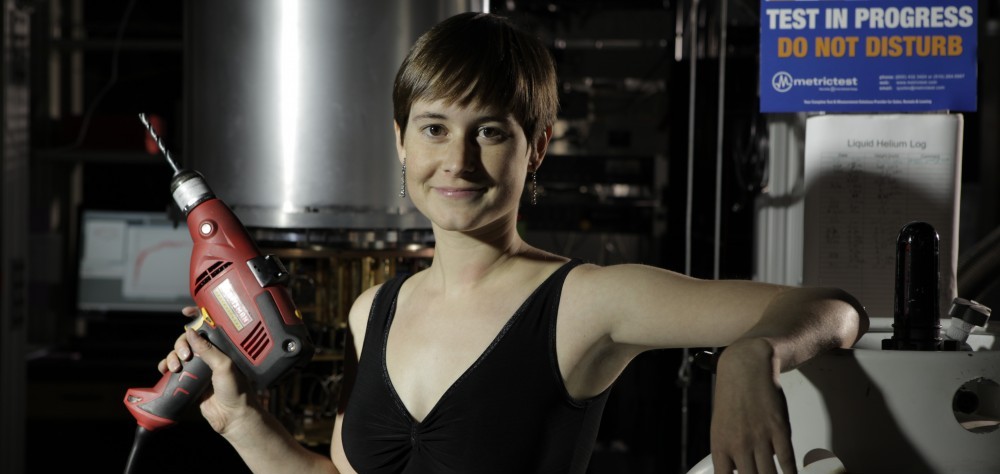
The most steampunk qubit

I never imagined that an artist would update me about quantum-computing research.

Last year, steampunk artist Bruce Rosenbaum forwarded me a notification about a news article published in Science. The article reported on an experiment performed in physicist Yiwen Chu’s lab at ETH Zürich. The experimentalists had built a “mechanical qubit”: they’d stored a basic unit of quantum information in a mechanical device that vibrates like a drumhead. The article dubbed the device a “steampunk qubit.”

I was collaborating with Bruce on a quantum-steampunk sculpture, and he asked if we should incorporate the qubit into the design. Leave it for a later project, I advised. But why on God’s green Earth are you receiving email updates about quantum computing? 

My news feed sends me everything that says “steampunk,” he explained. So keeping a bead on steampunk can keep one up to date on quantum science and technology—as I’ve been preaching for years.

Other ideas displaced Chu’s qubit in my mind until I visited the University of California, Berkeley this January. Visiting Berkeley in January, one can’t help noticing—perhaps with a trace of smugness—the discrepancy between the temperature there and the temperature at home. And how better to celebrate a temperature difference than by studying a quantum-thermodynamics-style throwback to the 1800s?

One sun-drenched afternoon, I learned that one of my hosts had designed another steampunk qubit: Alp Sipahigil, an assistant professor of electrical engineering. He’d worked at Caltech as a postdoc around the time I’d finished my PhD there. We’d scarcely interacted, but I’d begun learning about his experiments in atomic, molecular, and optical physics then. Alp had learned about my work through Quantum Frontiers, as I discovered this January. I had no idea that he’d “met” me through the blog until he revealed as much to Berkeley’s physics department, when introducing the colloquium I was about to present.

Alp and collaborators proposed that a qubit could work as follows. It consists largely of a cantilever, which resembles a pendulum that bobs back and forth. The cantilever, being quantum, can have only certain amounts of energy. When the pendulum has a particular amount of energy, we say that the pendulum is in a particular energy level. 

One might hope to use two of the energy levels as a qubit: if the pendulum were in its lowest-energy level, the qubit would be in its 0 state; and the next-highest level would represent the 1 state. A bit—a basic unit of classical information—has 0 and 1 states. A qubit can be in a superposition of 0 and 1 states, and so the cantilever could be.

A flaw undermines this plan, though. Suppose we want to process the information stored in the cantilever—for example, to turn a 0 state into a 1 state. We’d inject quanta—little packets—of energy into the cantilever. Each quantum would contain an amount of energy equal to (the energy associated with the cantilever’s 1 state) – (the amount associated with the 0 state). This equality would ensure that the cantilever could accept the energy packets lobbed at it.

But the cantilever doesn’t have only two energy levels; it has loads. Worse, all the inter-level energy gaps equal each other. However much energy the cantilever consumes when hopping from level 0 to level 1, it consumes that much when hopping from level 1 to level 2. This pattern continues throughout the rest of the levels. So imagine starting the cantilever in its 0 level, then trying to boost the cantilever into its 1 level. We’d probably succeed; the cantilever would probably consume a quantum of energy. But nothing would stop the cantilever from gulping more quanta and rising to higher energy levels. The cantilever would cease to serve as a qubit.

We can avoid this problem, Alp’s team proposed, by placing an atomic-force microscope near the cantilever. An atomic force microscope maps out surfaces similarly to how a Braille user reads: by reaching out a hand and feeling. The microscope’s “hand” is a tip about ten nanometers across. So the microscope can feel surfaces far more fine-grained than a Braille user can. Bumps embossed on a page force a Braille user’s finger up and down. Similarly, the microscope’s tip bobs up and down due to forces exerted by the object being scanned. 

Imagine placing a microscope tip such that the cantilever swings toward it and then away. The cantilever and tip will exert forces on each other, especially when the cantilever swings close. This force changes the cantilever’s energy levels. Alp’s team chose the tip’s location, the cantilever’s length, and other parameters carefully. Under the chosen conditions, boosting the cantilever from energy level 1 to level 2 costs more energy than boosting from 0 to 1.

So imagine, again, preparing the cantilever in its 0 state and injecting energy quanta. The cantilever will gobble a quantum, rising to level 1. The cantilever will then remain there, as desired: to rise to level 2, the cantilever would have to gobble a larger energy quantum, which we haven’t provided.1

Will Alp build the mechanical qubit proposed by him and his collaborators? Yes, he confided, if he acquires a student nutty enough to try the experiment. For when he does—after the student has struggled through the project like a dirigible through a hurricane, but ultimately triumphed, and a journal is preparing to publish their magnum opus, and they’re brainstorming about artwork to represent their experiment on the journal’s cover—I know just the aesthetic to do the project justice.

1Chu’s team altered their cantilever’s energy levels using a superconducting qubit, rather than an atomic force microscope.

Quantum automata

Do you know when an engineer built the first artificial automaton—the first human-made machine that operated by itself, without external control mechanisms that altered the machine’s behavior over time as the machine undertook its mission?

The ancient Greek thinker Archytas of Tarentum reportedly created it about 2,300 years ago. Steam propelled his mechanical pigeon through the air.

For centuries, automata cropped up here and there as curiosities and entertainment. The wealthy exhibited automata to amuse and awe their peers and underlings. For instance, the French engineer Jacques de Vauconson built a mechanical duck that appeared to eat and then expel grains. The device earned the nickname the Digesting Duck…and the nickname the Defecating Duck.

Vauconson also invented a mechanical loom that helped foster the Industrial Revolution. During the 18th and 19th centuries, automata began to enable factories, which changed the face of civilization. We’ve inherited the upshots of that change. Nowadays, cars drive themselves, Roombas clean floors, and drones deliver packages.1 Automata have graduated from toys to practical tools.2

Rather, classical automata have. What of their quantum counterparts?

Scientists have designed autonomous quantum machines, and experimentalists have begun realizing them. The roster of such machines includes autonomous quantum engines, refrigerators, and clocks. Much of this research falls under the purview of quantum thermodynamics, due to the roles played by energy in these machines’ functioning: above, I defined an automaton as a machine free of time-dependent control (exerted by a user). Equivalently, according to a thermodynamicist mentality, we can define an automaton as a machine on which no user performs any work as the machine operates. Thermodynamic work is well-ordered energy that can be harnessed directly to perform a useful task. Often, instead of receiving work, an automaton receives access to a hot environment and a cold environment. Heat flows from the hot to the cold, and the automaton transforms some of the heat into work.

Quantum automata appeal to me because quantum thermodynamics has few practical applications, as I complained in my previous blog post. Quantum thermodynamics has helped illuminate the nature of the universe, and I laud such foundational insights. Yet we can progress beyond laudation by trying to harness those insights in applications. Some quantum thermal machines—quantum batteries, engines, etc.—can outperform their classical counterparts, according to certain metrics. But controlling those machines, and keeping them cold enough that they behave quantum mechanically, costs substantial resources. The machines cost more than they’re worth. Quantum automata, requiring little control, offer hope for practicality. 

To illustrate this hope, my group partnered with Simone Gasparinetti’s lab at Chalmer’s University in Sweden. The experimentalists created an autonomous quantum refrigerator from superconducting qubits. The quantum refrigerator can help reset, or “clear,” a quantum computer between calculations.

Artist’s conception of the autonomous-quantum-refrigerator chip. Credit: Chalmers University of Technology/Boid AB/NIST.

After we wrote the refrigerator paper, collaborators and I raised our heads and peered a little farther into the distance. What does building a useful autonomous quantum machine take, generally? Collaborators and I laid out guidelines in a “Key Issues Review” published in Reports in Progress on Physics last November.

We based our guidelines on DiVincenzo’s criteria for quantum computing. In 1996, David DiVincenzo published seven criteria that any platform, or setup, must meet to serve as a quantum computer. He cast five of the criteria as necessary and two criteria, related to information transmission, as optional. Similarly, our team provides ten criteria for building useful quantum automata. We regard eight of the criteria as necessary, at least typically. The final two, optional guidelines govern information transmission and machine transportation. 

Time-dependent external control and autonomy

DiVincenzo illustrated his criteria with multiple possible quantum-computing platforms, such as ions. Similarly, we illustrate our criteria in two ways. First, we show how different quantum automata—engines, clocks, quantum circuits, etc.—can satisfy the criteria. Second, we illustrate how quantum automata can consist of different platforms: ultracold atoms, superconducting qubits, molecules, and so on.

Nature has suggested some of these platforms. For example, our eyes contain autonomous quantum energy transducers called photoisomers, or molecular switches. Suppose that such a molecule absorbs a photon. The molecule may use the photon’s energy to switch configuration. This switching sets off chemical and neurological reactions that result in the impression of sight. So the quantum switch transduces energy from light into mechanical, chemical, and electric energy.

Photoisomer. (Image by Todd Cahill, from Quantum Steampunk.)

My favorite of our criteria ranks among the necessary conditions: every useful quantum automata must produce output worth the input. How one quantifies a machine’s worth and cost depends on the machine and on the user. For example, an agent using a quantum engine may care about the engine’s efficiency, power, or efficiency at maximum power. Costs can include the energy required to cool the engine to the quantum regime, as well as the control required to initialize the engine. The agent also chooses which value they regard as an acceptable threshold for the output produced per unit input. I like this criterion because it applies a broom to dust that we quantum thermodynamicists often hide under a rug: quantum thermal machines’ costs. Let’s begin building quantum engines that perform more work than they require to operate.

One might object that scientists and engineers are already sweating over nonautonomous quantum machines. Companies, governments, and universities are pouring billions of dollars into quantum computing. Building a full-scale quantum computer by hook or by crook, regardless of classical control, is costing enough. Eliminating time-dependent control sounds even tougher. Why bother?

Fellow Quantum Frontiers blogger John Preskill pointed out one answer, when I described my new research program to him in 2022: control systems are classical—large and hot. Consider superconducting qubits—tiny quantum circuits—printed on a squarish chip about the size of your hand. A control wire terminates on each qubit. The rest of the wire runs off the edge of the chip, extending to classical hardware standing nearby. One can fit only so many wires on the chip, so one can fit only so many qubits. Also, the wires, being classical, are hotter than the qubits should be. The wires can help decohere the circuits, introducing errors into the quantum information they store. The more we can free the qubits from external control—the more autonomy we can grant them—the better.

Besides, quantum automata exemplify quantum steampunk, as my coauthor Pauli Erker observed. I kicked myself after he did, because I’d missed the connection. The irony was so thick, you could have cut it with the retractible steel knife attached to a swashbuckling villain’s robotic arm. Only two years before, I’d read The Watchmaker of Filigree Street, by Natasha Pulley. The novel features a Londoner expatriate from Meiji Japan, named Mori, who builds clockwork devices. The most endearing is a pet-like octopus, called Katsu, who scrambles around Mori’s workshop and hoards socks. 

Does the world need a quantum version of Katsu? Not outside of quantum-steampunk fiction…yet. But a girl can dream. And quantum automata now have the opportunity to put quantum thermodynamics to work.

From tumblr

1And deliver pizzas. While visiting the University of Pittsburgh a few years ago, I was surprised to learn that the robots scurrying down the streets were serving hungry students.

2And minions of starving young scholars.

Quantum Algorithms: A Call To Action

Quantum computing finds itself in a peculiar situation. On the technological side, after billions of dollars and decades of research, working quantum computers are nearing fruition. But still, the number one question asked about quantum computers is the same as it was two decades ago: What are they good for? The honest answer reveals an elephant in the room: We don’t fully know yet. For theorists like me, this is an opportunity, a call to action.

Technological momentum

Suppose we do not have quantum computers in a few decades time. What will be the reason? It’s unlikely that we’ll encounter some insurmountable engineering obstacle. The theoretical basis of quantum error-correction is solid, and several platforms are approaching or below the error-correction threshold (Harvard, Yale, Google). Experimentalists believe today’s technology can scale to 100 logical qubits and 10^6 gates—the megaquop era. If mankind spends $100 billion over the next few decades, it’s likely we could build a quantum computer.

A more concerning reason that quantum computing might fail is that there is not enough incentive to justify such a large investment in R&D and infrastructure. Let’s make a comparison to nuclear fusion. Like quantum hardware, they have challenging science and engineering problems to solve. However, if a nuclear fusion lab were to succeed in their mission of building a nuclear fusion reactor, the application would be self-evident. This is not the case for quantum computing—it is a sledgehammer looking for nails to hit.

Nevertheless, industry investment in quantum computing is currently accelerating. To maintain the momentum, it is critical to match investment growth and hardware progress with algorithmic capabilities. The time to discover quantum algorithms is now.

Empowered theorists

Theory research is forward-looking and predictive. Theorists such as Geoffrey Hinton laid the foundations of the current AI revolution. But decades later, with an abundance of computing hardware, AI has become much more of an empirical field. I look forward to the day that quantum hardware reaches a state of abundance, but that day is not yet here.

Today, quantum computing is an area where theorists have extraordinary leverage. A few pages of mathematics by Peter Shor inspired thousands of researchers, engineers and investors to join the field. Perhaps another few pages by someone reading this blog will establish a future of world-altering impact for the industry. There are not many places where mathematics has such potential for influence. An entire community of experimentalists, engineers, and businesses are looking to the theorists for ideas.

The Challenge

Traditionally, it is thought that the ideal quantum algorithm would exhibit three features. First, it should be provably correct, giving a guarantee that executing the quantum circuit reliably will achieve the intended outcome. Second, the underlying problem should be classically hard—the output of the quantum algorithm should be computationally hard to replicate with a classical algorithm. Third, it should be useful, with the potential to solve a problem of interest in the real world. Shor’s algorithm comes close to meeting all of these criteria. However, demanding all three in an absolute fashion may be unnecessary and perhaps even counterproductive to progress.

Provable correctness is important, since today we cannot yet empirically test quantum algorithms on hardware at scale. But what degree of evidence should we require for classical hardness? Rigorous proof of classical hardness is currently unattainable without resolving major open problems like P vs NP, but there are softer forms of proof, such as reductions to well-studied classical hardness assumptions.

I argue that we should replace the ideal of provable hardness with a more pragmatic approach: The quantum algorithm should outperform the best known classical algorithm that produces the same output by a super-quadratic speedup.1 Emphasizing provable classical hardness might inadvertently impede the discovery of new quantum algorithms, since a truly novel quantum algorithm could potentially introduce a new classical hardness assumption that differs fundamentally from established ones. The back-and-forth process of proposing and breaking new assumptions is a productive direction that helps us triangulate where quantum advantage lies.

It may also be unproductive to aim directly at solving existing real-world problems with quantum algorithms. Fundamental computational tasks with quantum advantage are special and we have very few examples, yet they necessarily provide the basis for any eventual quantum application. We should search for more of these fundamental tasks and match them to applications later.

That said, it is important to distinguish between quantum algorithms that could one day provide the basis for a practically relevant computation, and those that will not. In the real world, computations are not useful unless they are verifiable or at least repeatable. For instance, consider a quantum simulation algorithm that computes a physical observable. If two different quantum computers run the simulation and get the same answer, one can be confident that this answer is correct and that it makes a robust prediction about the world. Some problems such as factoring are naturally easy to verify classically, but we can set the bar even lower: The output of a useful quantum algorithm should at least be repeatable by another quantum computer.

There is a subtle fourth requirement of paramount importance that is often overlooked, captured by the following litmus test: If given a quantum computer tomorrow, could you implement your quantum algorithm? In order to do so, you need not only a quantum algorithm but also a distribution over its inputs on which to run it. Classical hardness must then be judged in the average case over this distribution of inputs, rather than in the worst case.

I’ll end this section with a specific caution regarding quantum algorithms whose output is the expectation value of an observable. A common reason these proposals fail to be classically hard is that the expectation value exponentially concentrates over the distribution of inputs. When this happens, a trivial classical algorithm can replicate the quantum result by simply outputting the concentrated (typical) value for every input. To avoid this, we must seek ensembles of quantum circuits whose expectation values exhibit meaningful variation and sensitivity to different inputs.

We can crystallize these priorities into the following challenge:

The Challenge
Find a quantum algorithm and a distribution over its inputs with the following features:
— (Provable correctness.) The quantum algorithm is provably correct.
— (Classical hardness.) The quantum algorithm outperforms the best known classical algorithm that performs the same task by a super-quadratic speedup, in the average-case over the distribution of inputs.
— (Potential utility.) The output is verifiable, or at least repeatable.

Examples and non-examples

CategoryClassically verifiableQuantumly repeatablePotentially usefulProvable classical hardnessExamples
Search problemYesYesYesNoShor ‘99

Regev’s reduction: CLZ22, YZ24, Jor+24

Planted inference: Has20, SOKB24
Compute a valueNoYesYesNoCondensed matter physics?

Quantum chemistry?
Proof of quantumnessYes, with keyYes, with respect to keyNoYes, under crypto assumptionsBCMVV21
SamplingNoNoNoAlmost, under complexity assumptionsBJS10, AA11, Google ‘20
We can categorize quantum algorithms by the form of their output. First, there are quantum algorithms for search problems, which produce a bitstring satisfying some constraints. This could be the prime factors of a number, a planted feature in some dataset, or the solution to an optimization problem. Next, there are quantum algorithms that compute a value to some precision, for example the expectation value of some physical observable. Then there are proofs of quantumness, which involve a verifier who generates a test using some hidden key, and the key can be used to verify the output. Finally, there are quantum algorithms which sample from some distribution.

Hamiltonian simulation is perhaps the most widely heralded source of quantum utility. Physics and chemistry contain many quantities that Nature computes effortlessly, yet remain beyond the reach of even our best classical simulations. Quantum computation is capable of simulating Nature directly, giving us strong reason to believe that quantum algorithms can compute classically-hard quantities.

There are already many examples where a quantum computer could help us answer an unsolved scientific question, like determining the phase diagram of the Hubbard model or the ground energy of FeMoCo. These undoubtedly have scientific value. However, they are isolated examples, whereas we would like evidence that the pool of quantum-solvable questions is inexhaustible. Can we take inspiration from strongly correlated physics to write down a concrete ensemble of Hamiltonian simulation instances where there is a classically-hard observable? This would gather evidence for the sustained, broad utility of quantum simulation, and would also help us understand where and how quantum advantage arises.

Over in the computer science community, there has been a lot of work on oracle separations such as welded trees and forrelation, which should give us confidence in the abilities of quantum computers. Can we instantiate these oracles in a way that pragmatically remains classically hard? This is necessary in order to pass our earlier litmus test of being ready to run the quantum algorithm tomorrow.

In addition to Hamiltonian simulation, there are several other broad classes of quantum algorithms, including quantum algorithms for linear systems of equations and differential equations, variational quantum algorithms for machine learning, and quantum algorithms for optimization. These frameworks sometimes come with proofs of BQP-completeness.

The issue with these broad frameworks is that they often do not specify a distribution over inputs. Can we find novel ensembles of inputs to these frameworks which exhibit super-quadratic speedups? BQP-completeness shows that one has translated the notion of quantum computation into a different language, which allows one to embed an existing quantum algorithm such as Shor’s algorithm into your framework. But in order to discover a new quantum algorithm, you must find an ensemble of BQP computations which does not arise from Shor’s algorithm.

Table I claims that sampling tasks alone are not useful since they are not even quantumly repeatable. One may wonder if sampling tasks could be useful in some way. After all, classical Monte Carlo sampling algorithms are widely used in practice. However, applications of sampling typically use samples to extract meaningful information or specific features of the underlying distribution. For example, Monte Carlo sampling can be used to evaluate integrals in Bayesian inference and statistical physics. In contrast, samples obtained from random quantum circuits lack any discernible features. If a collection of quantum algorithms generated samples containing meaningful signals from which one could extract classically hard-to-compute values, those algorithms would effectively transition into the compute a value category.

Table I also claims that proofs of quantumness are not useful. This is not completely true—one potential application is generating certifiable randomness. However, such applications are generally cryptographic rather than computational in nature. Specifically, proofs of quantumness cannot help us solve problems or answer questions whose solutions we do not already know.

Finally, there are several exciting directions proposing applications of quantum technologies in sensing and metrology, communication, learning with quantum memory, and streaming. These are very interesting, and I hope that mankind’s second century of quantum mechanics brings forth all flavors of capabilities. However, the technological momentum is mostly focused on building quantum computers for the purpose of computational advantage, and so this is where breakthroughs will have the greatest immediate impact.

Don’t be too afraid

At the annual QIP conference, only a handful of papers out of hundreds each year attempt to advance new quantum algorithms. Given the stakes, why is this number so low? One common explanation is that quantum algorithm research is simply too difficult. Nevertheless, we have seen substantial progress in quantum algorithms in recent years. After an underwhelming lack of end-to-end proposals with the potential for utility between the years 2000 and 2020, Table I exhibits several breakthroughs from the past 5 years.

In between blind optimism and resigned pessimism, embracing a mission-driven mindset can propel our field forward. We should allow ourselves to adopt a more exploratory, scrappier approach: We can hunt for quantum advantages in yet-unstudied problems or subtle signals in the third decimal place. The bar for meaningful progress is lower than it might seem, and even incremental advances are valuable. Don’t be too afraid!

  1. Quadratic speedups are widespread but will not form the basis of practical quantum advantage due to the overheads associated with quantum error-correction. ↩︎