Summer of Science: Caltech InnoWorks 2013

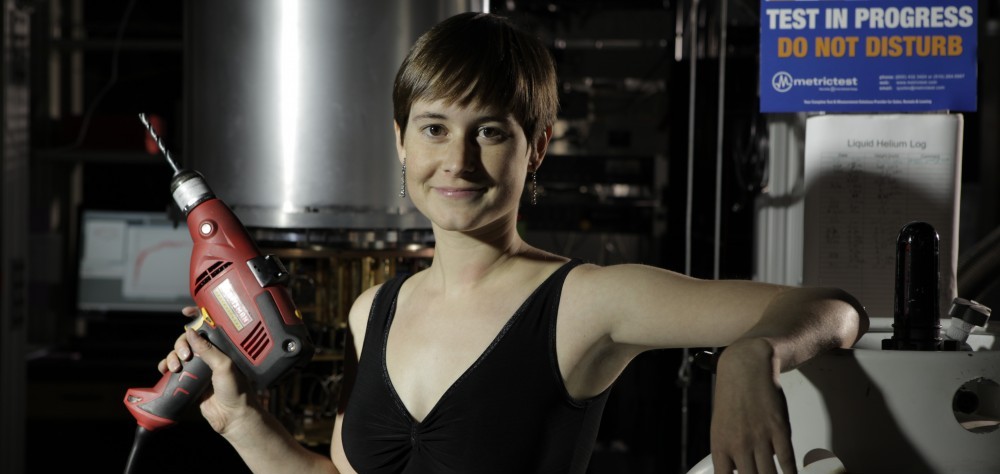
The following post is a collaboration between visiting undergraduates Evan Giarta from Stanford University and Joy Hui from Harvard University. As mentors for the 2013 Caltech InnoWorks Academy, Evan and Joy agreed to share their experience with the audience of this blog.

Innoworks-68All throughout modern history, science and mathematics have been the foundation for engineering new, world-advancing technologies. From the wheel and sailboat to the automobile and jumbo jet, the fields of science, technology, engineering and math (STEM) have helped our world and its people move faster, farther, and forward. Now, more than ever, products that were unimaginable a century ago are used every day in households and businesses all over the earth, products made possible by generations of scientists, mathematicians, engineers and technologists.

There is, however, some troublesome news regarding the state of our nation’s math and science education. For the past few years, education and news reports have ranked the United States behind other developed countries in science and mathematics. In fact, the proportion of students that score in the most advanced levels of math and science in the United States is significantly lower than that of several other nations. This reality brings to light a stark concern: If proficiency in science and math is necessary for the engineering of novel technologies and breakthrough discoveries, but is something the next generation will lack, what will become of the production industry, our economy, and global security? While the answer to this question might range from complete and utter chaos to little or no effect, it seems reasonable to try and avoid finding out. Rather, we–the community of collective scientists, technologists, engineers, mathematicians–should seek to solve this problem: What can we do to restore the integrity and substance of the educational system, especially in science and math?

Innoworks-36Although there is no easy answer to this question, there are ongoing efforts to address this important issue, one of which is the InnoWorks Academy. Founded in 2003 by a group of Duke undergraduates, the United InnoWorks Academy has developed summer programs that encourage underprivileged middle school students to explore the fields of science, technology, engineering, math, and medicine, (STEM^2) free of charge. The academy is sponsored by a variety of businesses and organizations, including GlaxoSmithKline, Cisco, Project Performance Corporation, Do Something, St. Andrew’s School, University of Pennsylvania, University of California, Los Angeles, and many others. InnoWorks Academy was a winner of the 2007 BRICK Awards and received both the MIT Global Community Choice Award and the MIT IDEAS Challenge Grand Prize in 2011. In ten short years, the United InnoWorks Academy has successfully conducted over 50 summer programs for more than 2,000 students through the contributions of over 1,000 volunteers. Currently, InnoWorks has chapters at about a dozen universities and is scheduled to add three more chapters this coming summer.

Innoworks-34In early August of 2013, the Caltech InnoWorks chapter hosted its second annual summer camp, and Joy and I (Evan) were privileged to be invited as program mentors. As people on the inside, we got a first hand look at how the organization prepares and runs the week-long event and what the students themselves experience in the hands-on, interactive and collaborative one-of-a-kind opportunity that is InnoWorks.

Since Joy and I kept a diary of each day’s activities, we thought you may like to see what our middle-schoolers experienced during that week. Here is a play-by-play of the first few days from Joy’s perspective.

Monday, August 5, 2013 was the first day of our camp! Before I go on with talking about the cool things we did that day, I’d like to introduce my team. The self-titled YOLOSWAG consisted of Michael, Chase, Evan, Phaelan and myself. Michael was the oldest, and a little shy at first, but he definitely started talking when he got comfortable. Chase was respectful and polite, and we hit it off immediately. Evan loved science and had lots of questions and knew a TON. Phaelan was the only other girl on the team, but she was very nice and friendly to the other students, and eager to help with anything she could. We all seem different, right? But wait, here’s the best part: we were all die-hard Percy Jackson (property of Rick Riordan) fans! We were definitely the best team.

Innoworks-24

Anyway, back to the actual stuff we did. One of the first things we saw was a cloud demo, essentially the creation of a cloud in a fish tank, with lots of dry ice and water. The demonstrator, Rob Usiskin, stuck a lot of dry ice in the (empty) fish tank, and poured some water into the tank, which caused the water to turn into a fog, which turns out to be the exact form of a cloud! Add a bubble maker, a question of whether bubbles will float or sink on the cloud, and a room full of InnoWorks campers (about 40 of them), and you will get an hour of general excitement. See the pictures for yourself! (The bubbles, float, by the way, even when the cloud is invisible!)

Innoworks-32

Following the demonstration, we made Soap Boats. We were apparently supposed to cut index cards into the shape of boats, and dab a little bit of soap on the bottom of the boat, and set the boat in the water. These “Soap Boats” were supposed to be propelled forward by the soap’s ability to decrease the surface tension of the water it touched. Ours, appropriately named “Titanic,” however, simply sat in the water until the water soaked through, and the Titanic sank for the second time in history. Many other teams’ boats fared about the same, but we certainly had a blast designing and naming our Soap Boat!

The last activity of the day was a secret message decoded with bio-luminescence. Each team was given a vial of dried up ostracods, which are sea creatures found glowing in the darkness of the deep sea. Then, each team crushed the ostracods and mixed the resulting powder with water to catalyze the bio-luminescence. Every mentor had written a secret message on a slip of paper, folded it, and handed it to their teams to decipher in the dark (Mine said: YOLOSWAG for the win). The convenient cleaning closet provided said darkness–Spiros, our faculty mentor, suggested that it might also provide passage to Narnia. I don’t think we lost any of our students that day, so no Narnia-traveling was done; by students. Nevertheless, it was a fun-filled and action-packed day, and a great start to an eventful week.

Tuesday was full of fun, hands-on activities. After a short lesson on the effects of air resistance and gravity on free-falling objects, we demonstrated the concept with a thin sheet of paper and a large textbook. As expected, when placed side by side and dropped, air resistance caused the sheet of paper to hit the ground much later than the textbook. But when the sheet of paper was placed directly above the textbook, to the shock of students, both items fell at the exact same rate. Though thorough in their knowledge of physical laws, the connection between their conceptual understanding and real life application had yet to be established. And as a result, when asked to explain what happened and why, the best answer one could muster was simply, “SCIENCE!”.

Following an exercise consisting of blow dryers and floating ping pong balls, the kids received a brief tutorial on how tornadoes are formed by air moving through high and low pressure regions and gusts of vertically rising winds. Due to the forces it is producing and acting upon, the tornado would then be able to more or less sustain itself. To explore this concept further, students constructed water tornado machines by taping two soda bottles together at their openings. Laughter and wetness ensued. Some groups added small trinkets in their tornado machine to observed the water tornado’s effect on “debris”. One team in particular inserted duct tape sharks, and aptly renamed themselves as Sharknado.

Innoworks-66[1]

In the afternoon, the campers were presented a lesson on the transportation of sailboats and aircraft. Contrary to what most people intuit, the fastest way to control a boat is not to flow in the direction of the wind, but to place the sail at the heading which produces a net force, which can be explained by Bernoulli’s Principle. It states that faster moving fluid has less pressure than slower moving fluid, therefore producing a force from the slower moving side to the faster moving side. Though in sailing this force is initially barely noticeable, over time it creates a large impulse to move the craft at considerable speeds. The same principle can also explain the way a plane takes flight.

With the importance of good design in mind, students were tasked with prototyping the fastest water-bottle boat. Given a solar panel, electric motor, various propellers, empty bottle, tape, and other construction essentials, kids started with basic designs, then diversified in order to gain an edge against other teams. Some teams boasted two-bottle designs, and others used one, each type having trade-offs in speed and stability. Few implemented style upgrades with graphics and colors, and even fewer leveraged performance modifications with ballast and crude control systems. But with a tough deadline to meet, not all boats met their intended specifications. Nonetheless, the races commenced and each team’s innovation was tested in the torrents of Caltech’s Beckman Fountain. Some failed, but those that survived were rewarded accordingly.

Innoworks-82[1]

By the end of the second day, many of the campers’ initial shyness had been replaced with conversation and budding new friendships. Lunch hour and break times allowed time for kids and mentors alike to hang out and enjoy themselves in California’s summer sun in-between discovering the applications of science and math to engineering, medicine, and technology. These moments of discovery, no matter how rare, are the reasons why we do what we do as we continue our research, studies, and work to improve the world we live in.

Oh, the Places You’ll Do Theoretical Physics!

I won’t run lab tests in a box.
I won’t run lab tests with a fox.
But I’ll prove theorems here or there.
Yes, I’ll prove theorems anywhere…

Physicists occupy two camps. Some—theorists—model the world using math. We try to predict experiments’ outcomes and to explain natural phenomena. Others—experimentalists—gather data using supermagnets, superconductors, the world’s coldest atoms, and other instruments deserving of superlatives. Experimentalists confirm that our theories deserve trashing or—for this we pray—might not model the world inaccurately.

Theorists, people say, can work anywhere. We need no million-dollar freezers. We need no multi-pound magnets.* We need paper, pencils, computers, and coffee. Though I would add “quiet,” colleagues would add “iPods.”

Theorists’ mobility reminds me of the book Green Eggs and Ham. Sam-I-am, the antagonist, drags the protagonist to spots as outlandish as our workplaces. Today marks the author’s birthday. Since Theodor Geisel stimulated imaginations, and since imagination drives physics, Quantum Frontiers is paying its respects. In honor of Oh, the Places You’ll Go!, I’m spotlighting places you can do theoretical physics. You judge whose appetite for exotica exceeds whose: Dr. Seuss’s or theorists’.

http://breakfastonthect.com/2012/01/18/dartmouths-winter-carnival-ranked-6th/

I’ve most looked out-of-place doing physics by a dirt road between sheep-populated meadows outside Lancaster, UK. Lancaster, the War of the Roses victor, is a city in northern England. The year after graduating from college, I worked in Lancaster University as a research assistant. I studied a crystal that resembles graphene, a material whose superlatives include “superstrong,” “supercapacitor,” and “superconductor.” From morning to evening, I’d submerse in math till it poured out my ears. Then I’d trek from “uni,” as Brits say, to the “city centre,” as they write.

The trek wound between trees; fields; and, because I was in England, puddles. Many evenings, a rose or a sunset would arrest me. Other evenings, physics would. I’d realize how to solve an equation, or that I should quit banging my head against one. Stepping off the road, I’d fish out a notebook and write. Amidst the puddles and lambs. Cyclists must have thought me the queerest sight since a cloudless sky.

A colleague loves doing theory in the sky. On planes, he explained, hardly anyone interrupts his calculations. And who minds interruptions by pretzels and coffee?

“A mathematician is a device for turning coffee into theorems,” some have said, and theoretical physicists live down the block from mathematicians in the neighborhood of science. Turn a Pasadena café upside-down and shake it, and out will fall theorists. Since Hemingway’s day, the romanticism has faded from the penning of novels in cafés. But many a theorist trumpets about an equation derived on a napkin.

Trumpeting filled my workplace in Oxford. One of Clarendon Lab’s few theorists, I neighbored lasers, circuits, and signs that read “DANGER! RADIATION.” Though radiation didn’t leak through our walls (I hope), what did contributed more to that office’s eccentricity more than radiation would. As early as 9:10 AM, the experimentalists next door blasted “Born to Be Wild” and Animal House tunes. If you can concentrate over there, you can concentrate anywhere.

One paper I concentrated on had a Crumple-Horn Web-Footed Green-Bearded Schlottz of an acknowledgements section. In a physics paper’s last paragraph, one thanks funding agencies and colleagues for support and advice. “The authors would like to thank So-and-So for insightful comments,” papers read. This paper referenced a workplace: “[One coauthor] is grateful to the Half Moon Pub.” Colleagues of the coauthor confirmed the acknowledgement’s aptness.

Though I’ve dwelled on theorists’ physical locations, our minds roost elsewhere. Some loiter in atoms; others, in black holes; some, on four-dimensional surfaces; others, in hypothetical universes. I hobnob with particles in boxes. As Dr. Seuss whisks us to a Bazzim populated by Nazzim, theorists tell of function spaces populated by Rényi entropies.

The next time you see someone standing in a puddle, or in a ditch, or outside Buckingham Palace, scribbling equations, feel free to laugh. You might be seeing a theoretical physicist. You might be seeing me. To me, physics has relevance everywhere. Scribbling there and here should raise eyebrows no more than any setting in a Dr. Seuss book.

The author would like to thank this emporium of Seussoria. And Java & Co.

*We need for them to confirm that our theories deserve trashing, but we don’t need them with us. Just as, when considering quitting school to break into the movie business, you need for your mother to ask, “Are you sure that’s a good idea, dear?” but you don’t need for her to hang on your elbow. Except experimentalists don’t say “dear” when crushing theorists’ dreams.

Guns versus butter in quantum information

From my college’s computer-science club, I received a T-shirt that reads:

while(not_dead){

sleep--;

time--;

awesome++;

}

/*There’s a reason we can’t hang out with you…*/

The message is written in Java, a programming language. Even if you’ve never programmed, you likely catch the drift: CS majors are the bees’ knees because, at the expense of sleep and social lives, they code. I disagree with part of said drift: CS majors hung out with me despite being awesome.

photo-3 copy

The rest of the drift—you have to give some to get some—synopsizes the physics I encountered this fall. To understand tradeoffs, you needn’t study QI. But what trades off with what, according to QI, can surprise us.

The T-shirt haunted me at the University of Nottingham, where researchers are blending QI with Einstein’s theory of relativity. Relativity describes accelerations, gravity, and space-time’s curvature. In other sources, you can read about physicists’ attempts to unify relativity and quantum mechanics, the Romeo and Tybalt of modern physics, into a theory of quantum gravity. In this article, relativity tangos with quantum mechanics in relativistic quantum information (RQI). If I move my quantum computer, RQIers ask, how do I change its information processing? How does space-time’s curvature affect computation? How can motion affect measurements?

Answers to these questions involve tradeoffs.

Nottingham

Nottingham researchers kindly tolerating a seminar by me

For example, acceleration entangles particles. Decades ago, physicists learned that acceleration creates particles. Say you’re gazing into a vacuum—not empty space, but nearly empty space, the lowest-energy system that can exist. Zooming away on a rocket, I accelerate relative to you. From my perspective, more particles than you think—and higher-energy particles—surround us.

Have I created matter? Have I violated the Principle of Conservation of Energy (and Mass)? I created particles in a sense, but at the expense of rocket fuel. You have to give some to get some:

Fuel--;
Particles++;

The math that describes my particles relates to the math that describes entanglement.* Entanglement is a relationship between quantum systems. Say you entangle two particles, then separate them. If you measure one, you instantaneously affect the other, even if the other occupies another city.

Say we encode information in quantum particles stored in a box.** Just as you encode messages by writing letters, we write messages in the ink of quantum particles. Say the box zooms off on a rocket. Just as acceleration led me to see particles in a vacuum, acceleration entangles the particles in our box. Since entanglement facilitates computation, you can process information by shaking a box. And performing another few steps.

When an RQIer told me so, she might as well have added that space-time has 106 dimensions and the US would win the World Cup. Then my T-shirt came to mind. To get some, you have to give some. When you give something, you might get something. Giving fuel gets you entanglement. To prove that statement, I need to do and interpret math. Till I have time to,

Fuel--;
Entanglement++;

offers intuition.

After cropping up in Nottingham, my T-shirt reared its head (collar?) in physics problem after physics problem. By “consuming entanglement”—forfeiting that ability to affect the particle in another city—you can teleport quantum information.

Entanglement--;
Quantum teleportation++;

My research involves tradeoffs between information and energy. As the Hungarian physicist Leó Szilárd showed, you can exchange information for work. Say you learn which half of a box*** a particle occupies, and you trap the particle in that half. Upon freeing the particle—forfeiting your knowledge about its location—you can lift a weight, charge a battery, or otherwise store energy.

Information--;
Energy++;

If you expend energy, Rolf Landauer showed, you can gain knowledge.

Energy--;
Information++;

No wonder my computer-science friends joked about sleep deprivation. But information can energize. For fuel, I forage in the blending of fields like QI and relativity, and in physical intuitions like those encapsulated in the pseudo-Java above. Much as Szilard’s physics enchants me, I’m glad that the pursuit of physics contradicts his conclusion:

while(not_dead){

Information++;

Energy++;

}

The code includes awesome++ implicitly.

*Bogoliubov transformations, to readers familiar with the term.

**In the fields in a cavity, to readers familiar with the terms.

***Physicists adore boxes, you might have noticed.

With thanks to Ivette Fuentes and the University of Nottingham for their hospitality and for their introduction to RQI.

Making predictions in the multiverse

Image

I am a theoretical physicist at University of California, Berkeley. Last month, I attended a very interesting conference organized by Foundamental Questions Institute (FQXi) in Puerto Rico, and presented a talk about making predictions in cosmology, especially in the eternally inflating multiverse. I very much enjoyed discussions with people at the conference, where I was invited to post a non-technical account of the issue as well as my own view of it. So here I am.

I find it quite remarkable that some of us in the physics community are thinking with some “confidence” that we live in the multiverse, more specifically one of the many universes in which low-energy physical laws take different forms. (For example, these universes have different elementary particles with different properties, possibly different spacetime dimensions, and so on.) This idea of the multiverse, as we currently think, is not simply a result of random imagination by theorists, but is based on several pieces of observational and theoretical evidence.

Observationally, we have learned more and more that we live in a highly special universe—it seems that the “physical laws” of our universe (summarized in the form of standard models of particle physics and cosmology) takes such a special form that if its structure were varied slightly, then there would be no interesting structure in the universe, let alone intelligent life. It is hard to understand this fact unless there are many universes with varying “physical laws,” and we simply happen to emerge in a universe which allows for intelligent life to develop (which seems to require special conditions). With multiple universes, we can understand the “specialness” of our universe precisely as we understand the “specialness” of our planet Earth (e.g. the ideal distance from the sun), which is only one of the many planets out there.

Perhaps more nontrivial is the fact that our current theory of fundamental physics leads to this picture of the multiverse in a very natural way. Imagine that at some point in the history of the universe, space is exponentially expanding. This expansion—called inflation—occurs when space is filled with a “positive vacuum energy” (which happens quite generally). We knew, already in 80’s, that such inflation is generically eternal. During inflation, various non-inflating regions called bubble universes—of which our own universe could be one—may form, much like bubbles in boiling water. Since ambient space expands exponentially, however, these bubbles do not percolate; rather, the process of creating bubble universes lasts forever in an eternally inflating background. Now, recent progress in string theory suggests that low energy theories describing phyics in these bubble universes (such as the elementary particle content and their properties) may differ bubble by bubble. This is precisely the setup needed to understand the “specialness” of our universe because of the selection effect associated with our own existence, as described above.

multiverse

A schematic depiction of the eternally inflating multiverse. The horizontal and vertical directions correspond to spatial and time directions, respectively, and various regions with the inverted triangle or argyle shape represent different universes. While regions closer to the upper edge of the diagram look smaller, it is an artifact of the rescaling made to fit the large spacetime into a finite drawing—the fractal structure near the upper edge actually corresponds to an infinite number of large universes.

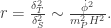
This particular version of the multiverse—called the eternally inflating multiverse—is very attractive. It is theoretically motivated and has a potential to explain various features seen in our universe. The eternal nature of inflation, however, causes a serious issue of predictivity. Because the process of creating bubble universes occurs infinitely many times, “In an eternally inflating universe, anything that can happen will happen; in fact, it will happen an infinite number of times,” as phrased in an article by Alan Guth. Suppose we want to calculate the relative probability for (any) events A and B to happen in the multiverse. Following the standard notion of probability, we might define it as the ratio of the numbers of times events A and B happen throughout the whole spacetime

P = \frac{N_A}{N_B}.

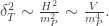
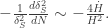
In the eternally inflating multiverse, however, both A and B occur infinitely many times: N_A, N_B = \infty. This expression, therefore, is ill-defined. One might think that this is merely a technical problem—we simply need to “regularize” to make both N_{A,B} finite, at a middle stage of the calculation, and then we get a well-defined answer. This is, however, not the case. One finds that depending on the details of this regularization procedure, one can obtain any “prediction” one wants, and there is no a priori preferred way to proceed over others—predictivity of physical theory seems lost!

Over the past decades, some physicists and cosmologists have been thinking about many aspects of this so-called measure problem in eternal inflation. (There are indeed many aspects to the problem, and I’m omitting most of them in my simplified presentation above.) Many of the people who contributed were in the session at the conference, including Aguirre, Albrecht, Bousso, Carroll, Guth, Page, Tegmark, and Vilenkin. My own view, which I think is shared by some others, is that this problem offers a window into deep issues associated with spacetime and gravity. In my 2011 paper I suggested that quantum mechanics plays a crucial role in understanding the multiverse, even at the largest distance scales. (A similar idea was also discussed here around the same time.) In particular, I argued that the eternally inflating multiverse and quantum mechanical many worlds a la Everett are the same concept:

Multiverse = Quantum Many Worlds

in a specific, and literal, sense. In this picture, the global spacetime of general relativity appears only as a derived concept at the cost of overcounting true degrees of freedom; in particular, infinitely large space associated with eternal inflation is a sort of “illusion.” A “true” description of the multiverse must be “intrinsically” probabilistic in a quantum mechanical sense—probabilities in cosmology and quantum measurements have the same origin.

To illustrate the basic idea, let us first consider an (apparently unrelated) system with a black hole. Suppose we drop some book A into the black hole and observe subsequent evolution of the system from a distance. The book will be absorbed into (the horizon of) the black hole, which will then eventually evaporate, leaving Hawking radiation. Now, let us consider another process of dropping a different book B, instead of A, and see what happens. The subsequent evolution in this case is similar to the case with A, and we will be left with Hawking radiation. However, this final-state Hawking radiation arising from B is (believed by many to be) different from that arising from A in its subtle quantum correlation structure, so that if we have perfect knowledge about the final-state radiation then we can reconstruct what the original book was. This property is called unitarity and is considered to provide the correct picture for black hole dynamics, based on recent theoretical progress. To recap, the information about the original book will not be lost—it will simply be distributed in final-state Hawking radiation in a highly scrambled form.

A puzzling thing occurs, however, if we observe the same phenomenon from the viewpoint of an observer who is falling into the black hole with a book. In this case, the equivalence principle says that the book does not feel gravity (except for the tidal force which is tiny for a large black hole), so it simply passes through the black hole horizon without any disruption. (Recently, this picture was challenged by the so-called firewall argument—the book might hit a collection of higher energy quanta called a firewall, rather than freely fall. Even if so, it does not affect our basic argument below.) This implies that all the information about the book (in fact, the book itself) will be inside the horizon at late times. On the other hand, we have just argued that from a distant observer’s point of view, the information will be outside—first on the horizon and then in Hawking radiation. Which is correct?

One might think that the information is simply duplicated: one copy inside and the other outside. This, however, cannot be the case. Quantum mechanics prohibits faithful copying of full quantum information, the so-called no-cloning theorem. Therefore, it seems that the two pictures by the two observers cannot both be correct.

The proposed solution to this puzzle is interesting—both pictures are correct, but not at the same time. The point is that one cannot be both a distant observer and a falling observer at the same time. If you are a distant observer, the information will be outside, and the interior spacetime must be viewed as non-existent since you can never access it even in principle (because of the existence of the horizon). On the other hand, if you are a falling observer, then you have the interior spacetime in which the information (the book itself) will fall, but this happens only at the cost of losing a part of spacetime in which Hawking radiation lies, which you can never access since you yourself are falling into the black hole. There is no inconsistency in either of these two pictures; only if you artificially “patch” the two pictures, which you cannot physically do, does the apparent inconsistency of information duplication occurs. This somewhat surprising aspect of a system with gravity is called black hole complementarity, pioneered by ‘t Hooft, Susskind, and their collaborators.

What does this discussion of black holes have to do with cosmology, and, in particular the eternally inflating multiverse? In cosmology our space is surrounded by a cosmological horizon. (For example, imagine that space is expanding exponentially; this makes it impossible for us to obtain any signal from regions farther than some distance because objects in these regions recede faster than speed of light. The definition of appropriate horizons in general cases is more subtle, but can be made.) The situation, therefore, is the “inside out” version of the black hole case viewed from a distant observer. As in the case of the black hole, quantum mechanics requires that spacetime on the other side of the horizon—in this case the exterior to the cosmological horizon—must be viewed as non-existent. (In the paper I made this claim based on some simple supportive calculations.) In a more technical term, a quantum state describing the system represents only the region within the horizon—there is no infinite space in any single, consistent description of the system!

If a quantum state represents only space within the horizon, then where is the multiverse, which we thought exists in an eternally inflating space further away from our own horizon? The answer is—probability! The process of creating bubble universes is a probabilistic process in the quantum mechanical sense—it occurs through quantum mechanical tunneling. This implies that, starting from some initially inflating space, we could end up with different universes probabilistically. All different universes—including our own—live in probability space. In a more technical term, a state representing eternally inflating space evolves into a superposition of terms—or branches—representing different universes, but with each of them representing only the region within its own horizon. Note that there is no concept of infinitely large space here, which led to the ill-definedness of probability. The picture of initially large multiverse, naively suggested by general relativity, appears only after “patching” pictures based on different branches together; but this vastly overcounts true degrees of freedom as was the case if we include both the interior spacetime and Hawking radiation in our description of a black hole.

The description of the multiverse presented here provides complete unification of the eternally inflating multiverse and the many worlds interpretation in quantum mechanics. Suppose the multiverse starts from some initial state |\Psi(t_0)\rangle. This state evolves into a superposition of states in which various bubble universes nucleate in various locations. As time passes, a state representing each universe further evolves into a superposition of states representing various possible cosmic histories, including different outcomes of “experiments” performed within that universe. (These “experiments” may, but need not, be scientific experiments—they can be any physical processes.) At late times, the multiverse state |\Psi(t)\rangle will thus contain an enormous number of terms, each of which represents a possible world that may arise from |\Psi(t_0)\rangle consistently with the laws of physics. Probabilities in cosmology and microscopic processes are then both given by quantum mechanical probabilities in the same manner. The multiverse and quantum many worlds are really the same thing—they simply refer to the same phenomenon occurring at (vastly) different scales.

branching

A schematic picture for the evolution of the multiverse state. As t increases, the state evolves into a superposition of states in which various bubble universes nucleate in various locations. Each of these states then evolves further into a superposition of states representing various possible cosmic histories, including different outcomes of experiments performed within that universe.

The picture presented here does not solve all the problems in eternally inflating cosmology. What is the actual quantum state of the multiverse? What is its “initial conditions”? What is time? How does it emerge? The picture, however, does provide a framework to address these further, deep questions, and I have recently made some progress: the basic idea is that the state of the multiverse (which may be selected uniquely by the normalizability condition) never changes, and yet time appears as an emergent concept locally in branches as physical correlations among objects (along the lines of an old idea by DeWitt). Given the length already, I will not elaborate on this new development here. If you are interested, you might want to read my paper.

It is fascinating that physicists can talk about big and deep questions like the ones discussed here based on concrete theoretical progress. Nobody really knows where these explorations will finally lead us to. It seems, however, clear that we live in an exciting era in which our scientific explorations reach beyond what we thought to be the entire physical world, our universe.

Navajo Preparatory High Visit: Reflections by Ana Brown

Evan Miyazono and I recently visited Navajo Preparatory High School in Farmington, New Mexico, the second half of the first exchange of visitors between Caltech and Navajo Prep. Two students and two teachers from the high school visited our campus last summer, spending time touring labs, working on small science and technology projects, and sharing their background and thoughts on science education in the Navajo Nation with us. Evan and I were happy to return the favor and take a trip out to Farmington.

Ana teaching about solar power

We spent the school days giving lectures about light and solar power to the underclassmen and having discussions with the seniors about college applications, college life, and graduate school. We took over physics classes for the entire freshmen class, and spent an hour and a half with each class teaching them the basic E&M they needed to know to understand the wave nature of light and walking them through some simple experiments with lenses and diffraction gratings. When Evan put a piece of paper on which he had cut two very thin slits in front of a green laser-pointer, “oh”s and “ah”s bubbled up from the students as they saw the diffraction pattern appear on the other side of the room. During a math class where Evan was demonstrating how the area and circumference of a circle are related in an intuitive way by breaking up the area of the circle into a rectangle with sides r and pi*r, from where I stood to the side of the classroom, I could hear a student exclaim to his friend “Math is amazing!”.

The next day, after I gave a presentation to the freshmen physics classes on solar power and photovoltaic cells, four students asked for help or resources for their science projects. Two students were making a working model of a “modernized Hogan.” The school has a hogan in the middle of campus where important ceremonies and traditional Navajo gatherings take place. The students want to build a table-top model hogan with working solar water heating and photovoltaic panel to provide warm water and lighting. Another student is working on making a smart phone app for visitors to the Navajo Nation as her senior project. Her app will inform tourists about Navajo landmarks and the significance they hold to the Navajo people. She wants to inform visitors about her culture in an effort to replace the many stereotypes held about native people and Navajos in particular with factual information. These are just a few examples of how students are honoring the traditions of their culture while also taking advantage of new technology and empowering themselves through science education.

Ana speaking to Navajo Prep students

Ana with Navajo Prep Class

I shared with the students stories of friends of mine who had grown up on the Navajo Reservation and the unique issues they confronted in college and afterward. Students who come from tribal reservations often experience homesickness to a much greater degree than other groups when they go away to college. Many of these young adults are accustomed to a very tight community and strong sense of belonging and support that they feel in their hometown, so leaving that community to join a huge group of strangers with cultures foreign from their own can be a big challenge. I gave an informal seminar to the senior class where I discussed college in general as well as issues specific to native students. I gave them advice gleaned from my own experiences as well as the experiences of some of my Navajo friends. Evan and I also answered tons of questions that the students had about all aspects of college—getting in, financial aid, being successful, and finding balance. They asked how to approach a professor about doing research in their lab and how to budget their finances, what kind of summer job they should look for, and how to balance family life and ties with college life. The seniors had so many questions that together we spent more than two hours discussing these topics and answering general and specific questions. I was really happy we could provide so much useful and desired information for these young scholars.

In our free time Evan and I got to spend more time with teachers and students, sharing meals, information, and ideas. It was great to get to know the students and teachers better and learn more about their perspectives and experiences, and how education is fitting into their lives. I look forward to continuing to develop these relationships from afar. We already have plans to mentor a couple of students with their science and senior projects and hope to recruit more Caltech grad students to serve as mentors. Supporting and encouraging these native students in their participation in math and science fields, and higher education in general, as well as helping them to maintain a strong commitment and connection to their culture and families is something that I want to continue to foster as a mentor and ally of the school. I want to thank IQIM for providing the funding for this trip that made these connections possible.

A Quantum Adventure

by Jorge Cham

How do you make something that has never existed before?

I often get suggestions for comics I should draw, which I welcome because A) I like to think of PHD Comics as a global collaborative effort and B) after 17 years, I’m almost out of ideas. This particular suggestion came from Chen-Lung Hung, a postdoc in Physics at Caltech:

PANEL 1 – Ask a scientist: “What motivates you to do the research you do?”

PANEL 2 – What people expect them to answer: “This can lead to real-life applications such as A, B, C, D, etc.”

PANEL 3 – How a real scientist would answer: “Because it’s cool.”

blog_02s

Ok, granted, the punchline needs work. Chen-Lung also asked me to make it clear that his research has important real-life applications, should someone from NSF, who funds his work, happen to be reading this blog.

Chen-Lung’s work with Prof. Jeff Kimble of Caltech’s IQIM is the subject of the third installment in our animated series of explanations of Quantum concepts and devices.

“The problem with atoms,” Prof. Kimble said at one point during our 3-4 hour conversation, “is that they exist in three dimensional space.” I didn’t know that was a problem (unless you expect them to exist in more than 3 dimensions), but Jeff explained that it means it’s very hard to control Quantum systems because the world is wide open, and information can leak and be corrupted from any direction. After a entire academic career making breakthroughs with one type of Quantum System, he’s now directing his group towards a new, experimental type which they believe has more potential for building devices with many Quantum Objects. As Jeff says in the video, “It’s a privilege to be able to explore.”

blog_04s

Shaping light, trapping atoms, alligator waveguides… The goal, Jeff and Chen-lung explained, is to make systems that are “surprising.” Not surprisingly, it was really hard to draw this video. How do you depict something that has never existed before? And more importantly, do you draw alligators differently from crocodiles? (Did you know alligators only exist in two places in the world: the Southern part of the United States, and in China?).

blog_03s

Hopefully, those of you watching will get some understanding of some key Quantum concepts and what it takes to build and manipulate Quantum systems, but to be honest, I make these videos because I think the work is really cool.

Jeff and Chen-Lung: thanks for taking us along on this adventure of yours, the privilege is all ours.

Watch the third installment of this series:

Jorge Cham is the creator of Piled Higher and Deeper (www.phdcomics.com).

CREDITS:

Featuring: Jeff Kimble and Chen-Lung Hung
Animated by Jorge Cham

Produced in Partnership with the Institute for Quantum Information and Matter (http://iqim.caltech.edu) at Caltech with funding provided by the National Science Foundation and the Betty and Gordon Moore Foundation.

Reporting from the ‘Frontiers of Quantum Information Science’

What am I referring to with this title? It is similar to the name of this blog–but that’s not where this particular title comes from–although there is a common denominator. Frontiers of Quantum Information Science was the theme for the 31st Jerusalem winter school in theoretical physics, which takes place annually at the Israeli Institute for Advanced Studies located on the Givat Ram campus of the Hebrew University of Jerusalem. The school took place from December 30, 2013 through January 9, 2014, but some of the attendees are still trickling back to their home institutions. The common denominator is that our very own John Preskill was the director of this school; co-directed by Michael Ben-Or and Patrick Hayden. John mentioned during a previous post and reiterated during his opening remarks that this is the first time the IIAS has chosen quantum information to be the topic for its prestigious advanced school–another sign of quantum information’s emergence as an important sub-field of physics. In this blog post, I’m going to do my best to recount these festivities while John protects his home from forest fires, prepares a talk for the Simons Institute’s workshop on Hamiltonian complexityteaches his quantum information course and celebrates his birthday 60+1.

The school was mainly targeted at physicists, but it was diversely represented. Proof of the value of this diversity came in an interaction between a computer scientist and a physicist, which led to one of the school’s most memorable moments. Both of my most memorable moments started with the talent show (I was surprised that so many talents were on display at a physics conference…) Anyways, towards the end of the show, Mateus Araújo Santos, a PhD student in Vienna, entered the stage and mentioned that he could channel “the ghost of Feynman” to serve as an oracle for NP-complete decision problems. After making this claim, people obviously turned to Scott Aaronson, hoping that he’d be able to break the oracle. However, in order for this to happen, we had to wait until Scott’s third lecture about linear optics and boson sampling the next day. You can watch Scott bombard the oracle with decision problems from 1:00-2:15 during the video from his third lecture.

oracle_aaronson

Scott Aaronson grilling the oracle with a string of NP-complete decision problems! From 1:00-2:15 during this video.

The other most memorable moment was when John briefly danced Gangnam style during Soonwon Choi‘s talent show performance. Unfortunately, I thought I had this on video, but the video didn’t record. If anyone has video evidence of this, then please share!
Continue reading

Of sensors and science students

Click click.

Once the clasps unfastened, the tubular black case opened like a yard-long mussel. It might have held a bazooka, a collapsible pole tent, or enough shellfish for three plates of paella.

“This,” said Rob Young, for certain types of light, “is the most efficient detector in the world.”
Continue reading

Building a Computer: Part I

During my senior year in high school, I was fortunate enough to participate in the Intel International Science and Engineering Fair. At the awards banquet I was seated with fourteen others and we each had the choice of ordering either salmon or steak for our respective entrées. I noticed that while taking our fifteen different orders, our waiter did not write anything down. How on Earth was he going to remember what each of us had requested?!

It turns out the answer is intimately related to Problems 2 and 5 in my last post. Did you realize you always save at least 999 people on the game show? Here’s how:

The person at the back of the line will look at all 999 hats in front of him. If the number of black hats is odd, he will shout “Black!” If the number of black hats is even, he will shout “White!” From this information, the second person in line can deduce from the hats in front of him what the color of his own hat is! For example, if Contestant 1 shouts “Black!” and Contestant 2 sees an even number of black hats in front of him, he can deduce that his own hat is black because the total number of black hats Contestant 1 sees is odd. From information given in Contestant 1’s and Contestant 2’s answers, Contestant 3 can determine his hat’s color via a similar parity argument, and so on. At least $999 will be donated to charity.

How about Problem 5? One solution requires knowledge of how to represent numbers in binary. Let’s say you owe your friend $3,761.50, and want to pay him using pennies and dimes, as well as $1, $10, $100, and hypothetical $1,000 bills. How would you pay him using the least number of monetary tokens? The answer to this is easy – we all learned about the hundredths’ place, the tenths’ place, ones’ place, the tens’ place, the hundreds’ place, and so on in elementary school. The digit in the ones’ place tells us how many $1 bills we need to give our friend, the digit in the tens’ place tells us how many $10 bills we need to give our friend, and so on. Written more suggestively,

3,761 = 3*103 + 7*102 + 6*101 + 1*100 + 5*10-1 + 0*10-2

Why does the number 10 appear so significant in the above equation? In the above equation, 10 is called the “base.” In base 10, we write every number as the sum of whole multiples of powers of 10. Notice that none of the bold numbers – the digits – can be greater than or equal to the base (10); they must be between 0 and 9. If one of the bold digits was greater than 9, we could just use a monetary token of higher value to reduce the total number of bills and coins we need to repay our friend. This leads to:

Rule #1: The value of each digit must be less than the base.

Could we use a number other than 10 as our base? Let’s try using 2! I can think of at least one way to write 3,761.50 as the sum of multiples of powers of two:

3,761.50 = 1*211 + 0*210 + 0*29 + 0*28 + 0*27 + 0*26 + 53*251*24 + 0*23 + 0*22 + 0*21 + 1*20 + 1*2-1

Continue reading

The Navajo connection

A few months ago, Prof. Keith Schwab brought visiting students and teachers from Navajo Preparatory School to tour some of the IQIM labs, listen to some quick lectures on optics, and talk to scientists. Since this opportunity was only allowed to the one carload that made the 11.5 hour drive from Farmington, NM, everyone involved agreed that we could reach far more students if the IQIM sent Caltech students there. Ana Brown and I both enjoyed speaking with the visiting students and teachers, and responded enthusiastically when Prof. Schwab offered to send us.  My enthusiasm momentarily dimmed when I realized our trip would be occurring in the dead of winter and it was projected to snow while we were there (having only lived in northern and southern California, let’s say I have a heightened sensitivity to weather), but I excitedly spent thanksgiving putting together demonstrations with supplies I found in my closet and garage. I’ve always enjoyed talking about applied math, science, and engineering to anyone, especially anyone young enough to have only heard “math is boring” or “science is too hard” few enough times I can convince them otherwise.  Navajo Prep seemed ideal for this, since the school prepares the students well and sends over 95% of the students to college, and is working to increase student interest in math, science, and engineering.

it's colder than it looks, I swear

Panorama from the center of Navajo Prep

With a suitcase half full of clothes and half full of tools and hacked-together electronics, I was picked up from the airport, and arrived at the school in the afternoon the Monday after Thanksgiving weekend. While Monday was spent arranging which classes I would attend, and what topics I would discuss, my second day involved a trip with the school’s outreach coordinator and Cody, one of the two students who visited Caltech, taking a tour of some of the local highlights, including a traditional Navajo lunch (steam corn stew, roast mutton, and I even tried ach’ii”) and toured the remnants of the cliff dwellings at Mesa Verde, about half an hour from the school. Exploring a region with such a rich history and discussing it with my hosts, who are descendants in part from that history was an incredible experience.

yup, some 70 rooms built in a recess carved into the canyon wall almost a thousand years ago.

Rooms at the Oak Tree House at Mesa Verde

On Wednesday, I began talking to the freshman physics classes about optics, intending to discuss the properties of light, like frequency, speed, wavelength, velocity, energy, and momentum, but to give some context I began with a historical summary of discoveries in optics. I know I was surprised when I was preparing, so you might enjoy answering the same questions that I asked the class. Take a second, and guess when you think the first lenses were made and when wearable glasses were first used. (After you think you have a guess, scroll to the bottom to see how you did.)  When I realized that the class was more interested in seeing rather than hearing about optics, I skimmed over what I’d prepared in order to spend more time on the demonstrations where I showed refraction in glass and explained how that can be derived from assuming a different speed of light in the material. We found lenses for the students to manipulate/play with, and even though historically there were about 300 years between invention of glasses (and the proliferation of lens-making) and the invention of the telescope, some of the students unintentionally built telescopes after taking a second lens from their friends and were shocked to hear that what they had just made was better than the one Galileo used to first discover the four largest moons of Jupiter.

I promise this shot is not advertising for Under Armour.

Measuring focal lengths and observing lensing with a drop of water on a glass slide

We also demonstrated double slit diffraction and calculated light’s wavelength for three different laser pointers to within 5% accuracy using only a tape measure, a post-it, and a knife. I decided not to bring a demonstration to measure the speed of light with a laser, a few mirrors, a computer fan, and a reverse-biased photodiode hooked up to an old speaker, because I couldn’t get the fan to spin fast enough to get a reasonably short delay length. (From that can you guess what my set-up was?) On Thursday, Ana and I gave a similar lecture to a different pair of 90 minute freshman physics classes, and spent the other periods talking with math classes. In calculus, I described the different kinds of math classes offered in college, their applications, and their connections to each other in an attempt to give more meaning to the course titles they would no doubt be reading next fall. In geometry and trigonometry I answered the perennial high school math question: “when will we ever use this?” by talking about some applications in geometric optics.

Since I figure you readers like thinking about this sort of thing, I’ll elaborate: I started with the fact that a light beam’s incident angle (measured from the perpendicular of a surface) is equal to its reflected angle. This means that light propagation, like much of (but not all of) physics, is reversible in all but a few specific cases. As a result, light generated at or passing through the center of a circle is reflected off the circle back to the center. An ellipse has a similar property where light through one focus is all reflected to the other. Try deriving that from the fact that an ellipse is defined to be the set of all points where the sum of the distances to the two foci equals some fixed constant. In the lecture, I then used the fact that a parabola is the set of all points equidistant from a point (the focus) and a line (the directrix) to show that light from the focus is reflected off the parabola and collimated (focused at infinity).

Ana brought some IQIM hats and shirts, which the freshman physics classes seemed to definitely enjoy when we met with each class for 40 minutes on Friday.

We probably tripled the number of high school varsity football players who've worn IQIM gear in that one picture

One of the four freshman physics classes we got to spend time with

I tried to give them an impression of what we do in the IQIM, but I had a hard time giving a satisfactory explanation of the significance of quantum information, and Ana easily convinced me that it would be more engaging to use the 90 minute introduction I had already given them on optics to explain and describe solar energy, since many buildings deep in the Navajo reservation are off the power grid.  There are also plans to construct a large solar power plant on the reservation that will be much cleaner than the three local coal power plants in the region.

I think I made a joke and Ana might have been the only one to laugh.  Still, it's proof I can be funny.

Action shot during the lecture on solar

Ana and I also spoke to the senior seminar, which contained the entire graduating class, where she talked about the difficulties transitioning to college experienced by some of her friends in college who were from the Navajo reservation. She gave such great advice on applying to schools, applying for fellowships, and developing a healthy work/life balance, that the only thing I felt like I could contribute was some advice on picking a major (since I’ve picked about 4 different majors), where I described the difference between science and engineering, and talked about different fields within each. I loved how truly helpful I felt when so many of the students told us that they either found certain pieces of advice to be useful, thanked us for introducing them to an idea they hadn’t heard of, or asked us to come back soon.

Occasionally a student asked what I personally do, and their curiosity was rewarded with an explanation that lasted as long as they were interested.  The shortest lasted two sentences and the longest explanation (given to a calculus class of 5 people) involved 30 minutes with my laptop out showing all the steps I take to fabricate nanoscale devices to trap light in almost a cubic-wavelength volume in proximity to an “optically interesting” rare earth ion which my advisor and I hope will provide a viable quantum optical memory.  (Here‘s a little more about our work.)

In the evenings we cheered for the school’s basketball team, had dinner with some of the students and teachers, and discussed the school’s science curriculum and science fair projects. Ana and I consulted on a solar water heating project some of the students were working on, and, after the students all went home for the weekend, I even spent 2 hours in 17ºF weather the last night calibrating an 8″ diameter Schmidt-Cassegrain telescope that had been donated to the school. Compared to Pasadena the viewing was spectacular, and I could easily spot galaxies, nebulae, and discern stripes on Jupiter and the four Galilean moons. I can only expect that some of the students I met will be as excited as I was.

From wikipedia: “The earliest known lenses were made from polished crystal, often quartz, and have been dated as early as 700 BC for Assyrian lenses” and “Around 1284 in Italy, Salvino D’Armate is credited with inventing the first wearable eye glasses.” For anyone who’s interested in the history of science, I’d suggest you check it out.