Last week, a journey began to find the solution to a problem I could not solve as a seventeen year-old boy. That problem became an obsession of mine during the last days of the International Math Olympiad of 1997, the days when I also met the first girl I ever kissed. At the time, I did not have the heart to tell the girl that I had traveled across the Atlantic to compete with the best and brightest and had come up short. I told her that I had solved the problem, but that the page with my answer had been lost. I told my parents the same thing and to everyone at school who would ask me why I did not return with a medal from the Math Olympics. The lie became so powerful that I did not look at that problem again until now. So, you may be wondering why a blog about Quantum Information Science at Caltech includes posts on problems from Math Olympiads. And why I would open the book on the page with that one problem after fifteen years… Continue reading
Category Archives: Reflections
Geniuses wanted
Growing up in Spata (no, not Sparta – but feel free to ignore this remark) there was not much to do in the evenings. After school was done and volleyball practice was over (with my two brothers we made up half of the school team) my dad would come pick us up for a fun three hours of track and field practice. Just another lazy evening. Who am I kidding… It was exhausting! But, throwing a javelin with exuberant fury was also therapeutic (it’s a Greek thing). Yet, here lied the problem: The adrenaline high from a good five hours of sports every day would not dissipate simply because of physical exhaustion. I don’t know about my brothers, but my brain was on fire and the two pounds of pasta my mom would put on my plate (almost) every night, could not induce a strong enough food coma. Even working on the next day’s homework did not do the trick of putting me to sleep (though it did help significantly). By then, it was past midnight and I was wide awake.
Continue reading
Apollo
I was an eight-year-old second grader on April 12, 1961, when my father showed me a screaming headline with two-inch-high lettering in the afternoon newspaper: RUSSIAN 1ST SPACEMAN. Sensing a historic moment, I saved the front page and pasted it into a scrapbook. That was the first of many headlines I saved through the years of the “space race.”
Continue reading
The Eiger et al.
When I was a graduate student, on my second year I was put in an office that was shared with two postdocs – Arne Brataas and Stefan Kehrein. It made me really feel like I was being initiated into this community of theoretical physicists – something I had been dreaming of since I was a teenager. The most conspicuous thing in the office (Harvard’s Lyman 332 if I recall correctly), was a big three or four panel poster of an astounding mountain range, craggy peaks, glaciers, steep drops. There was a small note on the corner: “The Eiger et al. – the amazing history of this poster is recounted in the book ‘Who Got Polchinski’s Office’ ”*
Continue reading
Universal thread
Thoughts while watching the Olympics …
My car gets about 30 miles per gallon of gasoline. Miles per gallon has the dimensions of inverse length squared, and the reciprocal of 30 miles per gallon is roughly the area of a circle whose diameter is 0.3 mm, or about 1/100 of an inch.
That means that when I drive my car, the fuel I consume has the same volume as a thin thread stretched along the road over the distance I travel, with a thickness just a few times the width of a human hair.*
That skinny little thread of gasoline is enough to keep my car going! Thinking about it reinforces one’s appreciation for the internal combustion engine.
Continue reading
Two-trick pony
Steve Flammia wrote a flattering post on The Quantum Pontiff about a game we used to play, in which Steve would ask a question and I would have just a minute or two to prepare a 20 minute mini-lecture answering the question. Steve reports that “these were not easy questions.” But actually most of them were.
Steve gives an example: “Why do neutrinos have a small but nonzero mass?”
Continue reading
Alesha

An excerpt from my notes (including a misspelling of “repetition”) taken at Alexei Kitaev’s seminar during his first visit to Caltech in 1997. That was a very exciting day.
In 1997, I had some disposable funding as part of a quantum computing project, and decided to seize the opportunity to bring an interesting visitor to Caltech. But whom to invite? Chris Fuchs, then a postdoc at Caltech who seemed to know everybody working on quantum computing, reported that Richard Jozsa, while attending a conference in Japan, had met a remarkable Russian from the Landau Institute named Alexei Kitaev.
Continue reading
An intellectual tornado
Hello?… The first thing I remember feeling moments later was panic.
Five years before that day, I was a graduating senior at MIT pursuing a Bachelor of Science in Mathematics with Computer Science (18C for all the fellow nerds out there). I had been close to some of the most brilliant people I have ever met, like my undergraduate adviser Michael Sipser and my undergraduate research mentor in bioinformatics, Bonnie Berger. I had applied to several graduate schools to study mathematics, but had been summarily rejected by most of them. It was a humbling experience, which ultimately led me to the day I got the call. I remember clearly what day it was: February 6th, 2008. I was eating breakfast with two friends at a local diner in Davis, CA. Yes, the one place which had enthusiastically accepted me to their Ph.D. program was the Mathematics Department at UC Davis. In fact, being an international student from Greece, and given the tight State budget of California at the time (all the time), it was a miracle that UC Davis said yes. True, I had a good GPA and lots of research experience at MIT, but I did not have any direction. I did not apply to work with any particular Professor, I just applied by school name and reputation. And if it weren’t for Prof. Berger’s suggestion to apply to UC Davis, I would have applied to the top 5 graduate schools in Applied Mathematics and would be trading stocks in New York right now. I was naive.
Continue reading
Supremacy Now?
In May 1994, Artur Ekert visited Caltech to give a seminar about quantum cryptography. Near the end of the talk, Ekert revealed an exciting new development — just weeks earlier, Peter Shor had announced the discovery of an efficient quantum algorithm for finding the prime factors of large composite integers, a problem for which no efficient classical algorithm is known.
Perhaps I’ve embellished the memory over time, but I recall being awestruck by this news. I spent the next month at the Isaac Newton Institute attending a workshop about quantum black holes, and though it was a very good workshop and I had some great discussions, I spent most of my time there secretly trying to understand Shor’s paper, which Ekert had emailed to me. This took some effort, because I knew little about algorithms or computational complexity at that time (even less than I know now), but by the end of the workshop I felt I understood the ideas behind Shor’s algorithm pretty well. I did not yet realize that I was in the midst of a career transition from particle physics to quantum information science.
Continue reading
Closure

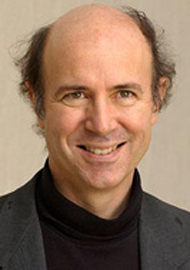
Frank Wilczek
There are two kinds of particle physicists: those who wanted the Higgs boson to be discovered, and those who wanted the Higgs boson not to be discovered.
At a conference last fall, I sat at the same dinner table with Frank Wilczek. Inevitably, the conversation came around to the prospects for discovering the Higgs boson in 2012. “It would be much more exciting if the Higgs isn’t found,” I insisted. Frank did not claim to disagree, but was adamant: “I want closure.”*
In the late fall of 1974, I had applied to graduate school, but did not yet know where I would be accepted. Roberta (then my fiance, now my wife) and I were in Boston for the day, so we decided to stop by Harvard to look around. We noticed Steve Weinberg was in his office, and though I had never met Weinberg and had no appointment, we barged in. I introduced Roberta and announced I was interested in coming to Harvard the following year.
Continue reading